Nigeria Faces Blood Supply Crisis as Annual Demand Reaches Two Million Units
By Atlantic Reports
Nigeria needs an estimated 1.8 million to two million units of blood annually to meet its healthcare requirements, but available supplies remain far below demand, raising concerns about access to life-saving transfusions.
The World Health Organisation (WHO) says Nigeria collected 371,827 units of blood in 2024, highlighting the gap between national demand and available supplies.
The shortage affects patients requiring blood for emergencies, major surgeries, childbirth complications, severe anaemia and treatment of life-threatening illnesses.
As a result, families frequently turn to relatives, friends and members of the public for urgent donations, sometimes in desperate circumstances where time is critical.
For two-year-old Destiny Emmanuel, the search for compatible blood became a race against time as she underwent chemotherapy for leukaemia.
Her mother, Gift Emmanuel, recalled the anxiety of watching doctors struggle to stabilise her daughter while the family searched for a suitable donor.
Just when hope appeared to be fading, a hospital security guard offered to donate blood after being assessed and certified eligible.
The guard had noticed the mother's repeated efforts to find donors near the hospital duty post and volunteered to help.
For Gift, the stranger's intervention became a turning point in her daughter's treatment.
“My daughter is alive today because someone I did not know chose to donate blood. That person gave my family another chance to smile,” she said.
A neighbour's donation saves a mother
Malam Usman Ali, a subsistence farmer, also recalled how a neighbour helped save his wife's life following complications during childbirth.
Ali said his wife experienced prolonged labour and severe bleeding while delivering their fifth child, leaving the family in urgent need of a blood donor.
He said he was unable to donate because of health-related reasons, but a neighbour volunteered to provide the blood required.
“I almost lost my wife because she had a prolonged labour and lost a lot of blood while trying to deliver our fifth child.
“I couldn’t donate blood because of some health reasons, so my neighbour, who is not even from my tribe or religion, was the one who donated freely,” he said.
Their experiences illustrate how voluntary blood donation can become critical during medical emergencies, particularly when families have limited time to find compatible donors.
Blood donations critical to childhood cancer treatment
Beyond childbirth emergencies, children receiving cancer treatment also depend on reliable access to safe blood.
Gift Emmanuel said securing blood for her daughter had been particularly challenging because chemotherapy can lower patients' blood levels, sometimes making transfusions necessary for them to continue treatment.
Dr Kemi Adekanye, Founder and Chief Volunteer of the Okapi Children Cancer Foundation, described blood donation as an essential part of childhood cancer care.
She said children undergoing chemotherapy could experience low blood levels and require safe transfusions to continue treatment and recover.
“Blood donation is a critical part of childhood cancer care.
“For these children, every unit of blood donated is more than a medical resource; it is a lifeline that gives them strength, hope and another chance at survival,” she said.
Blood transfusions are also important in managing maternal haemorrhage, severe anaemia, sickle cell complications, road traffic injuries and patients undergoing major surgical procedures.
Maternal emergencies highlight the need for safe blood
The importance of reliable blood supplies is particularly evident in maternal healthcare, where severe bleeding can quickly become life-threatening.
The WHO identifies postpartum haemorrhage as a major contributor to maternal deaths in Nigeria, with the supplied figures indicating that it accounts for approximately 23 to 30 per cent of such deaths.
Timely access to safe blood can be critical in managing severe bleeding during and after childbirth.
The WHO recommends that countries rely primarily on voluntary, unpaid blood donors, whom it identifies as the safest source of blood.
It also recommends annual blood collection of at least 10 units per 1,000 people to meet basic transfusion requirements.
For Nigeria, with a population exceeding 200 million, achieving this benchmark requires stronger collection systems, sustained public education and wider participation in voluntary donation.
National Blood Service Agency raises concern
The Director-General of the National Blood Service Agency (NBSA), Prof. Saleh Yuguda, said Nigeria required between 1.8 million and two million units of blood annually to meet its healthcare needs.
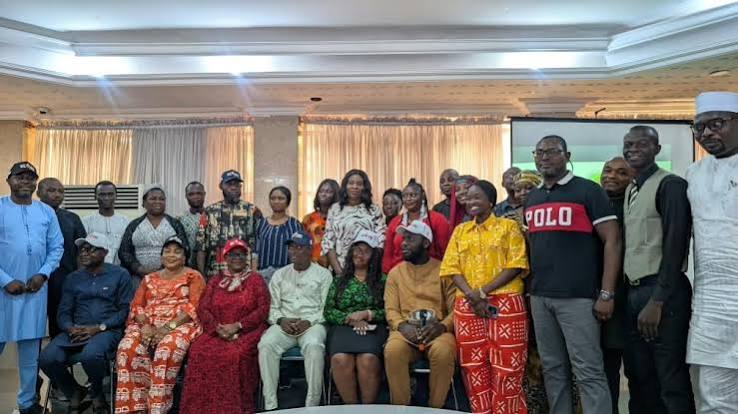
Yuguda, represented by Dr Aliyu Waziri, Head of the agency's Abuja Operations Centre, spoke at a media roundtable on voluntary blood donation and safe blood advocacy in Abuja.
He said the agency's collection figures remained significantly below national requirements, with its centres recording approximately 24,000 to 25,000 units in the preceding year.
He noted that the country's population required a much larger pool of regular donors to bridge the supply gap.
The NBSA official called for increased voluntary blood donation, arguing that a dependable donor base would reduce the pressure on families forced to seek blood during emergencies.
However, the figures presented at the roundtable also raise questions about the coverage of national blood collection data, particularly the difference between the WHO's reported 2024 collection of 371,827 units and the much lower figure cited for the agency's own centres.
The two figures relate to different reporting scopes and should not be treated as directly comparable without further clarification.
Misconceptions continue to discourage donors
Despite the medical importance of blood donation, fear, misinformation and misconceptions remain significant barriers to voluntary participation.
Dr Kefas Jibir-Gurama, Head of the Department of Paediatrics at the Federal Medical Centre (FMC), Abuja, said some people wrongly believed that donating blood caused weakness or exposed them to illness.
He explained that blood donation could be carried out safely when proper screening, sterile equipment and established medical procedures were followed in approved facilities.
Health professionals say public education is necessary to address these fears and encourage eligible people to become regular donors.
They also stress the importance of ensuring that donations are collected, screened, stored and distributed under appropriate medical standards.
Media urged to promote voluntary donation
Stakeholders have called on journalists and media organisations to play a stronger role in public education and community mobilisation.
Mrs Moji Makanjuola, Executive Director of the International Society of Media in Public Health (ISMPH), said the media could help promote safe blood donation through accurate information, advocacy and awareness campaigns.
She said collaboration among journalists, healthcare professionals, government agencies and the public was necessary to ensure an adequate and safe blood supply.
Similarly, Mrs Bassey Ita-Ikpang, Chairperson of the Nigeria Association of Women Journalists (NAWOJ), FCT Chapter, urged journalists to use human-interest reporting to encourage regular voluntary donation.
She said media organisations should go beyond reporting events by telling stories that highlight the importance of blood donation, correcting harmful misconceptions and promoting informed public participation.
Mr Joseph Kadiri, President of the Association of Nigeria Health Journalists (ANHeJ), also reaffirmed journalists' commitment to providing accurate information about blood donation.
From emergency appeals to a culture of giving
The experiences of Destiny Emmanuel and Ali's family demonstrate the importance of having safe blood readily available before emergencies occur.
For patients undergoing cancer treatment, women experiencing childbirth complications and people requiring urgent surgery, access to blood can determine whether treatment proceeds in time.
Nigeria's challenge therefore extends beyond encouraging people to donate. It also requires stronger blood collection centres, adequate screening facilities, reliable storage and distribution systems, and public confidence in transfusion services.
For the hospital security guard who volunteered to donate blood to Destiny, the intervention may have taken only a short time, but its consequences for the child and her family could last a lifetime.
As health authorities and advocacy groups push for increased voluntary donation, the central message remains clear: a regular supply of safe blood is essential to saving lives and reducing the burden on families during medical emergencies.
Atlantic Reports: Voices. People. Facts.
Written by
Atlantic Reports Admin
Comments
- Be the first to comment.