Nigeria Faces Race to Exploit China’s Zero-Tariff Trade Window Before 2028
By Atlantic Reports
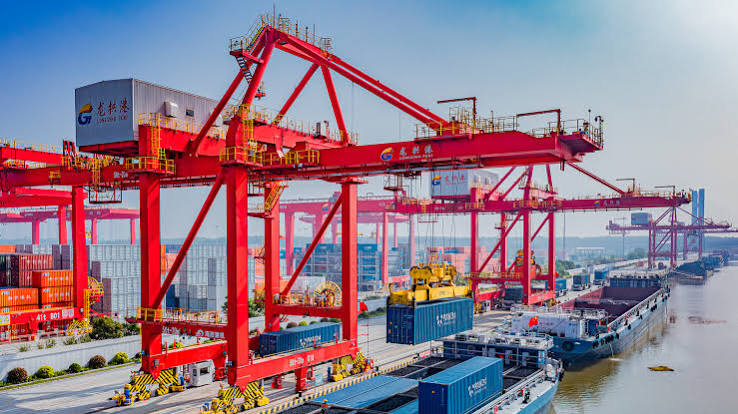
Nigeria has less than 18 months to strengthen its export capacity and take advantage of China’s zero-tariff access for African products, a trade opportunity that could expand the country’s non-oil exports and create jobs if local producers can meet the requirements of the Chinese market.
The policy, which took effect on 1 May 2026, grants goods from 53 African countries duty-free access to China’s market of approximately 1.4 billion people.
For Nigeria, the arrangement offers potential opportunities for agricultural products such as sesame seeds, cashew nuts, ginger, hibiscus and groundnuts, as well as processed solid minerals.
However, the preferential access is scheduled to run until 30 April 2028, while China pursues negotiations with African countries on a longer-term framework known as the China-Africa Economic Partnership for Shared Development (CADEPA).
The central question is whether Nigeria can develop the infrastructure, regulatory systems and manufacturing capacity needed to turn the opportunity into sustained export earnings.
A major opening for Nigerian exporters
The policy was announced under the Changsha Declaration in June 2025 within the framework of the Forum on China-Africa Cooperation (FOCAC).
Unlike a conventional free trade agreement, the arrangement is a unilateral concession by China. It allows eligible African products to enter the Chinese market without import tariffs, without requiring African countries to grant equivalent tariff concessions to Chinese goods.
The expansion in May 2026 extended zero-tariff treatment to 20 African countries that are not classified as least developed countries, including Nigeria, South Africa, Kenya, Egypt and Ghana.
Previously, the arrangement had largely benefited 33 African least developed countries.
Trade analyst Dr Hussaini Tukur described the policy as one of the most comprehensive trade concessions offered to Africa by a major global economy.
He argued that the removal of tariffs had shifted the main challenge for Nigerian exporters from market access costs to production capacity and compliance.
The potential benefits could be significant for agricultural producers and processors seeking access to a large international market. But duty-free treatment alone does not guarantee that Nigerian products will be accepted or commercially competitive.
Zero tariffs do not mean unrestricted access
China’s tariff schedule contains approximately 8,000 product categories, and the preferential arrangement reportedly covers all tariff lines.
For many ordinary products, including sesame, cashew and ginger, import duties that previously ranged from about eight to 30 per cent have been removed.
However, some products remain subject to Tariff-Rate Quotas (TRQs). These include wheat, rice, sugar and cotton.
Under this arrangement, eligible imports receive zero-tariff treatment only within specified quantities. Once the quota is exhausted, the applicable out-of-quota tariff may still apply.
Tukur warned that exporters dealing in quota-controlled products must understand the limits and requirements rather than assume that the policy provides unlimited access.
More importantly, Nigerian exporters must satisfy three broad conditions: rules of origin, inspection and quarantine requirements, and customs procedures.
Certification and food safety could determine success
To qualify for preferential treatment, products must meet China’s rules of origin. This means exporters must demonstrate that the goods were genuinely produced or substantially transformed in Nigeria.
An exporter cannot simply import goods from another country, repackage them locally and claim Nigerian origin.
Segun Giwa, an exporter, said businesses would need valid Certificates of Origin to demonstrate compliance.
Agricultural products must also meet China’s Sanitary and Phytosanitary (SPS) requirements, which cover food safety, pesticide residues, packaging, labelling and other standards.
Exporters may also need to register with China’s General Administration of Customs (GACC).
For certain agricultural products, access depends on bilateral protocols between the governments involved. These agreements establish whether the exporting country’s inspection and certification systems meet the importing country’s requirements.
Alhaji Ibrahim Dutse, a sesame farmer, said the absence of such agreements for some Nigerian products could prevent farmers from accessing the Chinese market despite the tariff concession.
He argued that Nigeria needed to accelerate negotiations on product-specific protocols to ensure that agricultural commodities could enter China legally.
The distinction is important: zero tariffs remove an import duty, but they do not override food safety, quarantine or customs regulations.
Exporters must still account for other costs
The preferential arrangement does not eliminate every charge associated with importing goods into China.
Import value-added tax, generally nine or 13 per cent depending on the product, may still apply, alongside consumption tax where relevant.
Lagos-based freight forwarder Bolaji Disu warned that exporters who interpret zero tariffs as zero import costs could underestimate the expenses involved.
He said businesses must budget for logistics, testing, certification and compliance with Chinese regulations.
These costs could particularly affect small exporters and agricultural cooperatives that lack the financial resources to meet demanding international standards.
Processing could create more value at home
Nigeria’s trade relationship with China remains heavily influenced by crude oil and unprocessed mineral exports.
The bilateral trade figure cited in the material for the first half of 2026 stood at approximately $18 billion. However, the opportunity presented by the zero-tariff arrangement is not simply to increase the volume of exports. It could also help Nigeria change what it sells.
International relations analyst Dr Anunne Eze said agro-processing and solid minerals processing could benefit significantly if Nigerian businesses moved beyond exporting raw commodities.
She argued that processed cashew kernels, for example, could generate more domestic value than exporting raw cashew nuts.
Eze also warned that the policy should not encourage the export of unprocessed minerals at the expense of Nigeria’s industrialisation objectives.
Her concern is that foreign buyers may prefer purchasing raw materials because they can process them elsewhere, leaving Nigeria with fewer opportunities to create manufacturing jobs and develop technical expertise.
Bako Awayi, a miner in Nasarawa State, expressed similar concerns about the potential export of raw lithium and other minerals.
He said local processing would create more employment and economic value, but acknowledged that direct sales of raw materials could be financially attractive to producers.
The challenge for policymakers is to ensure that the new trade opportunity supports domestic value addition rather than reinforcing dependence on raw commodity exports.
Infrastructure gaps threaten small producers
Nigeria’s export ambitions also face practical challenges at home.
Poor rural roads, inadequate cold storage, limited testing facilities, high certification costs and delays at ports can make it difficult for producers to deliver goods consistently and competitively.
Ngozi Eze, a ginger cooperative farmer in Kaduna State, said transportation costs could significantly reduce the profits of farmers moving produce from rural communities to export points.
She called for aggregation centres, standard warehouses and affordable laboratories where agricultural products could be tested for compliance with international requirements.
Such facilities could help smallholder farmers combine their produce, improve quality control and meet the volume requirements of overseas buyers.
Lukman Hakeem of the Abuja Chambers of Commerce, Industries, Mines and Agriculture said China was a demanding market where product quality and compliance could not be compromised.
He warned that poor-quality consignments could damage the reputation of Nigerian exporters and undermine confidence in the country's products.
Government agencies work on exporter support
The Nigeria Export Promotion Council (NEPC), Standards Organisation of Nigeria (SON) and Nigeria Agricultural Quarantine Service (NAQS) have reportedly intensified training for exporters on Chinese market requirements.
An NEPC official said the council was providing guidance on packaging, labelling and GACC registration.
The official also said discussions were ongoing with China on protocols for additional products, including soybean, groundnuts and dried hibiscus.
The progress of these negotiations will be important in determining which Nigerian products can enter the Chinese market under the preferential arrangement.
Beyond training, exporters will require accessible certification services, reliable laboratories, traceability systems and clear information about product-specific requirements.
Five priorities before April 2028
The trade opportunity has prompted calls for urgent action in five areas.
First, accelerate market-access agreements. Nigeria needs to conclude the necessary bilateral protocols for priority agricultural and processed products, including sesame, cashew, soybean, hibiscus and groundnuts.
Second, strengthen compliance infrastructure. More accredited laboratories, modern pack houses, storage facilities and traceability systems are needed to demonstrate product quality, safety and Nigerian origin.
Third, support small businesses and cooperatives. Smallholder farmers produce a significant share of Nigeria’s agricultural exports but often lack the finance, equipment and technical support required to meet international standards. Grants, training and aggregation facilities could help bridge this gap.
Fourth, negotiate CADEPA in line with domestic industrial priorities. Nigeria’s long-term trade relationship with China should support local processing, manufacturing, technology transfer and employment rather than entrenching raw-material exports.
Fifth, reduce logistics costs. Better rural roads, efficient ports, cold-chain facilities and affordable transportation are essential to making Nigerian products competitive.
Without improvements in these areas, the savings from zero import tariffs could be outweighed by the costs of moving, processing, testing and exporting goods from Nigeria.
A limited window for a long-term trade opportunity
The zero-tariff arrangement offers Nigeria an opportunity to expand its exports beyond crude oil and strengthen its position in international agricultural and manufacturing markets.
But the policy does not automatically create factories, guarantee buyers or resolve the structural challenges facing local producers.
Its benefits will depend on whether government agencies can secure market-access agreements, businesses can meet international standards and farmers can connect to reliable processing and export networks.
The negotiations on CADEPA will also matter. Nigeria will need to consider how any long-term arrangement affects its industrial policy, domestic manufacturers and ambitions to retain more value from its natural resources.
For farmers producing sesame in Jigawa, cashew in Ogbomoso and ginger in Kaduna, the opportunity will be meaningful only when access to the Chinese market translates into reliable orders, better prices and sustainable livelihoods.
China has lowered a trade barrier. Whether Nigeria can turn that concession into jobs, investment and stronger domestic production will depend on the decisions made before the preferential window closes on 30 April 2028.
Atlantic Reports: Voices. People. Facts.
Written by
Atlantic Reports Admin
Comments
- Be the first to comment.