Nigeria Needs Sovereign AI Infrastructure to Secure Data, Reduce Foreign Dependence, Expert Says
By Atlantic Reports
Nigeria needs a sovereign Artificial Intelligence (AI) infrastructure capable of securing national data, reducing dependence on foreign technology providers and strengthening the country's digital economy, a technology expert, Dr Faisal Orakzai, has said.
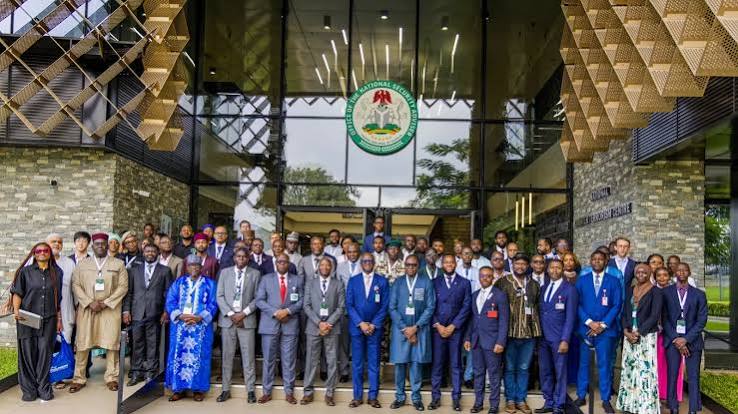
Orakzai, Chief Executive Officer of Digifloat LLC, made the recommendation on Wednesday at the ongoing Digital Nigeria International Conference and Exhibition (DNICE) in Abuja.
Speaking on the topic, “Beyond the Racks: Turning Nigeria’s Sovereign Cloud into a Sovereign AI Economy”, he argued that the country should concentrate on developing the software platforms, applications and intelligence systems needed to maximise existing data centre infrastructure.
According to him, Nigeria does not necessarily need additional data centres at this stage but a sovereign AI stack that would enable government institutions and businesses to control how their data is stored, processed and utilised.
He said Nigeria had invested considerably in data centre infrastructure but had yet to develop the complementary technology systems required to make those facilities fully productive.
Over 90 Per Cent of Nigerian Data Hosted Abroad
Orakzai said Nigeria had more than 20 data centres, making it the second-largest data centre market in Africa after South Africa.
However, he claimed that more than 90 per cent of Nigeria's data was still hosted outside the country, while annual spending on offshore cloud services was estimated at $850 million.
He argued that the situation exposed the limitations of investing in physical infrastructure without developing locally controlled software and digital services.
“We have built the racks, but the workloads have not come on. The question is, why do the workloads stay away?” he asked.
According to him, government agencies seeking services from local data centres often receive basic infrastructure such as virtual machines or storage facilities without the complete technology platforms required to operate their digital systems.
“When a government agency goes to a local data centre today, mostly what it gets is a virtual machine, an empty rack or an empty container.
“Everything that makes that server useful, including the data platform, AI models, security operations and applications, has to be built by the agency itself or sourced from foreign service providers,” he said.
Five Layers Required for a Sovereign Cloud
The Digifloat chief executive explained that a functional sovereign cloud required five interconnected technological layers.
These include:
-
Hosting infrastructure: Physical data centres and computing facilities where digital information and workloads are maintained.
-
Data platforms: Systems for organising, managing, accessing and processing information.
-
Security operations: Mechanisms for protecting data, networks and digital services against cyber threats.
-
Artificial intelligence models: Locally controlled intelligence systems capable of analysing information and supporting decision-making.
-
Applications: Software solutions through which government agencies, businesses and individuals access digital services.
Orakzai said Nigeria had made considerable progress in developing the hosting infrastructure layer but needed to strengthen the remaining four components.
He stressed that data sovereignty should not be measured solely by the physical location of servers, adding that ownership and control of the software platforms through which information is accessed and processed were equally important.
Foreign Cloud Dependence Raises Technology Costs
The technology expert also highlighted the financial implications of relying heavily on foreign cloud providers.
He explained that exchange rate fluctuations had increased the cost of technology contracts, placing additional pressure on government and private-sector budgets.
According to him, developing sovereign technology platforms priced in naira could help protect organisations against foreign exchange volatility while encouraging local technology development.
He also identified the Central Bank of Nigeria's directive requiring local hosting of payment data from January 1, 2027, as an opportunity to accelerate investment in domestic digital infrastructure.
The proposed policy, he suggested, could encourage financial institutions and technology companies to make greater use of locally available data centres and related services.
Over $2bn Data Centre Investment Expected
Orakzai disclosed that more than $2 billion in data centre investments was expected in Nigeria through 2027.
He warned, however, that infrastructure investments would require sufficient digital workloads to generate returns and justify the capital committed.
He advocated a shared sovereign AI platform that would allow government institutions to access common data management, cybersecurity and artificial intelligence infrastructure.
According to him, such an arrangement would reduce the need for individual agencies to develop separate systems and make repeated investments in similar technology.
He also cautioned against attempting to develop every component of the technology ecosystem from scratch.
Instead, he recommended a hybrid approach combining locally developed solutions, imported sovereign systems and licensed software.
He said training Nigerian engineers to operate, maintain and improve the platforms would be essential to ensuring long-term sustainability and allowing the model to be replicated across other data centres.
Call for Nigerian-Controlled Digital Infrastructure
Reinforcing his argument, Orakzai urged policymakers and industry stakeholders to prioritise technology ownership, local expertise and the development of applications that address Nigeria's needs.
“Let's not build another data centre. Nigeria already has data centres. Instead, we need a sovereign AI stack that sits on top of them.
“Let's fill those facilities with data that works for Nigerians, intelligence built in Nigeria, bills paid in Naira, hosted in Nigeria, and powered in Nigeria. Let's go beyond the racks,” he said.
The Challenge of Turning Infrastructure into Digital Value
The proposal raises an important question about Nigeria's digital development strategy: whether investments in physical infrastructure are being matched by sufficient local capacity to develop, operate and secure the technology platforms that depend on them.
A sovereign AI ecosystem could create opportunities for Nigerian software developers, engineers, cybersecurity professionals and technology businesses.
However, achieving meaningful data sovereignty would require more than local server facilities. It would also depend on effective data protection, cybersecurity standards, reliable electricity, skilled personnel, competitive local services and clear rules governing access to sensitive information.
The figures presented by Orakzai on offshore data hosting, cloud expenditure and projected investments were not independently established in the conference account.
For Nigeria, the broader challenge is to ensure that growing investment in digital infrastructure translates into locally controlled technology, stronger domestic expertise and measurable economic benefits.
Atlantic Reports: Voices. People. Facts.
Written by
Atlantic Reports Admin
Comments
- Be the first to comment.