Nigeria, Niger Basin Authority Push for Faster Climate and Water Projects Across Nine Countries
By Atlantic Reports
The Federal Government of Nigeria and the Niger Basin Authority (NBA) have called for accelerated implementation of water infrastructure and climate adaptation projects across the Niger Basin, warning that delays could undermine efforts to protect livelihoods and strengthen regional water security.
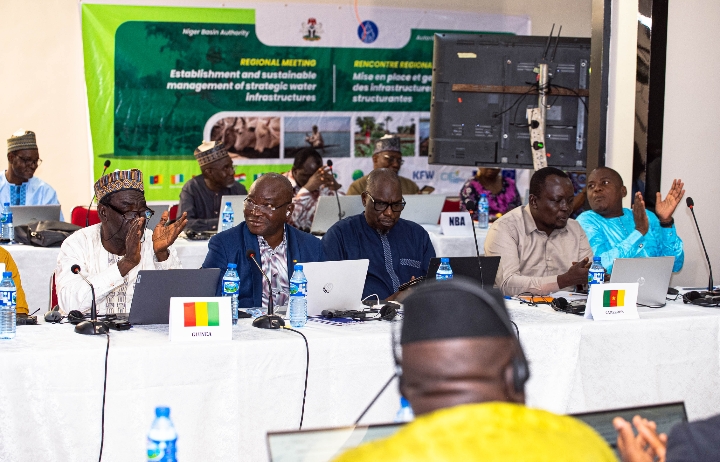
The call followed a series of regional meetings held in Abuja between September 28 and October 9, 2026, bringing together representatives of the authority's nine member countries, development partners and other stakeholders.
Speaking at a news conference on Friday, NBA Executive Secretary Kocou Houanye urged participating governments to complete outstanding infrastructure projects, fulfil their financial commitments and strengthen cooperation in managing shared water resources.
He said effective climate adaptation, improved governance and greater participation by women and young people were essential to the region's long-term development.
According to Houanye, more than 80 per cent of jobs in the basin are linked to water resources, underscoring the importance of reliable water systems to agriculture, fisheries and other economic activities.
Climate Pressures Put Livelihoods at Risk
The Niger Basin stretches across nine West and Central African countries, including Nigeria, Niger, Mali, Guinea, Benin, Burkina Faso, Côte d'Ivoire, Cameroon and Chad.
Communities throughout the basin depend on its rivers, wetlands and associated water systems for farming, fishing, livestock production, domestic water supply and commerce.
Changes in rainfall patterns, flooding, drought and environmental degradation can therefore affect household incomes, food production and access to essential resources.
For communities living along rivers and flood-prone areas, the consequences extend beyond agriculture to housing, transport, public health and local businesses.
Houanye emphasised that climate resilience must remain central to regional development planning, particularly as member countries work to protect vulnerable communities and sustain economic activities.
His remarks also highlighted the need for countries sharing the basin to coordinate their policies, since decisions affecting water use and infrastructure in one part of the river system can have consequences elsewhere.
Major Climate Adaptation Programme Reaches Critical Stage
A central focus of the Abuja meetings was the Programme for Integrated Development and Adaptation to Climate Change in the Niger Basin (PIDACC/NB).
The programme is intended to support climate resilience, sustainable management of natural resources and improvements in infrastructure and livelihoods across participating countries.
Houanye said the initiative had reached a critical implementation stage, requiring governments and implementing agencies to accelerate outstanding activities.
He disclosed that its physical implementation rate increased from 37 per cent in June 2025 to nearly 50 per cent in June 2026.
The programme's commitment rate also rose from 49 per cent to nearly 60 per cent during the same period.
PIDACC/NB implementation progress
■ June 2025
■ June 2026 (approx.)
Figures reported by the Niger Basin Authority. June 2026 values are approximate.
The figures indicate progress over the 12-month period, although approximately half of the programme's physical implementation remained outstanding as of June 2026.
Houanye attributed the improvement to institutional reforms and more effective programme management.
However, implementation percentages alone do not establish how many communities have benefited, which infrastructure projects are operational or whether completed interventions have improved livelihoods.
Those outcomes will require further assessment as the programme advances.
Member Countries Face Funding Deadlines
The NBA executive secretary urged member countries to fulfil their counterpart funding obligations to prevent further delays.
He also called on the governments concerned to sign the Framework Agreement on the Common Basket Fund by November 15, 2026.
The proposed funding arrangement is intended to support coordinated financing of regional priorities.
Houanye further urged member countries to complete the documentation required to access Global Environment Facility (GEF) resources from November.
Timely access to funding will be important for maintaining project momentum, particularly where infrastructure delivery depends on contributions from multiple governments and development partners.
However, the authority did not disclose the total amount of outstanding counterpart funding or identify which countries had yet to meet their commitments.
It also did not provide a detailed breakdown of the remaining projects, their estimated costs or revised completion schedules.
These details would help establish the scale of the financing and implementation challenges.
NBA Introduces Governance Reforms
Houanye announced that the authority had adopted its Strategic and Operational Plans for 2026–2030 to guide regional priorities over the next five years.
He said the NBA had also revised its administrative, financial and procurement procedures to strengthen institutional governance and operational efficiency.
The reforms are intended to improve accountability and support more effective delivery of development programmes.
According to him, the authority is also digitising its water and environmental information systems.
Improved data systems could support more informed decisions on water availability, environmental conditions and climate-related risks.
Reliable information is particularly important in a shared river basin, where countries must coordinate water management while responding to different national development needs.
Houanye said the NBA was also working towards operationalising the Regional Climate Change Adaptation Fund for the Niger Basin in early 2027.
The proposed fund could provide an additional financing mechanism for climate resilience activities, although its eventual resources, eligibility conditions and project priorities were not detailed.
Nigeria Calls for Effective Implementation and Maintenance
Representing the Minister of Water Resources and Sanitation, Prof. Joseph Utsev, Robert Umezulike commended the NBA, member countries and development partners for their participation in the Abuja meetings.
He said the discussions provided an opportunity to exchange experiences, examine implementation difficulties and identify solutions to challenges affecting PIDACC/NB projects.
Umezulike urged participants to translate the recommendations into practical action.
He emphasised that effective project implementation, regional cooperation and proper maintenance of completed infrastructure were essential to achieving lasting development outcomes.
The emphasis on maintenance is significant because the benefits of water infrastructure depend not only on construction but also on continued functionality.
Facilities that lack adequate maintenance funding, technical support or local management arrangements may deteriorate before communities realise their expected benefits.
For governments and development partners, this makes long-term operational planning an important part of project delivery.
Women, Youths and Local Communities Must Benefit
The meetings also examined gender inclusion and opportunities for greater participation by women and young people in water resources management and development programmes.
Across the Niger Basin, women and young people participate in farming, fisheries, trade and other activities closely connected to water availability.
Their involvement in planning and implementation can help ensure that interventions respond to practical community needs.
However, participation must extend beyond representation at meetings.
Meaningful inclusion would involve access to information, opportunities to influence project decisions and fair access to economic benefits.
The NBA did not provide specific targets for women and youth participation or disclose how such outcomes would be measured under the current programme.
Clear indicators would help determine whether inclusion commitments are producing tangible results.
Stronger Regional Partnerships Planned
Houanye said the authority intended to deepen cooperation with development finance institutions, private investors and research organisations.
He also identified closer collaboration with the Lake Chad Basin Commission as a priority.
Such partnerships could support knowledge sharing, climate research, investment mobilisation and improved management of shared environmental challenges.
The Abuja meetings addressed hydrodiplomacy, water security, climate adaptation, infrastructure development, gender inclusion and programme implementation.
Hydrodiplomacy involves cooperation among countries sharing water resources, particularly where competing demands require negotiation and coordinated management.
For the Niger Basin, effective cooperation is essential because the river system crosses national boundaries and supports millions of people with different economic and environmental needs.
From Regional Agreements to Community Results
The outcome of the Abuja meetings places renewed attention on whether member countries can convert regional commitments into completed and functioning projects.
The increase in PIDACC/NB's implementation rate suggests progress, but significant work remains.
For communities affected by flooding, unreliable water supply, declining agricultural productivity and environmental pressures, the most meaningful results will be improvements they can experience directly.
These could include better-managed water resources, functioning infrastructure, stronger climate resilience and more secure livelihoods.
The next important milestones include the proposed November 15 funding agreement deadline, access to GEF resources and the planned establishment of the regional climate adaptation fund in 2027.
Ultimately, the success of the Niger Basin Authority's development agenda will depend on whether governments provide the necessary resources, complete outstanding projects and maintain infrastructure long after construction ends.
Atlantic Reports: Voices. People. Facts.
Written by
Atlantic Reports Admin
Comments
- Be the first to comment.