Nigeria Records Progress in HIV Fight, but 2030 AIDS Elimination Target Remains Challenging
By Atlantic Reports
Nigeria has recorded significant progress in its fight against HIV and AIDS, with improved access to treatment, declining AIDS-related deaths and fewer new infections. However, health experts warn that the country faces a difficult journey towards ending AIDS as a public health threat by 2030.
Although millions of Nigerians living with HIV now have access to lifesaving antiretroviral treatment, approximately 64,000 new infections were recorded in 2025, significantly above the fewer than 5,000 annual infections experts say Nigeria needs to achieve to meet the 2030 target.
The figures expose a major gap between improvements in treatment and the country's continuing challenges with prevention, testing and access to healthcare.
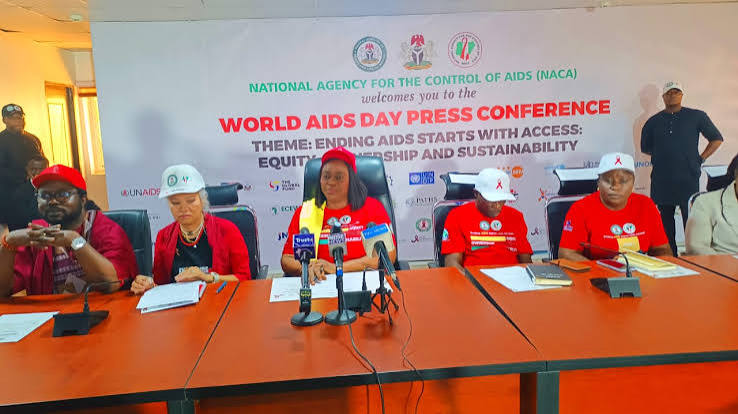
The 2026 World AIDS Day theme, "Ending AIDS Starts with Access: Equity, Ownership and Sustainability," highlights the importance of ensuring that effective HIV services reach everyone, regardless of income, location or social circumstances.
Nigeria's HIV Statistics Show Significant Improvement
The Director-General of the National Agency for the Control of AIDS (NACA), Dr Temitope Ilori, said HIV prevalence in Nigeria had declined from 5.8 per cent in 2001 to 1.3 per cent in 2025.
She also disclosed that annual AIDS-related deaths had fallen from 80,000 in 2010 to 32,000 in 2025, while new infections declined from 130,000 to 64,000 over the same period.
According to Ilori, 80 per cent of people living with HIV now know their status, 98 per cent of those diagnosed are receiving antiretroviral therapy, while 94 per cent have achieved viral suppression.
She attributed the progress to scientific advances, improved treatment and expanded access to HIV services.
"Science and medicine have given us the tools to stop HIV transmission and ensure long, healthy lives.
"However, tools only save lives when every citizen, regardless of location, gender or socioeconomic status, can access them without stigma or barrier," she said.
Despite the progress, Ilori noted that one in five people living with HIV remained unaware of their status, while 34 per cent of HIV-exposed infants missed early diagnosis.
She said NACA was expanding community-led testing, strengthening domestic financing and intensifying efforts to eliminate stigma and discrimination.
"Ending AIDS starts with access to testing, treatment, information and dignity," she added.
Donor Dependence Raises Concerns Over Sustainability
While Nigeria has expanded HIV treatment services, concerns remain over the financial sustainability of the country's response.
The World Health Organisation's (WHO) Team Lead for HIV, Tuberculosis, Hepatitis and Sexually Transmitted Infections for Africa, Dr Akudo Ikpeazu, warned that declining donor support made stronger domestic financing increasingly important.
She said external sources still accounted for more than 90 per cent of Nigeria's AIDS expenditure.
"External support has been a bridge, and bridges are for crossing, not to live on," she said.
Ikpeazu urged the Federal Government and other stakeholders to integrate HIV prevention and treatment into government institutions, public budgets and community structures.
She described the next phase of Nigeria's HIV response as requiring stronger institutional commitment and sustainable funding.
According to her, the country's prevention strategy must become firmly embedded in government systems and local communities to protect both current and future generations.
Experts Call for Affordable and Accessible HIV Services
The National Coordinator of the National AIDS and Sexually Transmitted Infections Control Programme (NASCP), Dr Adebobola Bashorun, said the availability of medical innovations would not automatically translate into better health outcomes without affordable and accessible services.
"We may have the best technology, the best product, without access it's useless," he said.
Bashorun identified affordability, availability, health insurance coverage and equitable service delivery as important factors in strengthening Nigeria's HIV response.
He also called for improved prevention of mother-to-child transmission through integrated HIV, hepatitis and sexually transmitted infection services.
He emphasised the need for stronger domestic resource mobilisation to ensure that essential services remained accessible to all Nigerians.
UNAIDS Identifies New Infections as Major Challenge
The UNAIDS Country Director, Tina Boonto, said more than 1.5 million Nigerians living with HIV were receiving lifesaving treatment.
However, she identified the reduction of new infections as one of the country's most pressing challenges.
Boonto said Nigeria needed to intensify prevention efforts to reduce annual infections to fewer than 5,000.
"We need to accelerate and intensify efforts so much more that we get below 5,000 new infections a year," she said.
She highlighted community support groups that help pregnant women access HIV testing, treatment and antenatal services as practical approaches to improving healthcare delivery.
Her position underscores the need to complement treatment programmes with stronger prevention strategies, particularly among populations facing barriers to healthcare.
Stigma Continues to Discourage Testing and Treatment
For people living with HIV, access to healthcare also involves confronting discrimination and social exclusion.
Mr Nicholas Ugbenyen of the Network of People Living with HIV/AIDS in Nigeria (NEPWHAN) said stigma continued to discourage some people from seeking testing and treatment.
He stressed that people living with HIV and affected communities must remain central to the country's response.
Ugbenyen called for sustained domestic funding and stronger community-led interventions, particularly for women, adolescents and vulnerable groups.
Similarly, Mrs Esther Hindi of the Association of Women Living with HIV/AIDS said efforts to end AIDS must include protecting unborn children from HIV transmission.
"We want to end AIDS and end new HIV.
"We need to protect our unborn children from HIV so that they can have a future that is strong," she said.
Hindi urged communities to replace discrimination with compassion, arguing that people were more likely to seek healthcare when they felt accepted and supported.
Young People Must Be Included in the HIV Response
With young people accounting for more than 60 per cent of Nigeria's population, stakeholders say their involvement is essential to achieving the 2030 target.
The United Nations Population Fund (UNFPA) Resident Representative, Muriel Mafico, advocated a whole-of-society approach involving government institutions, communities and other stakeholders.
"HIV does not belong in any sector and people do not belong to any sector. It is important that we have a whole-of-society approach," she said.
Sarah Gogwim of the Association of Positive Youth Living with HIV/AIDS in Nigeria also called for youth-friendly services that allow young people to access testing, information and treatment without fear or discrimination.
The concerns highlight the importance of age-appropriate information, accessible healthcare and community support in addressing new infections among younger populations.
IHVN Calls for Sustainable Investment and Community Leadership
The Institute of Human Virology Nigeria (IHVN) has also emphasised the importance of equitable access, national ownership and sustained investment.
Its Executive Officer, Dr Patrick Dakum, said ending AIDS required more than making treatment and prevention services available.
He identified empowered communities, stronger national commitment and sustainable financing as essential elements of a resilient HIV response.
Dakum said cooperation among government institutions, healthcare providers, development partners and communities would be necessary to accelerate progress towards the 2030 target.
The Road to 2030: Progress Must Reach Everyone
Nigeria's HIV response has demonstrated the benefits of scientific innovation, antiretroviral treatment and expanded healthcare interventions.
However, the reported 64,000 new infections in 2025 show that treatment achievements alone will not deliver the goal of ending AIDS as a public health threat.
The country's next phase of progress will depend on closing testing gaps, strengthening prevention programmes, improving early diagnosis among HIV-exposed infants, tackling stigma and securing reliable domestic financing.
The heavy reliance on external funding also raises questions about how Nigeria will maintain treatment services and prevention programmes if international support declines.
For millions of Nigerians affected by HIV, the outcome will be measured not only by national statistics but also by whether they can access affordable treatment, receive accurate information and live without discrimination.
As the 2030 deadline approaches, the challenge is to translate scientific progress and policy commitments into accessible, sustainable services for communities across the country.
Nigeria has made measurable gains. Whether those gains can be sustained and extended to prevent new infections will shape the country's ability to meet its AIDS elimination ambition.
Atlantic Reports: Voices. People. Facts.
Written by
Atlantic Reports Admin
Comments
- Be the first to comment.