Nigerian School, Destiny Christian Academy, Finishes Second in Global Academic Competition
By Atlantic Reports
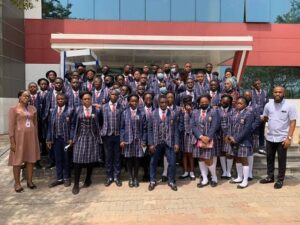
Destiny Christian Academy (DCA), Abuja, owned by Dunamis International Gospel Centre, has emerged second in the Middle Division category of the Future Problem Solving World Solutions Challenge.
The achievement places the Nigerian school among the top three performers in a competition involving participants from six continents, nine countries and 13 states in the United States.
The school's Administrator, Mr Paul Onoja, disclosed the achievement in an interview with the News Agency of Nigeria (NAN) in Abuja on Thursday.
He said DCA scored more than 93 per cent, narrowly missing the first position, and expressed confidence that the school would target the top spot in subsequent editions.
According to Onoja, the result demonstrates the ability of Nigerian students to compete internationally despite challenges often associated with educational opportunities in Africa.
He said the school remained committed to preparing its students for international academic and intellectual competitions.
“We are not preparing for second position; we are preparing for first position,” he said.
Students turn water hyacinth into economic opportunity
A major highlight of the competition was DCA's project titled “Menace to Money: Wealth in Water Hyacinth.”
The project was presented by four students, Amos, Bamidele, Chukwura and Grace, collectively known as the DCA All-Stars.
Their proposal focused on converting invasive water hyacinth, which obstructs Nigerian waterways, into biodegradable packaging materials.
The initiative seeks to provide an alternative to plastic bags while creating employment opportunities and generating income for local communities.
Water hyacinth is an invasive aquatic plant that can spread rapidly, obstruct waterways and threaten aquatic ecosystems and biodiversity.
The students' proposal explored how an environmental challenge could be transformed into an opportunity for innovation, sustainable enterprise and community development.
Global competition tests creativity and problem-solving
The Engagement Manager of the competition, Ms Amy McArthur, said the Future Problem Solving World Solutions Challenge was designed to celebrate creativity, critical thinking, teamwork and students' ability to develop solutions to pressing global challenges.
She identified invasive species as the environmental challenge addressed in the competition.
McArthur also disclosed that all participating students were new to the Future Problem Solving programme.
The final rankings in the Middle Division category were:
-
Dilworth School, New Zealand.
-
Destiny Christian Academy, Nigeria.
-
J. M. Robinson Middle School, North Carolina, United States.
School targets further international achievements
Onoja attributed the school's academic performance to the leadership of its founders, Dr Paul Enenche and Dr Mrs Becky Enenche, who established the institution in 2005.
He said the school's educational philosophy focused on developing students intellectually, spiritually, physically and socially.
DCA has also participated in international competitions across Africa, including South Africa, over the past four years.
The administrator disclosed that the school was preparing to represent Nigeria at a global robotics and engineering competition in Asia later in 2026.
He expressed optimism that the experience gained from previous international competitions would strengthen the students' performance in future contests.
Beyond academic recognition
DCA's second-place finish highlights the contribution Nigerian students can make to international conversations on environmental sustainability and technological innovation.
More significantly, the water hyacinth project connects academic problem-solving with challenges facing communities whose waterways and livelihoods are affected by invasive aquatic plants.
If developed beyond the competition, the proposal could provide opportunities for further research into biodegradable packaging, local manufacturing and alternative sources of income.
The next challenge will be translating the students' concept into a practical, commercially viable solution that can deliver measurable environmental and economic benefits.
Atlantic Reports: Voices. People. Facts.
Written by
Atlantic Reports Admin
Comments
- Be the first to comment.