Nisa Medical Group Acquires Robotic System to Improve Precision in Knee Replacement Surgery
By Atlantic Reports
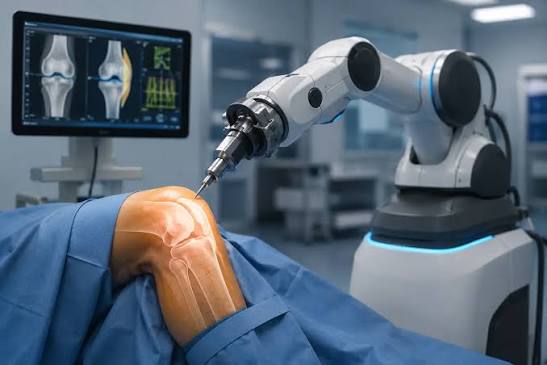
Nisa Medical Group has acquired a Misso-Ni Robotic System to enhance the accuracy of knee replacement surgeries and improve outcomes for patients undergoing joint replacement procedures.
The Medical Director of Nisa Garki Hospital, Abuja, Dr Kenneth Ityo, disclosed this during a media briefing in Abuja on Wednesday, November 25, 2026.
Ityo, an orthopaedic surgeon and robotic surgery specialist, described the technology as one of the latest innovations in joint replacement surgery, particularly knee arthroplasty.
According to him, the AI-powered system assists surgeons in planning and executing procedures with greater precision, potentially reducing post-operative pain and minimising human errors.
Hospital offers free surgeries to selected patients
Ityo said the acquisition was part of the hospital group's efforts to embrace modern medical technology and improve access to specialised healthcare.
He disclosed that the hospital had commenced a programme of free knee replacement surgeries, with approximately six procedures completed and four more scheduled.
The medical director explained that normal charges would resume after the free surgery programme.
“We are using this opportunity to conduct several free surgeries. We have performed about six already, with four more to go, after which we will return to our normal charges,” he said.
He added that Nisa Garki Hospital performs an average of 30 knee replacement surgeries monthly, alongside a higher number of hip replacement procedures.
Nigeria seeks to reduce medical tourism
The acquisition, according to Ityo, would help reduce the need for Nigerians to travel abroad in search of advanced joint replacement procedures.
He maintained that patients could now access such specialised treatments locally at Nisa Garki Hospital, Abuja.
“You don't need to leave Nigeria again for joint replacement because advanced joint replacement surgery is being performed right here at Nisa Garki Hospital, Abuja,” he said.
Ityo also claimed that the hospital had no waiting time for surgery once patients secured beds, describing its services as affordable.
However, the hospital's claims about affordability and waiting times were not accompanied by specific cost comparisons or independent patient outcome data at the briefing.
Robotic surgery represents major healthcare investment
The medical director disclosed that an average robotic surgical system could cost more than ₦600 million, describing the acquisition as a substantial investment in Nigeria's healthcare sector.
He urged public and private healthcare institutions to embrace modern medical technologies to strengthen the country's capacity to deliver specialised treatments.
Ityo also said the acquisition was timely ahead of a planned Nigerian Orthopaedic Association workshop expected to attract approximately 600 orthopaedic surgeons to Abuja.
Nigeria's growing role in advanced medical services
According to Ityo, three robotic surgical systems are currently available in West Africa, all located in Nigeria.
He described the development as an indication of the country's growing capacity to provide advanced medical services and attract patients from neighbouring countries.
He said Nigeria was beginning to experience a reversal of medical tourism, with patients from other West African countries and beyond travelling to the country for surgical procedures.
“We now have what should reverse medical tourism. We have patients from abroad and other West African countries coming to Nigeria for surgeries,” he said.
While the acquisition represents an investment in specialised surgical capacity, its wider impact will depend on affordability, the availability of trained personnel, equipment maintenance and independently documented patient outcomes.
The expansion of robotic-assisted surgery could strengthen Nigeria's healthcare system, but sustained access will require more than the purchase of advanced equipment. Patients will also need transparent pricing, appropriate clinical assessment and reliable post-operative care.
Atlantic Reports: Voices. People. Facts.
Written by
Atlantic Reports Admin
Comments
- Be the first to comment.