NMDPRA Seals Two Port Harcourt Filling Stations Over Alleged Under-Dispensing
By Atlantic Reports
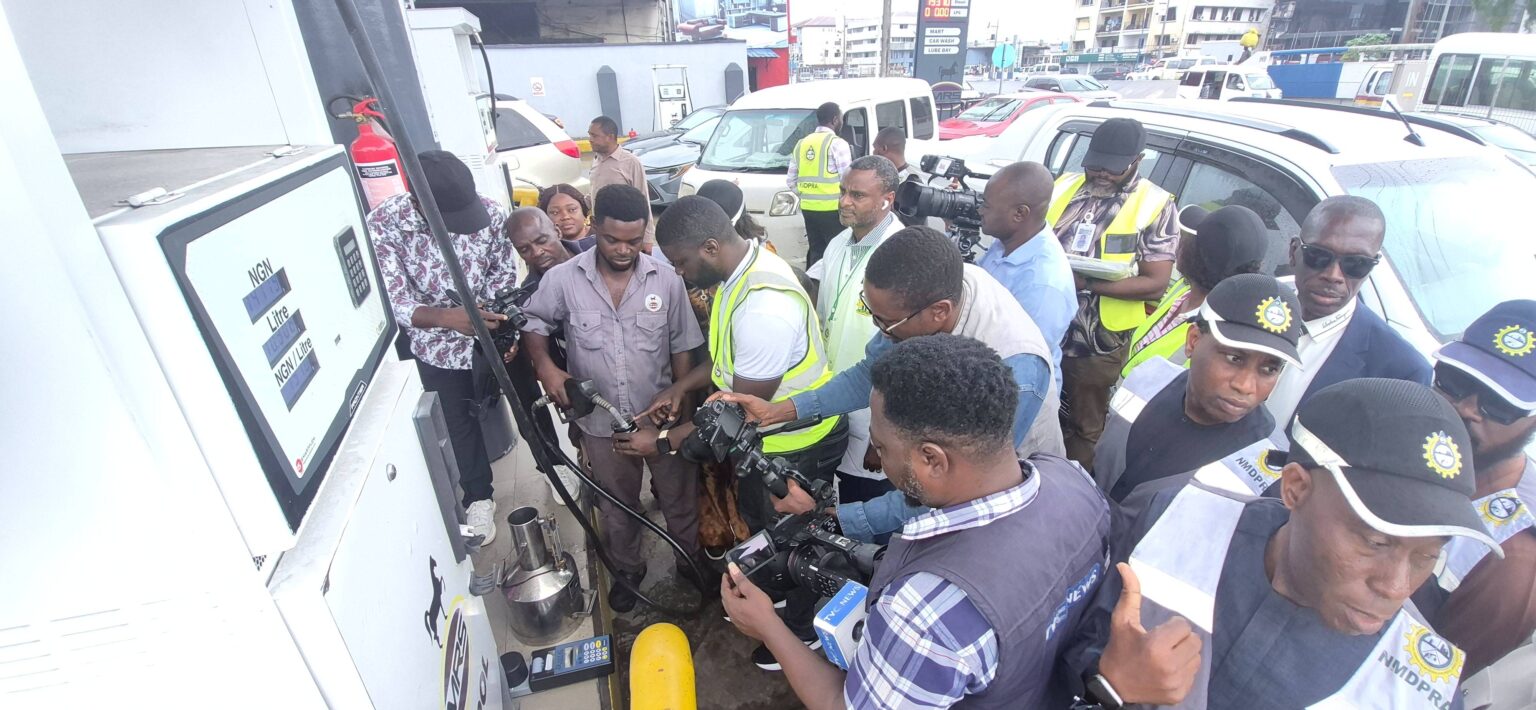
The Nigerian Midstream and Downstream Petroleum Regulatory Authority (NMDPRA) has sealed two filling stations in Port Harcourt over alleged under-dispensing of petrol to customers.
The enforcement action followed an inspection of filling stations in the city on Thursday, led by NMDPRA Chief Executive, Malam Farouk Ahmed.
The affected outlets, Stage Oil and MRS, located around the CFC area of Aba Road, were sealed following alleged breaches identified during the inspection.
Ahmed, who was represented during the exercise by NMDPRA Executive Director, Health, Safety, Environment and Community, Dr Mustapha Lamorde, said the authority would continue to sanction operators found violating petroleum retail regulations.
Regulator Checks Fuel Quantity and Quality
Ahmed said the surveillance exercise involved random sampling and on-the-spot screening to assess both the quality and quantity of petroleum products dispensed by retail outlets.
He said some filling stations were found to be under-dispensing and were immediately sealed.
“It is unfortunate that some filling station operators are still cheating customers, especially at a time when Nigerians are grappling with high fuel prices,” he said.
According to him, the affected outlets would face the full weight of regulatory sanctions as a deterrent to operators who deliberately tamper with dispensing meters.
Ahmed said the inspection produced mixed findings, with some outlets complying with regulations while others were found to be either over-dispensing or under-dispensing.
“The ultimate objective of this exercise is to ensure that consumers receive the quantity and quality of petroleum products they pay for,” he said.
NMDPRA Says Under-Dispensing Is Not Increasing
Despite the latest enforcement action, Ahmed said under-dispensing was not on the rise.
He attributed the reduction in such violations to regular surveillance of filling stations across the country.
“Our men and women are out there in the field. Their job, basically, is to go out for routine surveillance and check all these parameters,” he said.
He urged consumers to report suspected violations by filling stations through the NMDPRA’s website, social media platforms and official contact channels.
The latest enforcement highlights an issue of direct concern to motorists and households, particularly when retail fuel prices remain high and consumers expect to receive the full quantity displayed on dispensing pumps.
NMDPRA Expands Petroleum Testing Capacity
Beyond retail inspections, the NMDPRA is partnering with Bureau Veritas and Ace Energy and Power Solutions Ltd. to strengthen petroleum product quality testing.
Ahmed said the partnership would improve the authority’s regulatory oversight through capacity building, standardisation and staff training.
The collaboration is also expected to support the deployment of laboratory equipment and NMDPRA’s efforts to secure international accreditation for its testing facilities.
According to Ahmed, the authority operates nine laboratories strategically located across Nigeria for petroleum product testing and regulatory surveillance.
The Port Harcourt laboratory is currently being modernised as part of the first phase of NMDPRA’s laboratory development programme.
Other laboratories covered by the first phase are located in Lagos, Calabar and Warri, while the second phase is expected to extend laboratory development to the hinterland.
From Field Inspections to Laboratory Evidence
Ahmed said the authority was also digitalising its laboratories, with product certification, surveillance and compliance monitoring expected to become fully digitalised.
He said NMDPRA was moving towards greater reliance on laboratory-based evidence to support regulatory decisions and enforcement, alongside field surveillance.
The agency has upgraded existing laboratory equipment, calibrated the facilities and procured additional equipment for petroleum product analysis.
Ahmed said a sulphur analyser at the laboratory could measure sulphur content below 10 parts per billion.
He linked the testing capacity to Nigeria’s sulphur specification and the ECOWAS roadmap, which targets a 10 parts per million sulphur standard by 2030.
For consumers, the combination of pump inspections, product testing and laboratory modernisation is intended to strengthen oversight of both the quantity and quality of petroleum products sold at filling stations.
Atlantic Reports: Voices. People. Facts.
Written by
Atlantic Reports Admin
Comments
- Be the first to comment.