NUJ, Women’s Centre Seek Media Partnership to Promote Inclusion
By Atlantic Reports
The Nigeria Union of Journalists (NUJ), Federal Capital Territory (FCT) Council, has proposed a strategic media partnership with the Maryam Babangida National Centre for Women Development to promote women’s empowerment, inclusion and wider recognition of women’s contributions to national development.
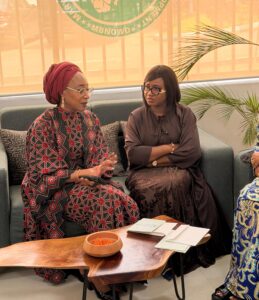
The council’s chairperson, Ms Grace Ike, made the proposal on Friday in Abuja during a courtesy visit to the centre’s Director-General, Dr Adedayo Benjamins-Laniyi, accompanied by members of the council’s delegation.
Ike, the council’s first female chairperson, said the visit was intended to establish a working relationship through which journalists could document women’s experiences, achievements and contributions more consistently.
The engagement was themed “Women in Journalism: Centring Women’s Stories, Voices and Contributions for National Development”, with emphasis on the place of women in Nigeria’s social, economic, cultural and political history.
Amplifying Overlooked Women’s Stories
Ike questioned why the contributions of many Nigerian women remained inadequately documented and underrepresented in the country’s public narrative.
She specifically highlighted grassroots and rural women, women in informal employment, women with disabilities and young women whose experiences often receive limited media attention.
“Where are the stories of grassroots women, rural women, women in informal work, women with disabilities and young women whose contributions rarely attract public attention?” she asked.
She said the Nigerian Women Hall of Fame, housed within the centre, should serve not only as a platform for recognising outstanding women but also as an archive preserving their experiences and contributions for future generations.
“How can young girls aspire if they do not see themselves reflected in the history of their country? We are ready to work with the centre to tell these stories responsibly and consistently,” Ike said.
She argued that greater visibility could help young women identify role models and better understand the range of opportunities available to them.
Journalism and Accountability
The NUJ chairperson described the media as an important influence on public opinion and policy, saying journalists had a responsibility to ensure that women’s voices were represented in discussions about governance, the economy, technology, security, education, health and climate change.
She also called for stronger reporting on whether government policies and institutional commitments were improving women’s lives.
“Are we explaining policies in clear language and following up on whether commitments improve women’s lives?” she asked.
Ike said women continued to face barriers to economic opportunities, leadership positions and professional advancement despite progress in some areas.
She proposed regular media features on women’s leadership, documentation of women’s histories, intergenerational dialogues and public discussions on empowerment, inclusion and digital participation.
Other proposals included more inclusive reporting on women in rural communities and women with disabilities, as well as professional training to equip women journalists with ethical, gender-sensitive reporting skills.
Ike also called for more opportunities for women journalists to participate in public affairs reporting and leadership within the media industry.
To support coordination, she said the council would designate a liaison officer to facilitate communication and help sustain activities under the proposed partnership.
Centre Proposes Five Areas of Collaboration
Responding, Benjamins-Laniyi welcomed the proposal and said the centre was prepared to formalise cooperation around shared priorities and measurable outcomes.
She urged journalists to consider gender and disability inclusion in their reporting assignments, stressing that representation should extend beyond symbolic gestures.
“Who is the woman in media with disability that you brought here to cover this event? Inclusion must be intentional, not symbolic,” she said.
The Director-General proposed five immediate areas of action: a formal media partnership framework, fireside chats every two months, gender-responsive journalism training, stronger institutional collaboration and data-driven accountability mechanisms to track progress.
The proposed framework could provide a structure for determining responsibilities, setting targets and assessing whether joint activities reach the women and communities they are intended to serve. Details of a formal agreement, funding arrangements and implementation timelines were not provided.
Turning Commitments into Measurable Results
Benjamins-Laniyi also invited the council to the forthcoming Women in Media Breakfast and activities marking the centre’s 35th anniversary, including the unveiling of a ramp and disability-friendly facilities.
The proposed partnership comes as both institutions seek to place women’s experiences more firmly within public debate and national development discussions.
Its impact will depend on whether the proposals translate into sustained reporting, accessible opportunities for women journalists, stronger documentation of women’s histories and consistent scrutiny of policies affecting women.
For communities whose experiences rarely receive sustained coverage, the central test will be whether their stories are not only told but also reflected in the decisions and public conversations that shape their lives.
Atlantic Reports: Voices. People. Facts.
Written by
Atlantic Reports Admin
Comments
- Be the first to comment.