Otti Presents ₦1.2 Trillion 2027 Budget to Abia Assembly, Allocates 80% to Capital Projects
By Atlantic Reports
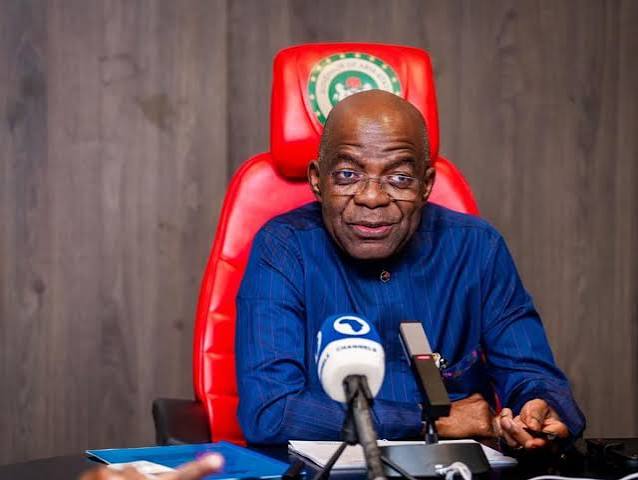
Abia State Governor, Alex Otti, has presented a proposed ₦1.2 trillion budget for the 2027 fiscal year to the State House of Assembly, with infrastructure development and economic growth taking a significant share of the planned expenditure.
The appropriation bill, tagged “Delivering Today, Energising Tomorrow”, was presented on Thursday in Umuahia for legislative consideration and approval.
The proposal allocates ₦960 billion, representing 80 per cent of the total budget, to capital expenditure, while ₦240 billion, or 20 per cent, is earmarked for recurrent expenditure.
According to Otti, the proposed budget represents an 18 per cent increase over the ₦1.016 trillion 2026 budget and a 648 per cent increase over the 2023 budget.
₦552.67 Billion Expected from Loans
Explaining the financing structure, the governor said ₦647.33 billion of the proposed expenditure would be funded through projected revenue, while the remaining ₦552.67 billion would come from concessional loans.
“The balance of N552.67 billion shall be sourced through concessional loans and committed strictly to infrastructure projects with regenerative value,” he said.
Otti projected Abia's Internally Generated Revenue (IGR) at ₦199.8 billion, expressing confidence that the amount would cover more than 80 per cent of the state's recurrent expenditure.
However, the governor acknowledged that the state had yet to meet its projected revenue target for the current fiscal year.
The substantial reliance on concessional borrowing places the proposed financing arrangements among the issues requiring close legislative scrutiny, particularly regarding repayment obligations, project selection and the expected economic returns from the investments.
Education and Healthcare Receive Priority
The governor said education would receive 20 per cent of the proposed budget, while healthcare would account for 15 per cent.
He explained that the allocations reflected his administration's commitment to human capital development and the strengthening of essential public services.
Under the sectoral distribution, the economic sector would receive 55 per cent of the budget, covering agriculture, works, transportation, power and other productive activities.
The social sector would receive 37.2 per cent, covering education, environmental management, sports, poverty alleviation and social protection.
The administrative sector was allocated 5.1 per cent, while ₦17.3 billion was earmarked for the law and justice sector.
Otti described the proposal as realistic and aspirational, saying it was designed to expand economic opportunities, improve living standards and protect vulnerable households.
He added that the budget was prepared with contributions from business leaders, development partners, members of the disability community, traditional rulers and other stakeholder groups.
Government Highlights Infrastructure Projects
Reviewing his administration's performance since assuming office in 2023, Otti recalled that his first budget, presented in December 2023, stood at ₦567.2 billion, with 84 per cent allocated to capital expenditure.
For 2025, the administration presented a ₦750 billion budget, allocating 82 per cent to capital projects.
On infrastructure, the governor said his administration had constructed more than 1,000 kilometres of roads across the state's 17 local government areas.
He also disclosed that construction was ongoing on more than 80 roads, covering over 200 kilometres in different communities.
In the healthcare sector, Otti said new tertiary medical facilities were being developed in Amachara and Umunnato, while the Abia State University Teaching Hospital in Aba was undergoing reconstruction and expansion.
He added that healthcare investments had supported workforce development, alternative energy provision and the acquisition of modern diagnostic equipment.
The governor further said several communities had regained electricity, while modern water schemes were being developed in urban and semi-urban areas. Some of the projects, he noted, were expected to be inaugurated before the end of the year.
Debt Reduction and Public Service Recruitment
Otti also claimed that his administration had reduced Abia's public debt profile by approximately 60 per cent compared with pre-2023 levels.
He said thousands of workers had been recruited, strengthening service delivery in the education and healthcare sectors.
According to him, the adoption of technology and capacity-building initiatives had also improved institutional performance.
However, the governor acknowledged that the state still had considerable development challenges to address.
“We are still far from our destination of choice, and I would like to acknowledge that we have yet to hit our projected revenue mark for the current fiscal year,” he said.
He expressed confidence that the state would achieve further milestones in infrastructure, healthcare, education, agriculture, workers' welfare and support for vulnerable groups.
Assembly Promises Detailed Budget Scrutiny
Responding to the presentation, the Speaker of the Abia State House of Assembly, Mr Emmanuel Emeruwa, assured the governor that lawmakers would discharge their constitutional responsibilities diligently.
Emeruwa commended the administration for the infrastructure development recorded since 2023 and pledged the Assembly's continued support for the state's development.
He, however, said the lawmakers would subject the proposed appropriation bill to detailed examination, including a line-by-line review before passage.
The Speaker also urged Ministries, Departments and Agencies (MDAs) to cooperate with the Assembly by making their officials available to defend their respective budget proposals whenever required.
He noted that the scrutiny process might require government officials to work with lawmakers beyond regular working hours to facilitate timely consideration and passage.
Borrowing and Revenue Performance Remain Key Issues
Beyond the size of the proposed budget, its implementation will depend heavily on the state's ability to generate projected revenue and secure the planned concessional financing.
The proposed ₦552.67 billion borrowing component represents a substantial share of the overall expenditure. Its impact will depend on the terms of the loans, the projects financed and the capacity of those investments to generate lasting economic and social benefits.
The Assembly's scrutiny will therefore be important in establishing how the proposed funds will be raised, allocated and monitored.
The timely passage of the budget, Otti said, would enable early implementation and provide greater certainty for investors, development institutions and other organisations interested in economic opportunities in Abia State.
The 2027 appropriation bill is awaiting consideration and approval by the Abia State House of Assembly.
Atlantic Reports: Voices. People. Facts.
Written by
Atlantic Reports Admin
Comments
- Be the first to comment.