Parents Urged to Speak Mother Tongues at Home to Prevent Language Loss
By Atlantic Reports
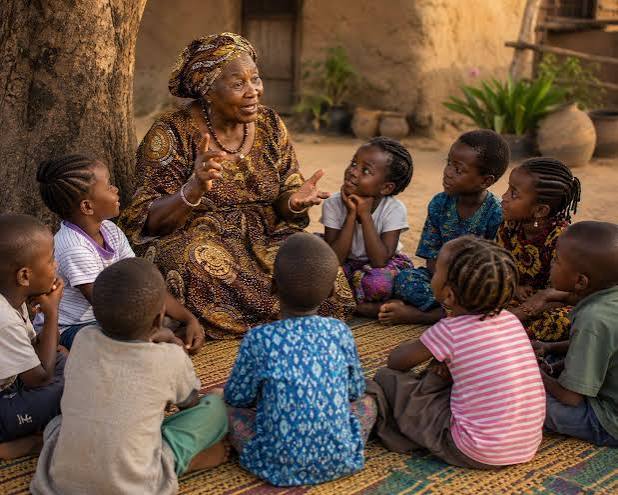
The Chief Executive Officer of Save Our Heritage Initiative (SOHI), Ms May Ikokwu, has urged Nigerian parents to make indigenous languages part of everyday family communication to prevent their gradual disappearance.
Ikokwu made the appeal on Wednesday in Abuja during the launch of her books, Akuko Ifo si N’Alaigbo (Nke Abuo), translated as Folktales from Igbo Land, Volume II, and Ilu, Gwa m Gwam Gwa m Na Ntabi Ire (Nke Abuo).
She called for collective efforts to preserve indigenous languages, particularly Igbo, stressing that families have an important role in passing linguistic and cultural knowledge to younger generations.
According to her, speaking mother tongues at home should become a deliberate practice rather than an occasional cultural activity.
Author raises concern over declining Igbo language use
Ikokwu said her concern about the future of the Igbo language developed during her professional work as a chemist and plastic engineer.
She explained that while working as a consultant on climate change, she became concerned about the possibility of the language losing its speakers and eventually disappearing.
“I am a chemist and a plastic engineer.
“In the course of my consultancy on climate change I discovered that the Igbo language will likely die in the next fifty years and I stopped my consultancy to help in stopping it from dying,” she said.
Her warning reflects wider concerns about the declining transmission of indigenous languages, particularly where younger generations increasingly rely on dominant national and international languages in education, social interaction and digital communication.
However, the projection she cited was not accompanied by a specific research source or methodology at the book launch.
Ikokwu maintained that preserving a language was inseparable from protecting the identity and heritage of the people who speak it.
“We should start preserving our language by knowing and promoting our dressings, foods, traditions,” she said.
She described returning to the mother tongue as an investment in the future, urging families to preserve cultural knowledge through everyday practices.
Book reviewer calls on parents to take responsibility
Earlier, the book reviewer, Dr Ada Okwuosa, urged parents to take a more active role in ensuring that their children understand and speak their indigenous languages.
Okwuosa commended Ikokwu for using literature to contribute to the preservation of Igbo language and cultural heritage.
She stressed that losing a language could also mean losing important aspects of a community's history, values and traditional knowledge.
Her remarks highlighted the importance of family participation alongside formal cultural preservation initiatives.
Traditional ruler commends cultural preservation effort
The Chairman of the occasion and Onowu of Okija Ancient Kingdom, Chief Otis Anyaeji, also praised the author for producing the books.
He said the publications could contribute to reorienting younger generations towards indigenous languages and encouraging greater appreciation of their cultural heritage.
The books' focus on Igbo folktales and proverbs provides a literary platform for preserving expressions, stories and traditional wisdom that might otherwise become less familiar to younger speakers.
Preserving languages beyond the home
The appeal comes amid broader concerns about the future of indigenous languages in Nigeria, where many children grow up using English more frequently than their ancestral languages.
While speaking indigenous languages at home remains important, sustainable preservation also requires support from schools, publishers, cultural institutions, broadcasters and digital platforms.
The documentation of folktales, proverbs, songs and oral histories can help preserve linguistic knowledge, while children's books and educational materials can encourage younger generations to read and write in their mother tongues.
Technology also offers opportunities to expand access through digital dictionaries, audio recordings, language-learning applications and online storytelling.
For Igbo and other Nigerian languages, the central challenge is ensuring that preservation goes beyond ceremonial celebrations and becomes part of everyday communication, education and cultural life.
Atlantic Reports: Voices. People. Facts.
Written by
Atlantic Reports Admin
Comments
- Be the first to comment.