Partners Seek Increased Funding to End Open Defecation in Nigeria by 2030
By Atlantic Reports
Development partners have urged the Federal Government and other stakeholders to increase investment in sanitation, strengthen collaboration and intensify community engagement to eliminate open defecation in Nigeria by 2030.
Representatives of the United Nations Children's Fund (UNICEF), World Health Organisation (WHO), Sightsavers Nigeria and Self Help Africa made the call on Tuesday at the fourth National Sanitation Retreat in Abuja.
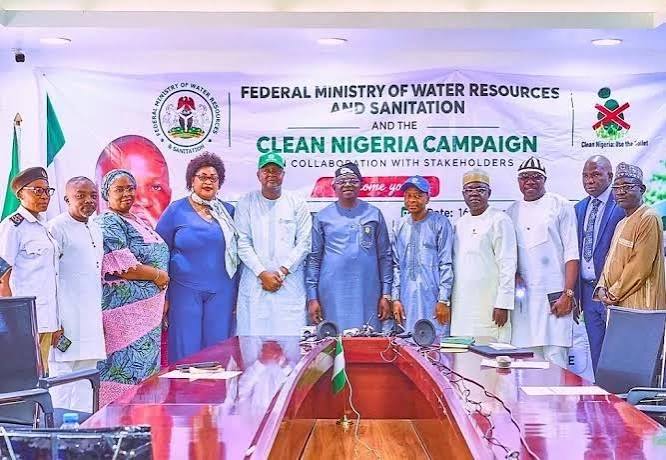
The retreat was organised by the Federal Ministry of Water Resources and Sanitation in collaboration with development partners to accelerate progress towards improving sanitation nationwide.
Only 184 local government areas attain ODF status
UNICEF Nigeria's Public Health and Water, Sanitation and Hygiene (WASH) Leader, Jolly Ann Maulit, disclosed that 184 of Nigeria's 774 local government areas had attained open defecation-free (ODF) status.
She identified Jigawa and Katsina as the first states to achieve the milestone but noted that approximately 48 million Nigerians still practised open defecation.
Maulit stressed that achieving ODF status must go beyond declaring communities free of open defecation.
She called for proper use and maintenance of toilets, as well as the integration of sanitation priorities into government policies and budgets.
She also warned against communities relapsing into open defecation after attaining the status, emphasising the need for continuous monitoring and public awareness.
WHO warns of public health risks
The WHO National Technical Officer for Public Health and Environment, Dr Edwin Isotu-Edeh, described open defecation as a serious public health concern that increases the risk of cholera and other diseases, particularly in vulnerable communities.
He argued that sanitation should become an established part of everyday life rather than an occasional public health campaign.
Isotu-Edeh also expressed concern over handwashing practices, stating that only four per cent of the population consistently practised hand hygiene despite widespread awareness of its importance.
He called for handwashing to be integrated into the Clean Nigeria Campaign and estimated that about ₦4 trillion would be required to sustain sanitation interventions.
Sightsavers calls for cross-sector collaboration
The Country Trachoma Coordinator of Sightsavers Nigeria, Dr Teyil Wamyil-Mshelia, said the organisation was working with stakeholders in the water resources, environment, education and information sectors to promote behavioural change.
She emphasised that no single organisation could address the sanitation challenge independently.
“We can't work alone. We believe in collaboration and putting resources together because when we put our hands together, we go further,” she said.
Her remarks highlighted the importance of coordinated action across sectors that influence sanitation practices, public awareness and access to essential facilities.
Community participation critical to 2030 target
The Country Director of Self Help Africa, Joy Aderele, urged stakeholders to strengthen community mobilisation and monitoring to prevent communities from returning to open defecation.
She said achieving the 2030 target would require shared responsibility and sustained commitment from government institutions, development partners and local communities.
Funding and implementation remain major challenges
The figures presented at the retreat underline the scale of Nigeria's sanitation challenge. With approximately 48 million people still practising open defecation, reaching the 2030 target will require more than awareness campaigns and declarations of ODF status.
Sustained investment in accessible toilets, water supply, sanitation infrastructure, maintenance and behavioural change will be essential.
The proposed ₦4 trillion funding requirement also raises questions about financing commitments, budgetary allocations and how resources will reach communities with the greatest sanitation needs.
For rural and underserved communities, progress will depend on whether sanitation programmes deliver facilities that people can use and maintain, rather than temporary interventions that fail to produce lasting behavioural change.
Atlantic Reports: Voices. People. Facts.
Written by
Atlantic Reports Admin
Comments
- Be the first to comment.