Peter Obi Pledges Accountability, 10,000MW Power Supply and Security Reforms if Elected
By Atlantic Reports
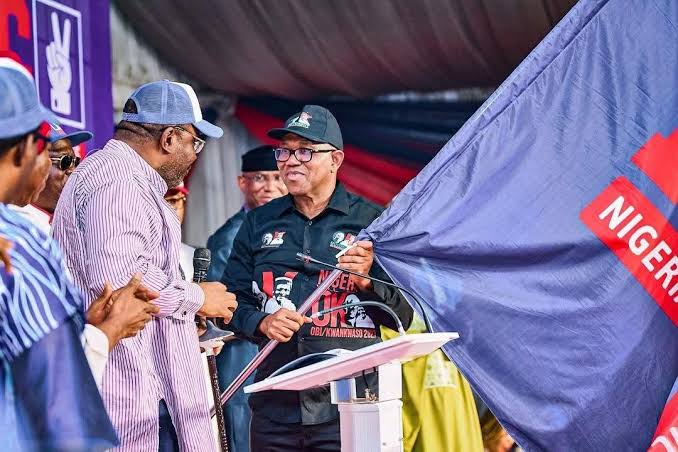
Presidential candidate of the Nigeria Democratic Congress (NDC), Peter Obi, has pledged that his proposed government would focus on delivering measurable results rather than offering explanations for failures if elected in 2027.
Obi made the commitment on Friday, November 27, 2026, during a town hall meeting with business leaders, academics, artisans and residents in Aba, Abia State.
He said he and his political associate, Rabiu Kwankwaso, intended to establish an administration built around accountability, public service and the effective use of public resources.
“Kwankwaso and I want to form a government that will not give you excuses.
“We already know the excuses, and we will tackle the challenges,” he said.
Obi added that his proposed administration would fight corruption and ensure public funds were used for the benefit of citizens.
Education, healthcare and public investment
The former Anambra governor criticised what he described as Nigeria's growing dependence on borrowing without sufficient productive investment.
He contrasted previous borrowing for major infrastructure projects, including the Kainji Dam, with what he characterised as the country's current pattern of borrowing without corresponding development outcomes.
Obi also raised concerns about poverty and youth unemployment, arguing that education and healthcare should receive greater attention in national spending priorities.
He said a new administration would invest in both sectors and pursue policies aimed at improving opportunities for Nigerians.
However, he did not provide detailed funding proposals, implementation timelines or specific targets for the education and healthcare commitments during the town hall meeting.
Promises 10,000MW electricity generation
Electricity was another major focus of Obi's address.
He criticised the current administration over the country's persistent power challenges and promised that his government would generate, transmit and distribute at least 10,000 megawatts of electricity.
“We will generate, transmit and distribute at least 10,000MW and any money we borrowed must be for investment,” he said.
The proposed target would require substantial investment across power generation, transmission and distribution infrastructure.
Obi did not outline how the target would be financed, the proposed implementation schedule or how his administration would address longstanding challenges involving the electricity value chain.
Aba positioned as proposed export and economic hub
Obi also promised to develop Aba into an export hub, linking its economic activities with Port Harcourt to create a wider commercial and industrial centre within the first few years of his proposed administration.
The pledge places emphasis on the commercial relationship between Abia and Rivers states, particularly the potential for manufacturing, trade, logistics and access to export markets.
Aba has a strong reputation for manufacturing and small-scale enterprise, but achieving the proposed regional hub would require improvements in infrastructure, electricity supply, transport connections, financing and access to markets.
The candidate did not provide specific details of the proposed integration or identify the projects required to deliver it.
Security and national unity
On security, Obi said his administration would not tolerate the continued abduction of schoolchildren and other citizens.
“We cannot be in government, when school children and others would be kidnapped and taken into the bush.
“We will be in that bush with them,” he said.
He also promised to pursue national unity, arguing that Nigeria needed leadership capable of bringing its diverse communities together.
Recalling a visit to Minna, Niger State, he cited the historical connections between Nigerian political figures Nnamdi Azikiwe and Chukwuemeka Ojukwu, both of whom were born in Zungeru.
He described his vision of Nigeria as a country where people from disadvantaged backgrounds could rise through opportunity and hard work.
Obi further argued that the presidency required energy and commitment, saying the office should not become a retirement destination for leaders.
Campaign promises face questions of delivery
Obi's address in Aba outlined several priorities, including electricity, security, education, healthcare, anti-corruption and regional economic development.
However, translating these commitments into policy would require clear financing arrangements, institutional reforms, implementation plans and measurable performance targets.
The proposed 10,000MW electricity supply, in particular, raises questions about investment requirements, infrastructure capacity and coordination across the power sector. The proposed Aba-Port Harcourt economic hub would similarly depend on practical plans for transport, industrial development and trade.
As the 2027 elections approach, voters will have an opportunity to examine the candidates' proposals alongside their records, policy details and explanations of how their promises would be funded and delivered.
Atlantic Reports: Voices. People. Facts.
Written by
Atlantic Reports Admin
Comments
- Be the first to comment.