Petrol Discount Fails to Ease Transport Costs as Abuja Motorists Report Limited Benefits
By Atlantic Reports
The Federal Government's 30-day petrol discount initiative has failed to deliver significant relief to many motorists and commuters in the Federal Capital Territory (FCT), as transportation costs remain high despite a ₦66 reduction per litre.
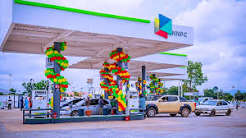
The scheme, introduced on October 31, 2026, allows motorists to purchase discounted petrol through retail outlets operated by the Nigerian National Petroleum Company Limited (NNPCL).
However, access to the discount has been restricted by technical challenges, particularly network failures and difficulties downloading or activating the NNPCL application required to participate.
Findings reported by the News Agency of Nigeria (NAN) indicate that only motorists who successfully accessed the application could purchase petrol at the discounted rate.
Finance Minister and Coordinating Minister of the Economy, Mr Taiwo Oyedele, had explained that the arrangement was not a return to petrol subsidy. He also assured that public transport operators would receive priority under the intervention.
Despite the government's assurances, motorists have expressed differing opinions about the scheme's effectiveness.
Network challenges limit access
Some motorists who successfully accessed the discount acknowledged its benefits but complained about the difficulties involved in purchasing the product.
A Jabi resident, Kingsley Okachi, commended the Federal Government for introducing the initiative, although he said long queues sometimes delayed access to discounted petrol.
Another motorist, Abdulrahim Malik, said network challenges prevented many Nigerians from benefiting.
Malik explained that he downloaded the application and followed the required procedures before purchasing petrol at ₦1,339 per litre.
However, others said they were unable to access the scheme altogether.
Transport fares remain high
For commuters, the central concern is that cheaper petrol has not translated into lower transportation costs.
Chike Agwu, a resident of Dei-Dei, said the intervention had not improved the affordability of public transportation.
He said commuters continued to struggle with rising transport fares despite the government's announcement.
"The transportation fare keeps increasing and there has not been any difference," he said.
A Bwari resident, Dele Babafemi, also said he could not access the application and had yet to observe any meaningful improvement in transportation costs.
He expressed concern that commuters continued to face difficulties accessing affordable transportation, with some struggling to secure available vehicles because of high fares.
Economist questions sustainability of scheme
An economist and public affairs analyst, Dr Aliyu Ilias, described the initiative as cumbersome, particularly for commercial drivers who may struggle with the application process.
Ilias said he personally activated the application to understand how the scheme operated but found the implementation process too complicated for the average taxi driver.
He questioned how the government intended to ensure that the savings from discounted petrol would translate into reduced transport fares.
"The discount should translate into actual reductions in transport fares for commuters, but how will they monitor and enforce implementation?
"I wonder how commercial drivers will genuinely reduce fares following the discount.
"For instance, in a journey that previously cost ₦500, I don't know if commuters will pay ₦400," he said.
He warned that without effective monitoring and enforcement, the initiative could become more of a public relations exercise than a practical intervention that improves household welfare.
Ilias called for a critical review of the scheme and urged the government to prioritise sustainable energy alternatives, particularly Compressed Natural Gas (CNG).
According to him, long-term energy security requires policies that reduce dependence on short-term interventions while making transportation more affordable.
He also stressed that reducing transport costs was essential to controlling the prices of food and other essential commodities, noting that cheaper transportation could lower the cost of moving agricultural produce from farms to markets.
Calls for broader economic intervention
Another economist, Gabriel Oyetola, urged the Federal Government to consider additional measures to reduce transportation costs and ease the economic pressure on Nigerians.
Similarly, Abubakar Yahaya, a resident of Dutse, called for a comprehensive review of the intervention, arguing that the government needed to adopt measures that would provide more direct relief to citizens.
He said the combined effects of economic hardship and expensive transportation had forced some workers to reduce the number of days they travelled to work.
The concerns highlight a wider challenge facing the government's intervention: reducing the price of fuel at selected retail outlets does not automatically guarantee lower transport fares.
For the scheme to produce meaningful benefits, questions surrounding accessibility, implementation, commercial transport participation and enforcement will need to be addressed.
Ultimately, its success will depend not only on how much motorists save at filling stations but also on whether ordinary Nigerians experience measurable reductions in their daily transportation expenses.
Atlantic Reports: Voices. People. Facts.
Written by
Atlantic Reports Admin
Comments
- Be the first to comment.