Pi-CNG Urges Motorists to Use Accredited Conversion Centres as CNG Adoption Grows
By Atlantic Reports
Government warns against unauthorised conversions
The Presidential Initiative on Compressed Natural Gas and Electric Vehicles (Pi-CNG & EV) has urged motorists to patronise accredited conversion centres to ensure that CNG systems are properly installed and meet safety requirements.
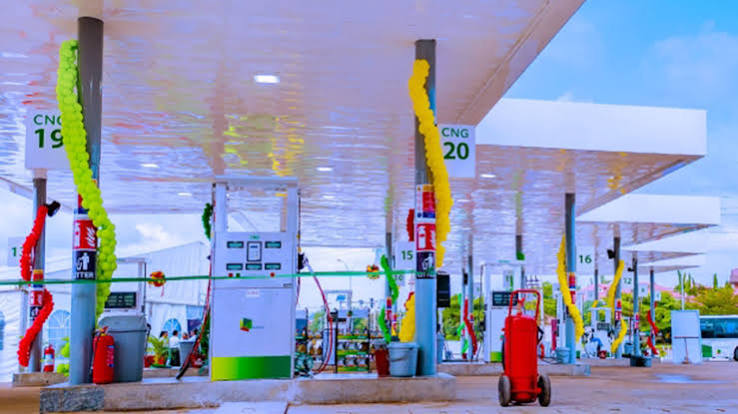
The initiative’s Head of Brand and Communications, Onyekachi Eke, gave the advice on Thursday, 26 November 2026, during a media excursion to Rolling Energy Limited, a CNG conversion centre and refuelling station in Jahi, Abuja.
The excursion was organised to mark the United Nations World Sustainable Transport Day and provide journalists with practical knowledge of CNG conversion, refuelling procedures and the electric vehicle ecosystem.
Eke said the government was working to expand access to cleaner and more affordable transport through the adoption of CNG and electric vehicles.
She urged motorists to consult the list of approved conversion centres and refuelling stations available on the initiative’s website, www.pci.gov.ng.
According to her, CNG can offer fuel-cost and environmental benefits, but proper installation by trained technicians remains essential to vehicle safety.
How vehicle conversion works
Julius Yaama, Technical Process Manager at Rolling Energy Limited, explained that CNG conversion involves installing additional components in petrol-powered vehicles to enable them to operate on both petrol and gas.
He said the process allows motorists to switch between the two fuel systems without removing the vehicle’s original manufacturer-installed components.
The conversion system includes an electronic control unit, high-pressure and low-pressure pipes, a pressure reducer, refill valve, injectors and emulation cables.
Yaama stressed that a thorough inspection must be carried out before installation to identify existing mechanical faults.
Vehicles with defective spark plugs, ignition coils or other engine problems, he said, should not be converted until the faults are corrected. Otherwise, the same problems could persist after installation.
He also emphasised the importance of proper calibration to ensure that the petrol and CNG systems work effectively.
On vehicle suitability, Yaama said most petrol-powered vehicles could be converted, although some direct-injection and turbocharged engines require specialised conversion kits.
Conversion costs and maintenance requirements
Yaama said the centre carried out between three and four vehicle conversions daily, with prices ranging from ₦600,000 to ₦750,000, depending on engine capacity.
Available cylinder options include 65-litre and 75-litre units, as well as larger 80-litre and 100-litre capacities.
He advised motorists to maintain their converted vehicles through periodic servicing, including attention to spark plugs and the Manifold Absolute Pressure (MAP) sensor.
He also said CNG cylinders could be transferred to another vehicle through a conversion centre when an owner sold a converted car.
The transfer, however, should be handled by qualified professionals to ensure that the installation remains compliant with safety requirements.
Improvised cylinders raise safety concerns
Addressing concerns about CNG-related explosions, Yaama attributed reported incidents to unauthorised modifications, particularly the attachment of improvised cylinders to approved storage systems.
He warned motorists against using uncertified storage equipment, explaining that CNG cylinders are specially manufactured to withstand high pressure.
He added that the centre inspected vehicle boots for rust and assessed suspension systems before conversion because the cylinders add weight and require adequate structural support.
Motorists with weak suspension systems, he said, may need to strengthen their springs and shock absorbers before installation.
The advice highlights the importance of vehicle-specific assessment rather than assuming that every petrol-powered car is automatically suitable for conversion.
Motorists report savings but complain about queues
A motorist, Adeolu Bamidele, said switching to CNG had reduced his vehicle running costs despite what he described as a slight difference in engine performance.
He said the lower cost of gas compared with petrol had made the alternative attractive amid rising fuel expenses.
However, Bamidele identified long queues at refuelling stations as a major obstacle to wider adoption.
He claimed that some stations had between 150 and 200 vehicles waiting to refill, urging the government to address the congestion as more motorists converted their vehicles.
His account points to a practical challenge facing the transition: conversion centres alone cannot sustain adoption without sufficient and accessible refuelling infrastructure.
Safety and infrastructure must accompany expansion
The Pi-CNG initiative’s campaign reflects the growing need to balance the promotion of alternative fuels with technical standards, consumer protection and adequate infrastructure.
Accredited conversion centres can help reduce risks associated with poor installation, but motorists also need clear information about approved equipment, inspection requirements, maintenance schedules and procedures for reporting safety concerns.
The government’s approved-centre list is an important starting point. However, effective oversight will also require regular inspections of conversion facilities, enforcement against unauthorised modifications and transparent reporting of safety incidents.
The reported queues at refuelling stations raise another question about whether infrastructure expansion is keeping pace with vehicle conversions.
For CNG to become a dependable alternative for Nigerian motorists, affordability must be matched by safe installations, reliable fuel supply, accessible refuelling facilities and effective regulation.
Atlantic Reports: Voices. People. Facts.
Written by
Atlantic Reports Admin
Comments
- Be the first to comment.