RCCG Pastor Urges Nigerian Leaders to Use Power to Protect Citizens
By Atlantic Reports
Pastor David Okoror, Zonal Pastor of the Redeemed Christian Church of God (RCCG), Everlasting Light Parish, Abuja, has urged political leaders and public officeholders to treat power as a responsibility to protect citizens rather than an instrument of exploitation.
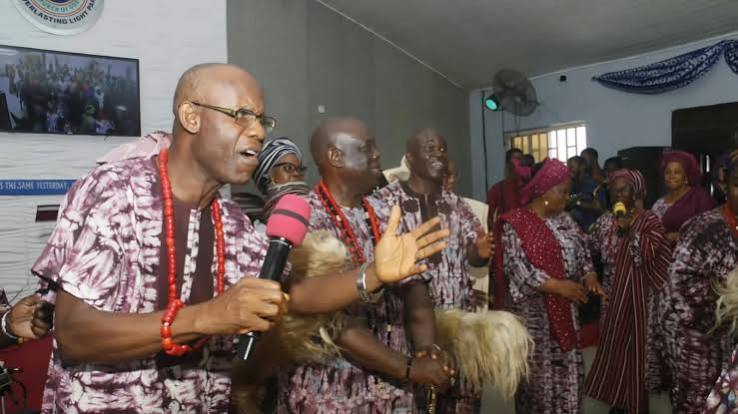
Okoror made the call on Sunday during the church’s Yoruba Cultural Sunday celebration in Abuja, themed “Our Culture Is Not Evil and Should Not Die.”
The cleric, who is also a security expert, acknowledged the challenges confronting Nigeria, including insecurity, unemployment and hunger, but encouraged citizens to remain grateful to God despite the difficulties.
“Nigeria currently, a lot of things seem to be very wrong. We have challenges everywhere. But the Bible commands us in 1 Thessalonians 5:18 that in all things we should give thanks,” he said.
He added that Nigeria’s continued existence as a united country was, in his view, a reason for gratitude and hope.
Power Should Protect Citizens, Pastor Says
Okoror urged those in positions of authority to use their influence to improve citizens’ welfare and safeguard their rights.
“My message to government and those who hold power is that they should use power and authority as a shield, as a protection, as a covering for the people,” he said.
He identified protection from insecurity, unemployment, hunger and destitution as central responsibilities of those entrusted with public authority.
“Covering from insecurity, unemployment, hunger and destitution. That is the purpose of power,” he said.
The pastor warned that the abuse of authority could instead deprive citizens of their rights and resources.
“When you use power as a sword, you use it to dispossess the people, you steal from the people, you take away their rights,” he said.
Despite the challenges, Okoror expressed optimism about Nigeria’s future, urging citizens to maintain their faith and hope.
Yoruba Cultural Celebration Promotes Unity
Okoror said the church organised the cultural celebration to recognise the contributions of Yoruba people to Nigeria’s development and demonstrate how cultural diversity could strengthen national unity.
He noted the contributions of Yoruba people to education, medicine, industry and other professional fields in Nigeria and internationally.
The cleric also pointed to the participation of people from different ethnic backgrounds at the event as an example of how cultural differences could bring communities together.
“Today we are celebrating the Yoruba culture but the Igbo man is here, the Edo man is here,” he said.
“I am not a Yoruba person but I am wearing agbada and a Yoruba cap. We are going to eat amala, gbegiri and Yoruba food. That is how we promote unity.”
He said such celebrations could encourage Nigerians to appreciate one another’s traditions rather than allow ethnic differences to become sources of division.
Church Says Christianity Does Not Require Abandoning Culture
The parish pastor, Otunba Oreoluwa Ariba of the Ariba dynasty, said the celebration was an expression of gratitude to God through the preservation and appreciation of Yoruba heritage.
Ariba compared the event with the Oju de Oba festival in Ogun State, where he comes from, describing cultural expression as an opportunity to offer God praise.
“When you praise God, you move Him from His throne. It is the easiest way to get victory, to get answers to prayers and for God to fight your battles,” he said.
He explained that the church incorporated Yoruba language, traditional attire and indigenous music into the service to demonstrate that Christians could maintain their cultural identity while upholding their religious beliefs.
Academic Calls for Preservation of Yoruba Heritage
Dr Bolaji Mejabi, a lecturer at Baze University, Abuja, and chairman of the event’s organising committee, said the celebration was designed to challenge misconceptions about African culture and encourage Nigerians to preserve valuable traditions.
Mejabi argued that negative portrayals of African traditions had contributed to the abandonment of cultural practices, some of which he said were now receiving renewed appreciation in other parts of the world.
“Our culture is not evil at all. There are some practices we have to modernise, but everything should still give glory to God,” he said.
He expressed concern that some Yoruba children could no longer speak their indigenous language, greet elders appropriately or bear names reflecting their cultural heritage.
Mejabi highlighted the Omoluabi ethos, which places emphasis on integrity, respect, love and unity, as a source of values that could contribute to Nigeria’s social and moral development.
“Yoruba culture is all about love, unity and respect. We respect our elders and show love. If we revive these values in our homes and schools, it will reflect in governance,” he said.
He urged parents to teach their children Yoruba language, appropriate greetings, traditional dressing and other positive cultural practices, stressing that cultural preservation should begin at home.
He also called for cooperation among families, schools and religious institutions to ensure that younger generations remained connected to their heritage.
Culture, Faith and National Identity
The celebration featured cultural dance, drama, gift presentations and traditional delicacies.
The event brought together religious and cultural expressions around a shared message: that cultural heritage can be preserved while people maintain their religious convictions and respect the traditions of others.
The speakers also linked cultural values to wider questions of national development, including leadership, public responsibility and social cohesion.
For Nigeria, where communities maintain diverse languages, customs and traditions, the challenge is to preserve cultural knowledge while encouraging mutual respect and equal citizenship.
Atlantic Reports: Voices. People. Facts.
Written by
Atlantic Reports Admin
Comments
- Be the first to comment.