Recognising the Warning Signs of Unhealthy Behaviour
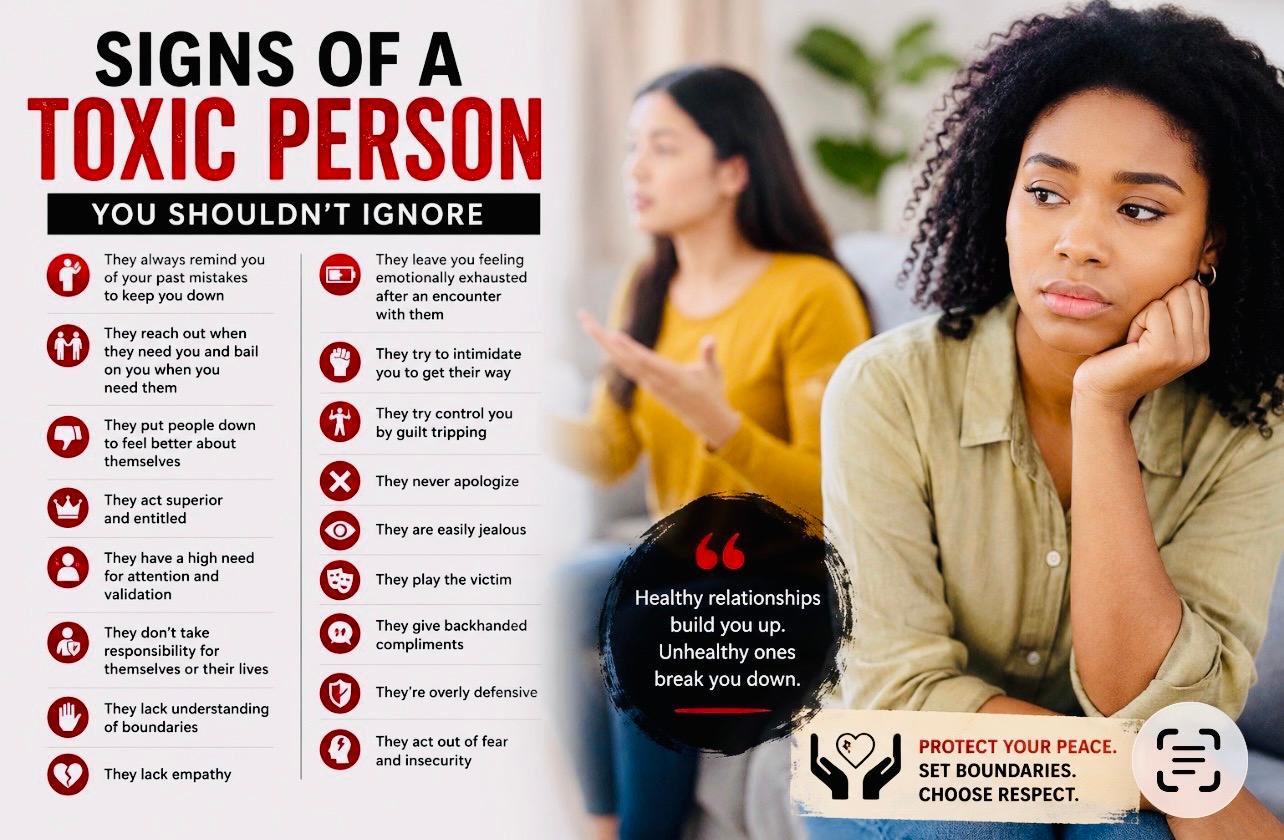
When a Relationship Drains You: Recognising the Warning Signs of Unhealthy Behaviour
Not every difficult person is toxic—but some behaviours can slowly damage your emotional well-being.
By Atlantic Reports LifeStyle Editor.
We all encounter difficult people.
Some are demanding. Others are stubborn, critical, or simply going through a difficult season in life. But there are times when certain patterns of behaviour become so persistent that they leave us feeling anxious, emotionally drained, or questioning our own worth.
Recognising these patterns is not about judging people. It is about protecting our mental and emotional well-being while building healthier relationships based on mutual respect.
Here are some behaviours that should not be ignored when they become a consistent pattern.
They Keep You Trapped in Your Past
Rather than encouraging your growth, they repeatedly remind you of old mistakes, failures, or embarrassing moments. Instead of helping you move forward, they use your past to keep you feeling small or guilty.
Healthy relationships allow people to learn, grow, and change.
They Only Show Up When They Need Something
They call when they need help, money, advice, or support. But when you face your own struggles, they become unavailable or disappear altogether.
Healthy relationships involve mutual care, not one-sided dependence.
They Put Others Down to Lift Themselves Up
Some people build their confidence by belittling others through ridicule, gossip, or constant criticism.
True confidence does not require someone else's humiliation.
They Believe the Rules Don't Apply to Them
An exaggerated sense of superiority or entitlement often shows itself in how a person treats others. They expect special treatment while dismissing the needs or opinions of those around them.
Respect is earned through character, not demanded through status.
They Constantly Seek Attention and Validation
Everyone appreciates encouragement. But when a person's self-worth depends entirely on admiration, they may constantly seek attention while overlooking the feelings and achievements of others.
They Rarely Accept Responsibility
Nothing is ever their fault.
Someone else is always to blame—family, friends, colleagues, society, or circumstances.
Personal growth begins with accountability.
They Ignore Healthy Boundaries
Healthy relationships respect personal space, privacy, time, and emotional limits.
People who repeatedly ignore boundaries often create stress, conflict, and emotional exhaustion.
They Struggle to Show Empathy
Empathy is the ability to understand another person's feelings.
When someone consistently dismisses your pain, minimises your experiences, or shows little concern for how their actions affect others, the relationship can become emotionally harmful.
You Feel Drained After Every Interaction
One of the clearest warning signs is how you feel after spending time with someone.
Do you leave feeling encouraged—or emotionally exhausted?
Healthy relationships should not consistently leave you feeling depleted.
They Use Fear or Intimidation
Whether through anger, threats, or manipulation, some people attempt to control others by creating fear rather than earning trust.
Respect cannot grow where intimidation exists.
They Use Guilt to Control You
Phrases such as "If you really cared..." or "After everything I've done for you..." may be used to pressure people into doing things against their better judgment.
Healthy relationships rely on honest communication, not emotional manipulation.
They Rarely Apologise
Everyone makes mistakes.
The difference is whether they are willing to admit them.
A sincere apology reflects maturity, humility, and respect.
They Are Consumed by Jealousy
Persistent jealousy can damage trust and create unnecessary conflict.
Instead of celebrating your success, they may resent it or try to diminish your achievements.
They Always See Themselves as the Victim
Life is unfair at times. But when someone refuses to acknowledge their own role in repeated conflicts, meaningful change becomes difficult.
Their Compliments Leave You Feeling Worse
Backhanded compliments often sound positive but carry hidden criticism.
Instead of building confidence, they quietly undermine it.
They Become Defensive Over Everything
Constructive feedback is part of healthy relationships.
People who react to every concern with anger, denial, or blame often make honest communication impossible.
Fear and Insecurity Drive Their Behaviour
Many unhealthy behaviours are rooted in fear, insecurity, or unresolved emotional pain.
Understanding this does not excuse harmful behaviour—but it reminds us that compassion and healthy boundaries can exist together.
A Final Thought
No one displays perfect behaviour all the time. We all have moments of weakness, insecurity, or poor judgment.
What matters is whether someone is willing to reflect, accept responsibility, apologise when necessary, and grow.
Healthy relationships are built on trust, empathy, accountability, respect, and mutual support.
If a relationship consistently leaves you feeling controlled, diminished, or emotionally exhausted, it may be time to set healthier boundaries—or seek guidance from trusted friends, family members, or a qualified mental health professional.
Because protecting your peace is not selfish.
It is an essential part of living a healthy life.
Atlantic Reports
Voices. People. Facts.
Written by
Atlantic Reports Admin
Comments
- Be the first to comment.