Russia-Africa Summit: Media Leaders Call for Stronger Journalism Standards to Combat Disinformation
By Atlantic Reports
Media leaders from Africa and Russia have called for greater collaboration, stronger editorial standards and investment in professional training as journalism confronts growing challenges from artificial intelligence, disinformation and declining public trust.
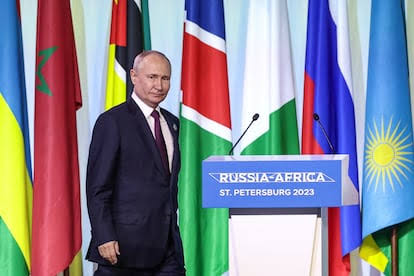
The call emerged from a high-level media dialogue held during the third Russia-Africa Summit in Moscow from October 28 to 29, where participants examined the changing media landscape and the responsibilities of journalists in an increasingly digital information environment.
The discussions focused on the theme, “Rethinking the Challenges Facing Modern Media”, with participants warning that the rapid expansion of digital platforms has made it increasingly difficult for audiences to distinguish credible journalism from fabricated or misleading content.
Media sovereignty and the struggle against misinformation
The discussions reflected a broader ambition of the summit to strengthen Africa’s position in global information exchange, challenge long-standing colonial narratives and improve the international visibility of African perspectives.
Participants argued that African media organisations needed stronger institutional capacity, access to reliable information sources and greater control over the production and distribution of stories about their communities.
They also identified audience fragmentation, censorship, insecurity, declining trust and the misuse of artificial intelligence as major obstacles to responsible journalism.
The participants warned that these challenges could deepen information divisions if media organisations failed to strengthen verification systems and adapt their editorial practices to emerging technologies.
They called for international cooperation to address disinformation, while emphasising the need for journalists to maintain professional independence and credibility.
Zakharova advocates collective action
Maria Zakharova, spokesperson and director of the Information and Press Department of Russia’s Ministry of Foreign Affairs, stressed the importance of cooperation among media organisations in responding to disinformation.
She said meaningful information exchange depended on having effective channels for sustained media collaboration.
“Therefore, tackling challenges modern media face must be done collectively, by joint efforts and not alone,” Zakharova said.
Her remarks reinforced calls for stronger communication and information-sharing arrangements between African and Russian media institutions.
NAN chief highlights credibility concerns
Managing Director of the News Agency of Nigeria (NAN), Malam Ali M. Ali, called for global media collaboration to protect the credibility of mainstream journalism amid the growing influence of digital technology and artificial intelligence.
Ali identified credibility as one of the media industry's most pressing challenges, arguing that the spread of AI-generated content had made verification more difficult.
“The major challenge facing the media in the modern era is that of credibility; the dawn of AI has eroded whatever credibility the media used to have.
“In the past, these challenges were regional, but now, they have become a global concern,” he said.
He urged media organisations to make greater use of fact-checking tools and cross-referencing procedures before publishing information.
Such measures, he said, would help strengthen the reliability of news content and protect public confidence.
KASU vice-chancellor calls for better information management
Vice-Chancellor of Kaduna State University, Prof. Abdullahi Musa, emphasised the importance of strategic information management in strengthening journalism across Africa.
Speaking during a panel session titled “New Generation of Media Professionals: The Experience of Russia and Africa”, Musa said the constant production, distribution and interpretation of information made capacity building essential for media professionals.
“We are either using information, distorting information, sharing information, avoiding information, rejecting or manipulating information.
“If this is what we do 24 hours a day, then capacity building on information management is indispensable in tackling challenges of modern media, and that is what journalism is all about,” he said.
His remarks highlighted the need for journalists and media institutions to develop stronger skills in assessing information, identifying manipulation and communicating verified facts.
Training and editorial independence remain central
An unnamed participant at the dialogue called on media organisations to strengthen internal professional standards and invest in the editorial structures needed to improve the quality of reporting.
The participant argued that African media institutions should rely more on their own sources, regional expertise and reporting capacity rather than depend heavily on external narratives.
The stakeholder also called for journalists and editors to develop critical thinking skills to examine established narratives and present regional issues with greater clarity.
Solutions journalism, constructive journalism and podcasts were identified as possible formats for improving audience engagement and making complex issues more accessible.
However, participants' calls for alternative narratives also raise an important question for media institutions: how to strengthen African media sovereignty without replacing one form of editorial bias with another.
Credible journalism requires independent verification, openness to competing evidence and the willingness to scrutinise claims regardless of their source.
Cooperation must deliver practical results
The dialogue ended with a call for media stakeholders to work together to counter disinformation, strengthen professional standards and expand information cooperation between Russia and African countries.
Participants identified knowledge-sharing, digital technology transfer and improved journalist training as potential areas for collaboration.
The discussions underscored the growing pressure on media organisations to adapt to technological change while preserving the principles that distinguish journalism from unverified online content.
For African media institutions, the challenge extends beyond gaining greater visibility in international conversations. It also involves building the professional capacity, editorial independence and public trust required to ensure that African stories are reported accurately and reach audiences on their own merits.
Atlantic Reports: Voices. People. Facts.
Written by
Atlantic Reports Admin
Comments
- Be the first to comment.