Senate Moves to Probe Prolonged VIP Airspace Closures
By Atlantic Reports
The Nigerian Senate has resolved to investigate the frequent closure of airspace during the movements of Very Important Personalities (VIPs), following concerns over prolonged flight delays, poor coordination and potential safety risks.
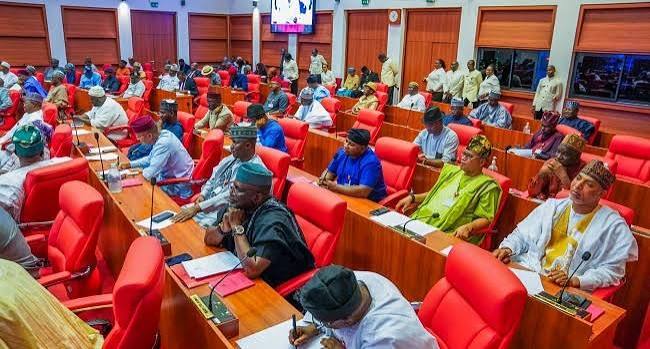
The decision followed a motion sponsored by Senator Isah Jibrin (APC, Kogi) during plenary on Tuesday, November 10, 2026.
The motion highlighted the impact of airspace restrictions on commercial airlines, passengers and aviation operations, particularly when aircraft are instructed to remain airborne in holding patterns while awaiting clearance to land.
Senate Committee Given Two Weeks
As part of its resolutions, the Senate mandated its Committee on Aviation to engage the Nigerian Civil Aviation Authority (NCAA), Nigerian Airspace Management Agency (NAMA), Nigerian Safety Investigation Bureau (NSIB) and Federal Airports Authority of Nigeria (FAAN).
The committee is expected to investigate the circumstances surrounding the restrictions, examine compliance with established aviation procedures and submit its findings to the Senate within two weeks.
The lawmakers also urged aviation authorities to consider diverting affected flights to alternative airports rather than keeping aircraft airborne for extended periods.
Lawmakers Raise Safety Concerns
Moving the motion, Jibrin emphasised that passenger and crew safety remained fundamental to the reliability and economic viability of air transport.
He explained that commercial aviation depended on coordinated flight schedules, departure and arrival slots, fuel planning, crew duty-time limits, passenger connections and effective air traffic management.
According to him, prolonged restrictions could disrupt these interconnected operations and create avoidable risks.
Jibrin said commercial aircraft scheduled to land at domestic airports were sometimes forced to remain in holding patterns for extended periods when landing operations were suspended for VIP or other security-related movements.
He noted that some delays had reportedly lasted more than an hour, raising concerns about fuel management, operational efficiency and passenger safety.
Senator Diket Plang (APC, Plateau), who also contributed to the debate, warned that poor coordination could result in commercial aircraft departing for destinations where airspace restrictions had already been imposed.
Plang, a former station manager with Kabo Air in Kano, called for better coordination of flight schedules, take-off times and landing arrangements.
He also raised concerns about compliance with aviation safety regulations, particularly requirements governing aircraft fuel reserves for emergencies, including situations requiring a return to the departure airport.
The senator warned that inadequate airspace management and prolonged holding patterns could expose aircraft and passengers to serious danger.
Ningi, Akpabio Demand Urgent Action
Senator Abdul Ningi (Bauchi Central) described the recurring delays as an emergency requiring stronger intervention and regulatory oversight by the National Assembly.
He blamed weak supervision and inadequate enforcement of operational standards by aviation agencies, adding that passengers frequently experienced unexplained delays at airports.
Ningi cited a recent journey from Kano that should have taken approximately 40 minutes but reportedly lasted two-and-a-half hours because of airspace restrictions.
He also criticised the lack of adequate communication with passengers when flights were delayed for extended periods.
Senate President Godswill Akpabio expressed similar concerns, recalling an experience in which passengers were kept inside a bus for approximately three hours while waiting to board an aircraft.
Akpabio said restrictions were sometimes imposed several hours before the arrival or departure of VIPs, leaving commercial aircraft circling in the air and passengers stranded at airports.
He particularly questioned the practice of imposing restrictions long before presidential movements, even when the President had not arrived at the airport.
According to him, poor communication between airport authorities and officials coordinating presidential movements contributed to unnecessary delays.
The Senate President warned that prolonged holding patterns could create additional risks, particularly when weather conditions changed while aircraft awaited landing clearance.
He called for improved coordination among aviation authorities and security officials, insisting that restrictions should be imposed closer to the actual movement of VIPs to minimise disruption to commercial flights.
Questions Beyond the Investigation
The Senate's intervention raises broader questions about the balance between VIP security arrangements and the safety and convenience of ordinary air travellers.
The two-week investigation will provide an opportunity to examine whether existing procedures are being followed, how restrictions are communicated and whether aviation agencies have effective mechanisms for preventing unnecessary delays.
It also places responsibility on the relevant authorities to demonstrate how commercial flight operations can be protected while legitimate security requirements are maintained.
The findings could help determine whether changes to existing airspace management procedures are necessary to improve coordination, accountability and passenger safety.
Atlantic Reports: Voices. People. Facts.
Written by
Atlantic Reports Admin
Comments
- Be the first to comment.