Shettima Reaffirms Tinubu’s Commitment to Salaries, Welfare and Rights of Community Health Workers
By Atlantic Reports
Vice-President Kashim Shettima has reaffirmed President Bola Tinubu's administration's commitment to improving the welfare, protecting the rights and ensuring reliable salaries for community health workers across Nigeria.
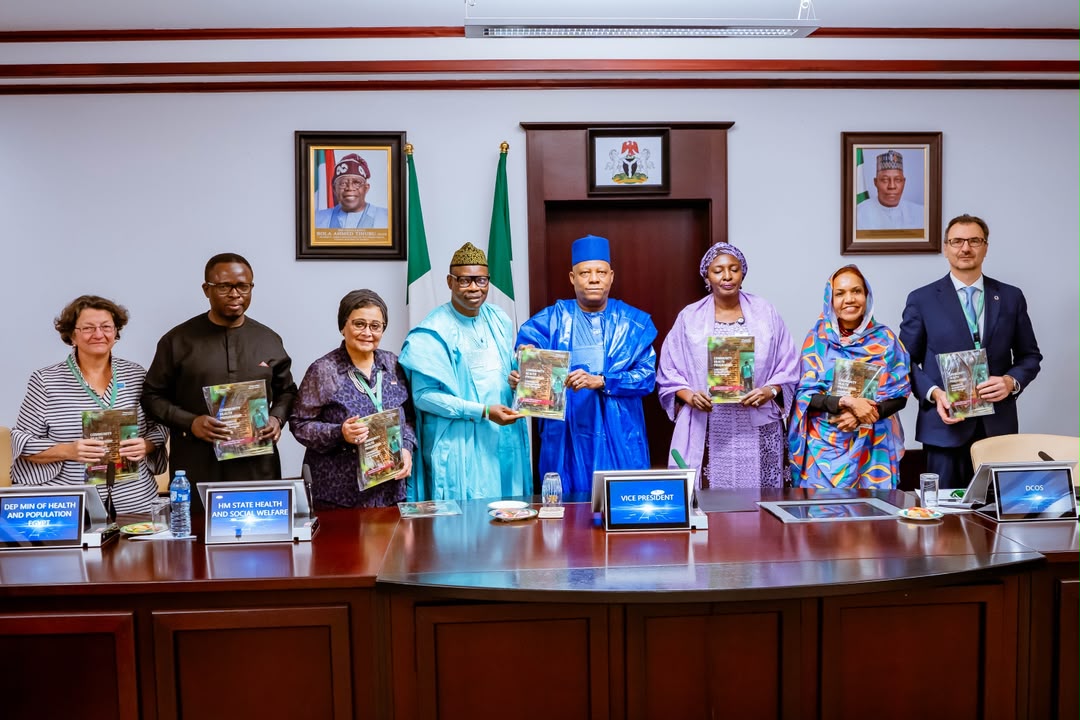
Shettima gave the assurance on Thursday in Abuja during the inauguration of the Community Health Programme Continental Acceleration Plan 2026–2030 at the Continental High-Level Forum on a Fit-for-Purpose Health Workforce.
He said fair, competitive and consistent remuneration for healthcare personnel was essential to building effective community health services and sustainable health institutions.
According to him, community health workers remain critical to delivering essential medical services, particularly in underserved communities where access to healthcare facilities is limited.
“If you look around today, if you look across Africa, the number of community health workers is increasing. But we cannot deliver on this promise unless we acknowledge the threats that surround us,” he said.
Shettima explained that the continental acceleration plan focuses on governance, primary healthcare integration, workforce development, digital systems, service delivery, financing, medical supplies and accountability.
He said the initiative envisioned a healthcare workforce with legal recognition, professional certification, dependable salaries, effective supervision and clear career progression.
Nigeria Targets 100,000 Salaried Community Health Workers
The Vice-President said the Federal Government recognised the shortage of community health personnel and the need to expand the workforce to meet growing healthcare demands.
He disclosed that Nigeria's community health workforce remained below the estimated 315,000 workers required by 2030.
Shettima said President Tinubu's Health Sector Renewal Investment Initiative had secured more than $2.2 billion in commitments, with programmes targeting the revitalisation of over 17,000 primary healthcare centres and the training of 120,000 frontline health workers.
He added that the administration was targeting 100,000 salaried community health workers by 2027.
The Vice-President also stressed that access to community healthcare could determine whether families receive timely medical attention, particularly during maternal emergencies and disease outbreaks.
He said community health workers played essential roles in identifying maternal health risks, locating unvaccinated children, collecting household health information and detecting disease outbreaks.
“The service of our health workers sustains primary care, universal coverage and health sovereignty,” he said.
He added that health security required a sufficient number of skilled workers who were fairly remunerated, adequately supported and equitably deployed.
Shettima Calls for Sustainable Health Financing
Shettima expressed concern over declining external health financing, noting that many African countries remained heavily dependent on development partners to fund community healthcare programmes.
He said the continent must strengthen domestic financing arrangements to ensure that essential health services were not disrupted by reductions in international assistance.
The Vice-President recalled that 25 years after African leaders adopted the Abuja Declaration, which committed governments to allocating at least 15 per cent of national budgets to healthcare, countries still faced significant gaps in access to medical services.
He said the new continental plan would require approximately $28 billion in its ambitious financing scenario through 2030, with more than 80 per cent expected to cover recurrent expenditure.
According to him, the plan projects $19 in economic and social benefits for every dollar invested.
“These returns will be measured in healthier communities and lives saved. But they depend on sustained financing,” he said.
Shettima urged African countries to adopt nationally owned implementation plans, supported by dedicated budgets and monitoring frameworks.
He also acknowledged the contributions of the African Union Commission, Africa Centres for Disease Control and Prevention, UNICEF, the Community Health Delivery Partnership, the World Health Organisation and the International Federation of Red Cross and Red Crescent Societies.
Health Minister Reaffirms Nigeria's Commitment
Earlier, the Minister of State for Health and Social Welfare, Dr Iziaq Salako, commended President Tinubu for approving Nigeria's hosting of the high-level forum and the launch of the continental acceleration plan.
Salako described the initiative as significant to the future of community health workers and primary healthcare delivery across Africa.
He assured participants that Nigeria remained committed to achieving the continental targets, adding that the plan aligned with the administration's Renewed Hope Agenda.
According to him, the agenda prioritises stronger disease surveillance, improved primary healthcare and greater community resilience.
Africa CDC Seeks Stronger Political Commitment
Also speaking, the Deputy Director-General of Africa CDC, Dr Raji Tajudeen, called for stronger political commitment and increased investment in community healthcare across the continent.
He said Africa was falling behind its target of deploying two million community health workers by 2030, noting that the continent had achieved only about half of the target adopted by African leaders in 2016.
Tajudeen identified recurring infectious disease outbreaks, declining international development assistance for health and inadequate operational capacity in primary healthcare facilities as major obstacles.
He recalled that the African Union Assembly called for renewed political action in 2025, leading to Tinubu's appointment as Champion for Human Resources for Health and the Community Health Delivery Partnership.
He said Africa CDC was working with the African Union's 55 member states and development partners to identify barriers to workforce deployment and develop strategies to accelerate progress.
Tajudeen also commended Nigeria's efforts in primary healthcare development, community health systems and universal health coverage.
He cited the country's response to the Ebola outbreak as an experience from which other African countries could learn.
Egypt Highlights Maternal and Family Health
Meanwhile, Egypt's Deputy Minister of Health for Population and Family Development, Dr Abla Al-Alfi, emphasised the importance of strengthening primary healthcare and empowering community health workers to improve maternal and family health outcomes.
She said Egypt was collaborating with relevant government institutions, including the Ministries of Social Solidarity and Youth, to expand health awareness, strengthen community participation and reduce preventable maternal deaths.
Al-Alfi maintained that community health workers were essential to educating mothers and families and improving access to basic healthcare services.
The continental acceleration plan places renewed attention on the financing, recruitment, training and professional recognition of community health workers.
For Nigeria, the proposed target of 100,000 salaried workers by 2027 will require sustained funding, clear employment arrangements and effective deployment. The government has announced its targets and investment commitments, but their impact will ultimately depend on implementation and measurable improvements in healthcare access, particularly in underserved communities.
Atlantic Reports: Voices. People. Facts.
Written by
Atlantic Reports Admin
Comments
- Be the first to comment.