Stakeholders Call for Greater Digital Inclusion of Persons with Disabilities in Nigeria
By Atlantic Reports
Stakeholders in Nigeria’s disability and technology sectors have called for stronger collaboration, enforceable accessibility standards and deliberate policy interventions to ensure persons with disabilities can participate fully in the country’s expanding digital economy.
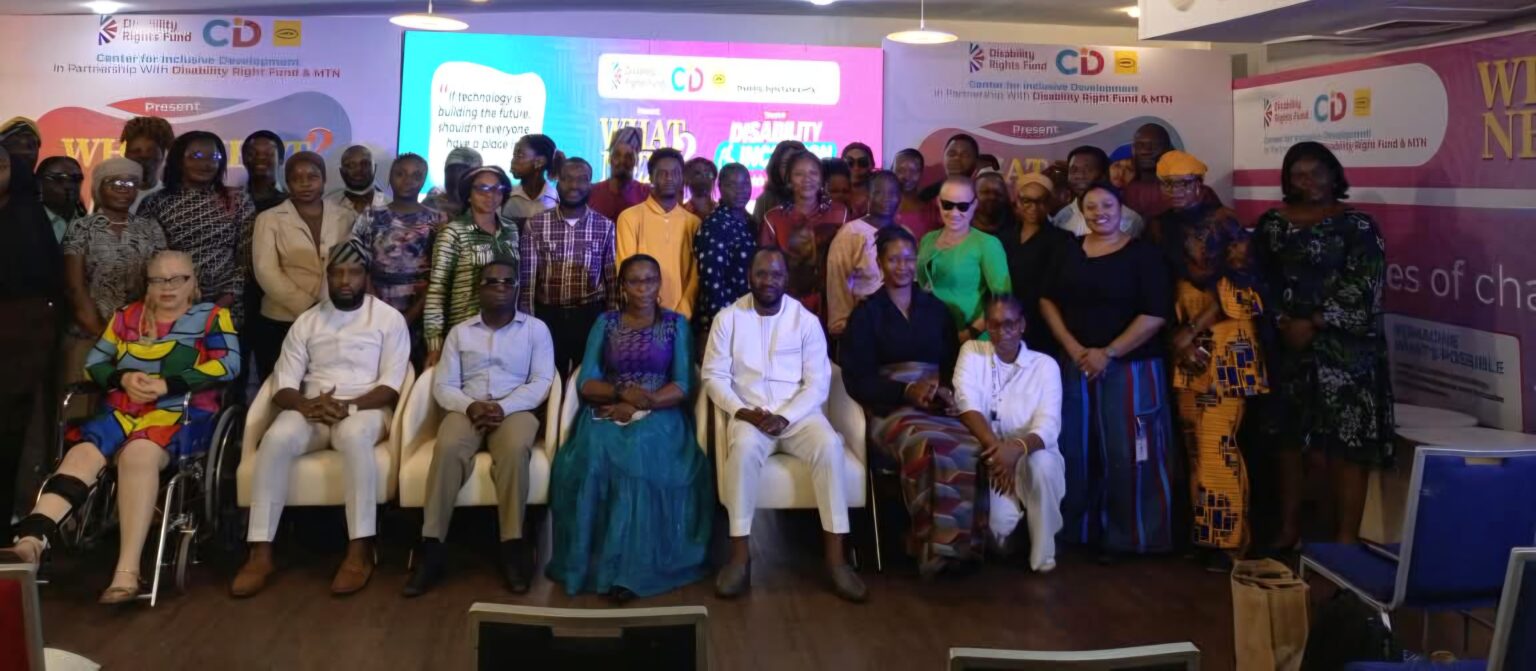
The call was made in Abuja on Thursday at the third edition of the What Next Learning Series, organised by the Centre for Inclusive Development (CID) in partnership with the Disability Rights Fund (DRF) and MTN Nigeria.
The event, themed “Disability Inclusion in Nigeria’s Digital Economy”, examined barriers preventing persons with disabilities from accessing digital education, employment, banking, e-commerce and public services.
Participants stressed that digital transformation would remain incomplete if people with disabilities were unable to use the technologies and platforms increasingly shaping everyday life.
Digital Growth Must Not Leave Persons with Disabilities Behind
The Co-Founder of CID, Mrs Yauri Aduak, said digital inclusion required more than creating opportunities for persons with disabilities. It also involved deliberately removing the barriers that prevent their meaningful participation.
She explained that the What Next Learning Series was established to move discussions beyond awareness and commitments towards practical solutions and measurable improvements.
According to her, Nigeria’s growing digital economy offers significant opportunities, but inaccessible websites, applications, digital platforms and technologies continue to exclude many persons with disabilities.
Aduak said findings from CID’s project on Enhancing Digital Accessibility for Persons with Disabilities in Nigeria, supported by DRF, had highlighted both the opportunities and challenges associated with digital access.
She added that consultations with Organisations of Persons with Disabilities and other stakeholders showed that meaningful inclusion required institutional commitment, technical capacity and sustained cooperation.
Aduak urged stakeholders to translate discussions into concrete interventions, noting that no single organisation could independently address the challenges.
Inaccessible Platforms Create Different Barriers
The Programme Officer for Sub-Saharan Africa at DRF, Mr Theophilus Odaudu, said digital inclusion meant enabling everyone to access and use digital products and services independently, without relying on assistance from others.
He identified the failure of developers to consider different disability needs as a major reason many digital platforms remain inaccessible.
Odaudu explained that blind users often encounter websites with unlabeled buttons and images without descriptions, making it difficult for screen-reading software to interpret information.
For deaf users, he said, video content needed appropriate captions, while persons with intellectual disabilities required clear and simple language instead of complicated technical information.
These barriers, he noted, could prevent people with disabilities from accessing information, participating in online transactions and benefiting from digital opportunities available to other citizens.
He said Nigeria had laws and policies supporting disability inclusion, but specific accessibility standards for technology developers and companies remained inadequate.
Odaudu identified weak enforcement of existing provisions and the absence of clear technical standards as major obstacles.
He called on relevant government institutions to strengthen enforcement and ensure that persons with disabilities were involved in decisions affecting their rights.
He also urged technology companies to involve people with different disabilities in the design and testing of digital products rather than treating accessibility as an adjustment to be made after development.
MTN Highlights Workplace and Digital Skills Initiatives
The Chief Human Resource Officer of MTN Nigeria, Mrs Esther Akinnukawe, described disability inclusion as both a moral responsibility and an important component of national development.
Represented by the company's Head of Customer Operations and Experience, North, Mr Chikaodi Ofoegbu, she said MTN had introduced measures to improve workplace accessibility.
These include ramps, modified workspaces, accessible fittings and emergency wheelchairs.
Akinnukawe also highlighted the role of the MTN Foundation and initiatives such as the MTN Skills Academy in supporting education, scholarships and digital training opportunities for persons with disabilities.
She commended CID for developing MakeAm, an artificial intelligence-powered WhatsApp tool designed to support persons with disabilities through accessible technology.
According to her, the initiative demonstrates how widely used digital platforms can be adapted to reduce barriers and expand access to opportunities.
From Policy Commitments to Measurable Action
The discussions highlighted a central challenge for Nigeria’s digital economy: access to technology does not automatically guarantee inclusion.
A person may have access to a smartphone or internet connection but still be unable to use an application because its design does not accommodate screen readers, captions, accessible navigation or simplified content.
Addressing these gaps requires accessibility to be incorporated from the earliest stages of technology development. It also demands clear standards, effective enforcement, regular testing and meaningful participation by persons with disabilities.
For government institutions, the challenge extends to ensuring that digital public services are accessible. For private technology companies, it involves making inclusive design part of product development rather than an optional feature.
The success of initiatives such as MakeAm and workplace accessibility programmes will depend not only on their introduction but also on their reach, usability and measurable benefits to the people they are intended to serve.
As Nigeria expands its digital economy, ensuring that persons with disabilities can independently access its opportunities will be an important measure of how inclusive that transformation becomes.
Atlantic Reports: Voices. People. Facts.
Written by
Atlantic Reports Admin
Comments
- Be the first to comment.