Sultanate Council Plans Islamic Microfinance Bank to Tackle Poverty
By Atlantic Reports
The programme was organised by the Islamic Development Bank (IsDB) in collaboration with the Sokoto State Zakat and Endowment Agency.
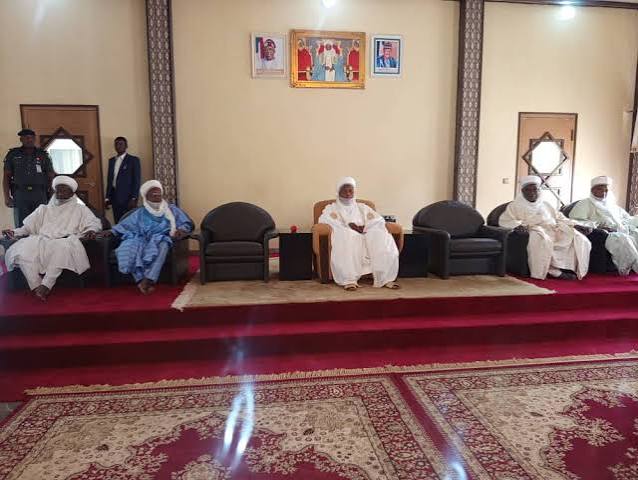
Represented by the District Head of Kilgore, Alhaji Jabbi Kilgore, the Sultan said the proposed bank would provide small-scale entrepreneurs with access to Islamic financing to expand their businesses, create employment and improve livelihoods.
He said the initiative had reached an advanced stage, with investors, including those from outside Nigeria, expressing interest in partnering with the project.
“The aim is to establish a bank that will serve as a model not only for Nigeria but also for the West African sub-region,” he said.
The Sultan described the collaboration between the IsDB and the Sokoto State Zakat and Endowment Agency as an important step towards poverty reduction through effective Zakat collection, sustainable administration and productive use of charitable resources.
He urged participants and resource persons to translate the training into practical measures that would improve the welfare of vulnerable people and strengthen poverty alleviation efforts.
Agency Advocates Economic Empowerment Beyond Charity
The Chairman of the Sokoto State Zakat and Endowment Agency, Malam Lawal Maidoki, called for a shift from excessive dependence on Zakat and other charitable assistance towards productive activities that would enable beneficiaries to become self-reliant.
Maidoki said the BMT model combines social welfare with economic development by providing immediate assistance to vulnerable people while helping them acquire the resources and skills needed to build sustainable livelihoods.
He noted that although Zakat and other charitable resources provide essential relief to disadvantaged households, such interventions should be complemented by opportunities for beneficiaries to establish businesses, generate income and gradually escape poverty.
“In many communities, Zakat and other charitable resources provide essential relief, but relief alone may not create a clear, supported pathway from vulnerability to sustainable livelihoods.
“At the same time, conventional microfinance may be inaccessible or unsuitable for people who cannot meet its conditions or who seek financing consistent with Islamic principles,” he said.
Maidoki explained that BMT mobilises and distributes social funds, including Zakat, Sadaqah and Waqf, to eligible beneficiaries while supporting productive activities through Shariah-compliant financial services and business development assistance.
He said the approach could strengthen poverty reduction by linking social protection with economic empowerment and helping vulnerable households achieve financial independence.
Training Targets Sustainable Livelihoods
Earlier, one of the resource persons, Saat Suharto, an Indonesian social activist and expert in Islamic economics and finance, said the programme was designed to strengthen stakeholders’ capacity to apply BMT principles in an inclusive, accountable and locally appropriate manner.
Suharto said the initiative would support the poorest and most vulnerable people in developing sustainable livelihoods, with the long-term goal of enabling them to become financially capable of contributing Zakat themselves.
He also highlighted the need to strengthen Zakat and Waqf administration, improve staff capacity, simplify procedures and deploy technology to enhance transparency, accountability and operational efficiency.
The proposed microfinance bank is intended to connect Islamic social finance with business development, although its eventual impact will depend on implementation, access to financing, effective management and the support available to participating entrepreneurs.
Atlantic Reports: Voices. People. Facts.
Written by
Atlantic Reports Admin
Comments
- Be the first to comment.