TCN Upgrades Bauchi Transmission Substation to 330kV, Projects Benefits for 80,000 Households
By Atlantic Reports
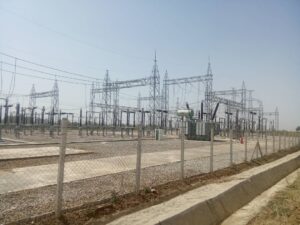
The Transmission Company of Nigeria (TCN) has upgraded the Bauchi Transmission Substation from 132kV to 330kV, in an intervention expected to improve electricity transmission and benefit more than 80,000 households.
The facility was inaugurated on Friday, November 20, by the Minister of Power, Chief Joseph Tegbe, who said the upgrade formed part of the Federal Government’s efforts to strengthen electricity infrastructure and improve power delivery across the country.
According to the minister, the project will increase the capacity of the transmission network serving Bauchi State and neighbouring communities, while providing additional support for growing economic activities.
He said reliable electricity infrastructure was essential for businesses, investment, public services and wider socio-economic development.
New transformers increase transmission capacity
Tegbe explained that the substation previously operated with an installed capacity of 112.5MVA.
The upgrade involved installing two 100MVA 330/132kV power transformers, providing 300MVA of upstream transmission capacity.
Two additional 60MVA 132/33kV transformers were installed, while the existing 60MVA transformer was retained, bringing the downstream capacity to 180MVA.
The project also included a modern control room, two 330kV line bays, four 132kV bays, three additional 33kV outgoing feeders and upgraded control and protection systems.
The minister said the improvements would provide greater operational flexibility and strengthen the network’s ability to handle increasing electricity demand.
He added that the Federal Government was pursuing improvements in transmission infrastructure alongside efforts to expand electricity generation, with the aim of reducing constraints that prevent generated power from reaching consumers.
TCN identifies communities expected to benefit
TCN Managing Director, Sule Abdulaziz, said the intervention had transformed the facility into a stronger transmission substation capable of handling increased demand.
He explained that the upgrade would strengthen bulk electricity delivery to the Jos Electricity Distribution Company (JEDC).
Communities expected to benefit include Ningi, Dass, Yankari, Nabardo, Gudum Hausawa, Dabo Farms and Gubi, among others.
Abdulaziz disclosed that the project was awarded in January 2021 and completed in June 2026.
He said it was executed by a joint venture involving MBH Power Ltd. and other consortium members, with funding from the World Bank.
A representative of MBH Power Ltd., Riyas Cherayakkatt, described the project as a contribution to strengthening Nigeria’s transmission network and commended the Federal Government, TCN management, consultants and other stakeholders for their cooperation.
Minister warns against vandalism of electricity infrastructure
Tegbe also raised concerns about the destruction and vandalism of electricity infrastructure, particularly transmission towers and other critical national assets.
He said such activities disrupted businesses, livelihoods and household activities, while forcing the government to incur additional costs to repair or replace damaged facilities.
The minister urged residents to protect electricity infrastructure and report suspicious movements, vandalism and unauthorised access around installations.
The Emir of Bauchi, Dr Rilwanu Sulaiman, represented by the Waziri Bauchi, Alhaji Mohammed Uba-Kari, also called on residents to take collective responsibility for protecting the facility.
He assured the Federal Government and TCN of the community’s cooperation in safeguarding the infrastructure.
Bauchi State Commissioner for Power, Alhaji Modibbo Abdulkadir, similarly pledged the state government's support for the protection of critical electricity assets.
Improved transmission capacity must translate into reliable supply
The upgrade increases the amount of electricity the Bauchi substation can handle, but the projected benefits for more than 80,000 households will depend on how effectively the wider electricity network operates.
The additional transmission capacity does not, by itself, guarantee uninterrupted electricity. Power generation, distribution network capacity, maintenance, available supply and the condition of local infrastructure will also influence what consumers receive.
The project’s completion is therefore an important infrastructure milestone, but its real impact will be measured by improvements in electricity availability, reduced outages and more reliable supply to households and businesses.
Further public information on actual household connections, changes in supply hours and performance across the benefiting communities would help establish whether the expected gains are being delivered.
Atlantic Reports: Voices. People. Facts.
Written by
Atlantic Reports Admin
Comments
- Be the first to comment.