Telecom Infrastructure Vandalism Threatens Public Safety, Livelihoods and Nigeria’s Digital Economy
By Atlantic Reports
A pregnant woman in Benin City, Edo State, Grace Osagie, expected to call her husband when she went into labour. Instead, unexpected communication problems left her unable to reach him when she needed his support most.
Nine months pregnant, Osagie repeatedly attempted to make calls, but the mobile network was unavailable. Unable to contact her husband or obtain assistance by telephone, she eventually relied on a passerby for help.
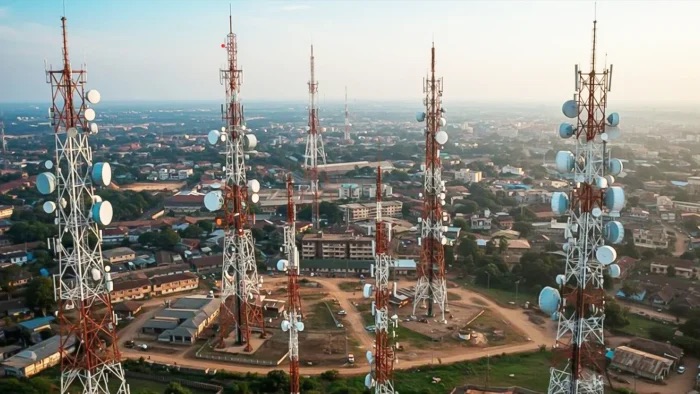
Her experience illustrates a growing concern in Nigeria, where telecommunications infrastructure damage is increasingly affecting more than the operations of mobile network providers. It is becoming a public safety, economic and development challenge.
As mobile communications and internet connectivity become essential to healthcare, commerce, education and employment, damage to the infrastructure supporting these services can have consequences far beyond the immediate location of an incident.
Thousands of Fibre-Optic Cable Cuts Recorded
The Nigerian Communications Commission (NCC) disclosed in August that more than 5,000 fibre-optic cable-cut incidents were recorded nationwide in the first half of 2026.
Many of the incidents were linked to road construction, excavation and other civil engineering activities.
NCC Chief Executive Officer, Aminu Maida, warned that damaged fibre-optic cables could result in failed telephone calls, interrupted digital payments, disrupted services and lost economic opportunities.
He called for stronger coordination among construction contractors, telecommunications operators, government agencies and regulators before excavation work begins.
The warning highlights a persistent weakness in infrastructure planning, particularly where telecommunications cables share underground corridors with water pipelines, electricity facilities and other essential utilities.
Without accurate infrastructure maps and proper consultation, construction activities can damage communication networks and disrupt services used by thousands of people.
Theft of Power Equipment Deepens the Crisis
Beyond fibre-optic cable damage, telecommunications operators are also contending with the theft of generators, batteries, diesel, cables and other equipment required to keep base stations operational.
NCC data reported in April showed that 656 power assets, comprising 152 generators and 504 batteries, were stolen from telecommunications facilities in 2025.
The commission also recorded 1,344 diesel theft incidents and 49 cases classified as vandalism and sabotage.
Between January and February 2026, another 64 batteries and 17 generators were reportedly stolen.
These incidents create additional pressure on telecommunications operators, particularly in locations where public electricity supply is unreliable.
Base stations depend on backup power systems to maintain connectivity during electricity interruptions. When generators, batteries or fuel are stolen, affected facilities may become unable to sustain operations.
Similarly, damage to fibre-optic routes can interrupt connectivity across multiple locations, depending on the network configuration and available alternative routes.
For subscribers, the distinction between a damaged cable and a stolen generator often makes little difference. Both can result in failed calls and unavailable internet services.
Edo Records Extensive Telecommunications Infrastructure Damage
The scale of the problem is also evident in Edo State, where the Nigeria Security and Civil Defence Corps (NSCDC) has reported substantial damage to telecommunications infrastructure between 2024 and 2026.
Suleiman Mohammed, head of the Critical National Infrastructure Unit at the NSCDC state command, said MTN recorded more than 500 vandalisation incidents involving its facilities during the period.
He also disclosed that IHS recorded 350 vandalisation spots.
According to Mohammed, Airtel recorded cases involving damage to fibre-optic cables across 150 locations, affecting a route spanning approximately 300 kilometres during the period. He attributed the damage to road construction activities.
The figures highlight the vulnerability of telecommunications infrastructure to both deliberate interference and poorly coordinated construction work.
Mohammed called for stronger collaboration among stakeholders, prompt reporting of suspicious activities and the adoption of a 'Call Before You Dig' approach to excavation.
The approach encourages contractors to establish the location of underground utilities and consult relevant infrastructure operators before commencing work.
Operators Identify Construction and Theft as Major Threats
Gbenga Adebayo, chairman of the Association of Licensed Telecommunications Operators of Nigeria (ALTON), identified construction-related damage and deliberate theft as two major sources of telecommunications infrastructure disruption.
However, he cautioned against treating every incident as intentional vandalism, noting that damage during road construction frequently results from inadequate coordination.
“No contractor of government who is receiving a government contract will go with his flowers to go and remove or destroy infrastructure,” he said.
According to Adebayo, telecommunications cables often run alongside water pipelines, electricity installations and other underground utilities.
Where accurate maps are unavailable or telecommunications operators are not consulted before excavation, construction workers can accidentally sever cables without knowing that critical infrastructure lies beneath the ground.
His position draws attention to an important distinction between deliberate vandalism and preventable construction-related damage.
While both can disrupt connectivity, their causes require different responses. Deliberate theft and sabotage demand effective security and law enforcement, while accidental damage requires better infrastructure mapping, planning and coordination.
When Network Failure Becomes a Personal Crisis
For Nigerians who depend on reliable communications, infrastructure damage is not simply a technical inconvenience.
Osagie's experience in Benin City demonstrates how network failure can affect access to assistance during a critical personal emergency.
She attributed the outage to a dispute involving youths in her community who allegedly demanded money from operators of a nearby telecommunications facility, leading to the shutdown of its base station.
Her account raises concerns about the consequences of interference with telecommunications facilities, particularly when communities depend on them for emergency communication.
The economic consequences can be equally serious.
Rahmat Saadu, a computer analyst in Abuja, said disruptions to fibre-optic and mobile connections prevented her from delivering work to an international employer before a deadline.
For professionals whose livelihoods depend on digital connectivity, prolonged outages can threaten contracts, income and professional relationships.
In Benin City, investigative journalist Jethro Ibike was unable to upload a report after a telecommunications site reportedly lost power following the theft of diesel and inverter batteries.
The disruption affected his ability to complete a routine but essential part of his journalistic work.
In Enugu, surgeon Dr Emeka Nwosu said he could not reach a consultant during a medical emergency, an experience he attributed to fibre-optic cable vandalism.
His account highlights the potential implications of communication disruptions within healthcare, where timely consultation and coordination can be important to patient management.
These experiences, drawn from engagements with the individuals concerned, demonstrate how damage to telecommunications infrastructure can affect families, workers, businesses and essential services.
Protecting Telecommunications Infrastructure Requires Collective Action
Nigeria's growing dependence on digital services makes the protection of telecommunications infrastructure an increasingly important public interest issue.
The responsibility does not rest solely with telecommunications companies. Government agencies, construction contractors, security organisations, traditional institutions, community leaders and residents all have roles to play.
Several measures are particularly important:
-
Better construction coordination: Contractors should consult telecommunications operators and relevant authorities before excavation or road construction begins.
-
Accurate infrastructure mapping: Reliable records of underground cables and other utilities can reduce accidental damage.
-
Stronger security: Theft of generators, batteries, diesel and other equipment requires effective monitoring, investigation and prosecution.
-
Community participation: Residents should report suspicious activities and avoid interfering with telecommunications facilities.
-
Emergency preparedness: Operators should strengthen backup power arrangements and alternative network routes where feasible to reduce the effects of infrastructure failures.
The NCC and other relevant authorities also face the challenge of ensuring that reported incidents translate into effective preventive measures, enforcement and accountability.
A Digital Economy Cannot Function Without Reliable Infrastructure
The consequences of telecommunications infrastructure damage extend beyond dropped calls and slow internet connections.
They affect the ability of pregnant women to seek assistance, businesses to serve customers, professionals to earn a living, journalists to deliver reports and medical personnel to coordinate care.
As Nigeria expands its digital economy, the reliability of the infrastructure supporting it must receive the same attention as network expansion and technological investment.
The experiences of Osagie, Saadu, Ibike and Nwosu offer a human perspective on a problem often discussed through statistics and industry reports.
Protecting telecommunications infrastructure is therefore not simply about safeguarding corporate assets. It is about protecting livelihoods, public safety, economic activity and people's ability to remain connected when communication matters most.
Atlantic Reports: Voices. People. Facts.
Written by
Atlantic Reports Admin
Comments
- Be the first to comment.