Tinubu Pledges Stronger Biosafety Regulation to Support Biotechnology and Innovation
By Atlantic Reports
Government highlights biotechnology opportunities
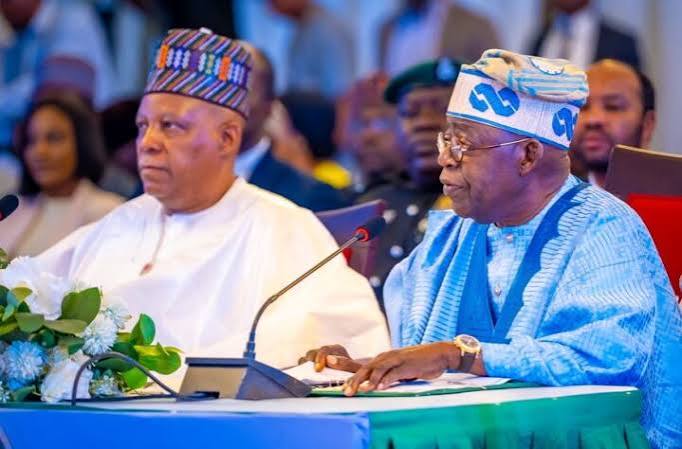
Tinubu made the commitment on Thursday, November 26, 2026, at the 2026 National Biosafety and Biosecurity Summit in Abuja. He was represented by the Minister of Innovation, Science and Technology, Dr Kingsley Udeh.
The President said biotechnology could support national development by improving agricultural productivity, strengthening healthcare systems and addressing emerging national security challenges.
He identified potential applications in developing climate-resilient crop varieties, improving nutritional quality and increasing food production.
However, he stressed that scientific advancement must be accompanied by rigorous risk assessments, transparent regulatory procedures and standards that protect public health and the environment.
Tinubu described biosafety regulation as a necessary foundation for responsible innovation and public confidence, rather than an obstacle to scientific progress.
He said the government would continue to encourage collaboration among universities, research institutions, regulatory agencies and private-sector organisations to ensure that biotechnology applications were properly assessed and scientifically validated.
UN calls for stronger national capacity
The Deputy Secretary-General of the United Nations, Amina Mohammed, urged Nigeria to strengthen its biosafety and biosecurity institutions while investing in scientific expertise and responsible biotechnology development.
She said international cooperation, research partnerships and effective regulatory systems were necessary to harness emerging technologies, including synthetic biology, without compromising safety.
Mohammed identified stronger institutions, effective legal frameworks and improved scientific capacity as priorities for Nigeria.
She also highlighted biotechnology’s potential contributions to food security, healthcare, climate-resilient agriculture, industrial development and waste-to-wealth initiatives.
The UN official reaffirmed the organisation’s commitment to supporting Nigeria in developing an inclusive biotechnology economy capable of creating jobs, protecting the environment and contributing to Africa’s sustainable development.
Environment minister stresses enforcement and coordination
The Minister of Environment, Balarabe Lawal, called for stronger institutional capacity, effective enforcement and closer collaboration among government agencies responsible for biosafety and environmental protection.
He said the National Biosafety Management Agency (NBMA) was expected to intensify efforts to fulfil its regulatory responsibilities under its new Director-General.
Lawal emphasised the need for coordinated action involving the ministries of Environment, Health and Agriculture, state governments, research institutions and private-sector stakeholders.
He said the government’s objective was not to discourage scientific innovation but to ensure that emerging technologies were developed and applied without endangering human health, the environment or national interests.
NBMA outlines regulatory reforms
Earlier, the Director-General of the NBMA, Dr Fatima Suleiman-Zuntu, said the agency was strengthening its regulatory capacity, digital operations and monitoring systems.
She explained that the summit was designed to examine how Nigeria could expand its biotechnology sector, improve food production and protect public health and the environment.
Suleiman-Zuntu disclosed that the agency’s administrative processes were undergoing automation and digitalisation, with the platform at an advanced stage ahead of its planned deployment.
According to her, the system is expected to improve transparency, accessibility and efficiency while reducing delays in processing applications and providing regulatory services.
She also disclosed that the agency was working towards becoming a national commission, a proposed institutional change intended to strengthen its capacity and improve coordination of its responsibilities.
Other measures outlined by the Director-General included the review and validation of national laboratory biosafety guidelines, a completed national project on gene-editing technology and the establishment of a monitoring team for inspections and surveillance.
The monitoring team, she said, would visit supermarkets and retail outlets to check that genetically modified products displayed for sale had the required regulatory approval.
Regulation, public confidence and accountability
The summit's discussions highlight the challenge of balancing the economic opportunities of biotechnology with the need for effective oversight.
For farmers, biotechnology could offer tools to improve crop performance and respond to climate pressures. For healthcare institutions and researchers, it could support scientific advances and new applications. Consumers and communities, however, need reliable information about the safety, approval and monitoring of products entering the market.
The agency’s proposed digital platform, stronger laboratory guidelines and retail surveillance could contribute to improved oversight. Their effectiveness will depend on implementation, adequate funding, qualified personnel and transparent enforcement.
The proposed transition of the NBMA into a national commission also requires clarity on its legal framework, institutional structure and accountability arrangements.
Tinubu urged the National Assembly, regulatory agencies and other stakeholders to support the initiative and ensure that recommendations from the summit translated into practical action.
For Nigeria, the task is not simply to expand biotechnology research, but to establish a regulatory system capable of protecting the public while allowing credible scientific innovation to develop.
Atlantic Reports: Voices. People. Facts.
Written by
Atlantic Reports Admin
Comments
- Be the first to comment.