UBEC Says $552m Education Programme Targets 29 Million Children
By Atlantic Reports
The Universal Basic Education Commission (UBEC) says a $552.18 million World Bank-supported programme aims to reach 29 million children, improve teaching and expand access to basic education across Nigeria.
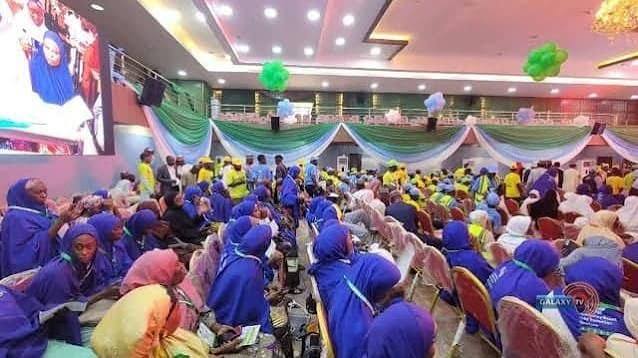
UBEC Executive Secretary, Dr Aisha Garba, outlined the targets on Wednesday in Abuja at a two-day implementation-readiness meeting with chairmen of State Universal Basic Education Boards (SUBEBs).
She said the Human Capital Opportunities for Prosperity and Equity education programme, known as HOPE-EDU, would support 500,000 teachers, 65,000 public schools and 10,000 non-formal learning centres.
It also plans to support the construction of 13,000 classrooms. These figures represent programme targets, rather than completed work or beneficiaries already reached.
Garba said the programme became effective on February 27, 2026, and had entered its implementation phase.
State Funding Linked to Results
According to Garba, HOPE-EDU uses results-based financing, with funds released to states when they achieve agreed targets.
“HOPE-EDU is designed to improve learning outcomes, increase equitable access to basic education and strengthen governance and accountability in the education sector,” she said.
She identified three principal components: improving education quality, expanding access and strengthening education systems.
Garba put the allocations at $262.239 million for quality improvements, $123.9 million for access and $133.611 million for strengthening systems.
Those allocations total $519.75 million, leaving $32.43 million of the stated $552.18 million programme value unexplained in the breakdown presented. The account did not specify what the balance would cover or how much funding had already been disbursed.
Eligibility Varies Across Components
Garba said the education quality component was open to 33 states, with participation potentially extending to all 36 states and the Federal Capital Territory, subject to requirements.
The access component targets 15 states with the highest populations of out-of-school children that also satisfy other eligibility conditions. The systems component is open to all states and the FCT.
The account did not name the states selected or detail the full eligibility criteria.
Garba said the programme would improve teaching, supply learning materials and strengthen pupils’ literacy and numeracy through the Structured Pedagogy Programme.
For children in rural and marginalised communities, the intended benefits include greater access to learning and better classroom instruction. Delivery will depend on states meeting their commitments and translating funding into functioning services.
UBEC Seeks Provision in 2027 Budgets
Garba urged SUBEB chairmen to brief governors and relevant officials, secure policy support and make adequate provision for implementation in their states’ 2027 budgets.
“A lot of the deliverables for Year One will require provisions in the states’ 2027 budgets,” she said.
She called on states to take ownership of the programme and meet the targets required to access funding.
Programme Manager Mr Olumayowa Aleshin also presented an overview of the funding structure, implementation targets and milestones.
As implementation proceeds, progress will need to be measured through children reached, classrooms delivered, teachers supported and improvements in learning, alongside transparent reporting of funds released and spent.
Atlantic Reports: Voices. People. Facts.
Written by
Atlantic Reports Admin
Comments
- Be the first to comment.