UN Court Delivers Ruling on Myanmar’s Alleged Genocide Against Rohingya
By Atlantic Reports
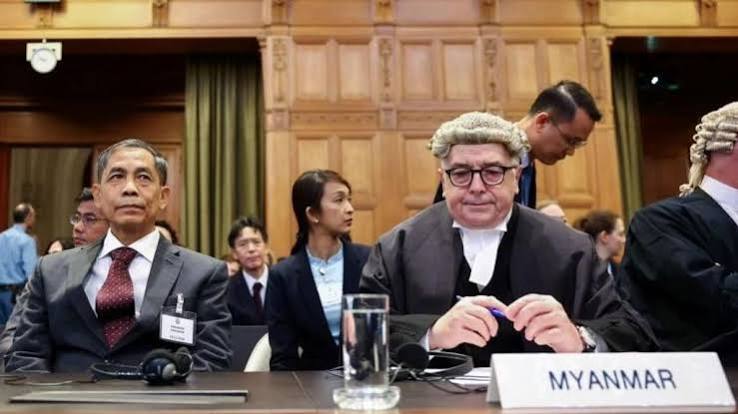
The United Nations’ highest court is due to deliver a long-awaited judgment on Thursday in a case brought by The Gambia, accusing Myanmar of committing genocide against the predominantly Muslim Rohingya minority.
The ruling is being closely watched by Rohingya refugees in Bangladesh, where about 1.2 million people remain in the sprawling Cox’s Bazar settlement after fleeing violence in Myanmar.
The case, filed by The Gambia in 2019, centres on allegations that Myanmar bears state responsibility for genocidal acts committed during a military offensive that forced at least 730,000 Rohingya to leave the country.
Survivors have reported killings, mass rape and the destruction of villages. A United Nations fact-finding mission previously concluded that the military campaign included acts of genocide.
Myanmar has denied the allegations, maintaining that its security forces acted legitimately in response to attacks by armed groups.
Court to examine state responsibility
The 15-member bench of the International Court of Justice (ICJ) will consider whether genocide occurred and whether alleged actions by Myanmar’s military or other state institutions breached the country’s obligations under the Genocide Convention.
The legal test is particularly demanding because genocide requires proof of specific intent to destroy, in whole or in part, a national, ethnic, racial or religious group.
The case is among the most significant proceedings on the application of the 1948 convention in recent years. Its outcome is expected to provide important legal guidance on how the court assesses state responsibility for alleged violations of international law.
The Gambia has also asked the court to order Myanmar to pay reparations and guarantee conditions for the safe return of Rohingya refugees.
Implications beyond Myanmar
The judgment is expected to attract attention beyond the Rohingya crisis, particularly because of its potential relevance to other cases involving allegations of genocide before the ICJ.
These include South Africa’s 2023 case against Israel over its military operations in Gaza. Israel, like Myanmar, denies committing genocide and maintains that its military actions are responses to attacks by armed groups.
Genocide has been established in only a limited number of international legal proceedings since the Holocaust. These include cases relating to the 1994 genocide in Rwanda, the 1995 Srebrenica massacre in Bosnia and atrocities committed under Cambodia’s Khmer Rouge regime.
Enforcement remains a challenge
ICJ judgments are final and binding on the states involved, but the court has limited mechanisms to enforce its decisions.
The court must also be distinguished from the International Criminal Court (ICC). While the ICJ settles legal disputes between states and considers alleged breaches of international treaties, the ICC prosecutes individuals accused of crimes including genocide, war crimes and crimes against humanity.
For Rohingya refugees who have spent years displaced in Bangladesh, the proceedings represent an important legal effort to address allegations surrounding the violence that forced them from their homes.
However, the practical questions of accountability, reparations and safe return will remain central to the wider crisis.
Atlantic Reports: Voices. People. Facts.
Written by
Atlantic Reports Admin
Comments
- Be the first to comment.