UNICEF Supports 2,702 Displaced Children with Learning Materials in Benue
By Atlantic Reports
Education support reaches six IDP camps
UNICEF says it has supported 2,702 children living in six internally displaced persons (IDP) camps in Benue State with teaching and learning materials to improve access to safe and quality education.
The Education Specialist at UNICEF's Enugu Field Office, Mr Believe Eke, disclosed this on Wednesday in Makurdi during a two-day media dialogue on humanitarian action for children in the state.
Eke, represented by UNICEF Desk Officer in the Benue Ministry of Education and Knowledge Management, Dr Emmanuel Ngulum, said the intervention was supported by the Government of Sweden through the Swedish International Development Cooperation Agency (Sida).
He explained that the programme was implemented under UNICEF's 2026 Sida-supported initiative to improve educational opportunities for children affected by humanitarian crises, particularly those living in displacement camps.
According to him, UNICEF engaged 64 volunteer facilitators and mentors to support teaching and learning across six IDP learning centres.
The facilitators received training in the Teaching at the Right Level methodology and were provided with curriculum materials, scripted lessons and textbooks to improve learning outcomes.
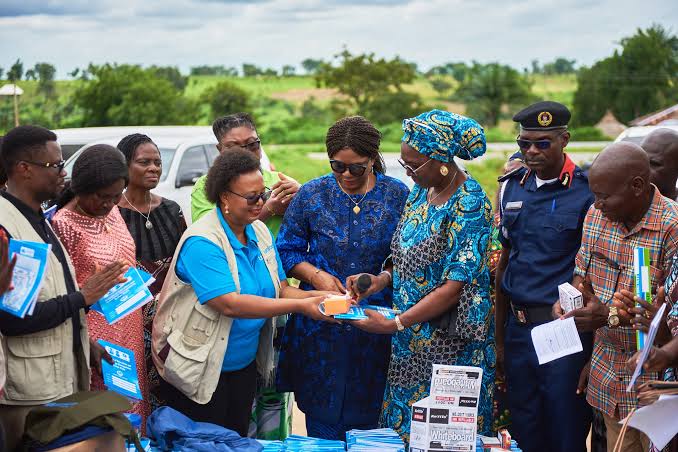
UNICEF also distributed exercise books, chalk, whiteboards, rulers and other educational materials to the facilitators and the 2,702 children.
School kits, desks and learning shelters provided
Eke disclosed that UNICEF distributed 400 School-in-a-Box kits to the State Universal Basic Education Board (SUBEB), with the potential to benefit 16,000 learners.
The intervention also included the provision of 250 school desks to six IDP learning centres and eight canopies to support learning activities in three camps.
These facilities are intended to improve the learning environment for children whose education has been disrupted by displacement.
However, the potential reach of the School-in-a-Box kits will depend on their distribution and effective use in the targeted learning communities.
UNICEF trains facilitators to address out-of-school challenge
Beyond the IDP camps, UNICEF is supporting the Benue State Government's efforts to reduce the number of children excluded from formal and non-formal education.
Eke said 4,600 facilitators across local government areas had been trained in positive parenting to encourage parents and guardians to enrol and retain out-of-school children in learning centres.
He added that UNICEF supported the state government in developing a costed implementation plan under the State BRACE UP Initiative to address the out-of-school children challenge.
The organisation also supported a rapid education needs assessment to identify gaps and improve responses to the educational needs of crisis-affected communities.
Psychosocial support for displaced children
Recognising the emotional and psychological difficulties associated with displacement, UNICEF has also supported mental health and psychosocial interventions.
Eke said 700 teachers and facilitators across six local government areas had received training in mental health and psychosocial support to help them respond to the needs of vulnerable children.
He added that the organisation had procured psychosocial support and play materials for 2,702 children in the six IDP learning centres.
The materials were awaiting distribution at the time of the presentation.
The intervention is intended to complement classroom learning by helping children affected by displacement access appropriate emotional and social support.
Water facilities benefit more than 56,000 people
In a related presentation, UNICEF Focal Person II at the Benue Rural Water Supply and Sanitation Agency (BERWASSA), Mr Patrick Ihuma, outlined the organisation's water, sanitation and hygiene (WASH) interventions in six IDP camps across Guma and Makurdi Local Government Areas.
He said UNICEF had provided or rehabilitated 10 water facilities, comprising four solar-powered boreholes and six hand-pump boreholes.
According to him, the facilities were designed to improve access to safe water for 56,569 internally displaced persons and members of host communities.
The beneficiary communities include Abagana, Daudu I, Daudu II, Gbajimba I, Gbajimba II and Ichwa.
Access to safe water is particularly important in displacement settings, where overcrowding and inadequate infrastructure can increase the risk of waterborne diseases and other public health problems.
Sanitation facilities rehabilitated in four camps
Ihuma said UNICEF had also constructed or rehabilitated 241 latrine units in four camps.
The intervention included 40 newly constructed units in Abagana and Ichwa, alongside 201 rehabilitated units in Daudu I, Daudu II, Abagana and Ichwa.
The organisation also rehabilitated 98 bathrooms and decommissioned 71 old units.
According to Ihuma, the rehabilitation of sanitation facilities restored toilet access to more than 3,200 displaced persons in Daudu I.
UNICEF further distributed 515 WASH replenishment kits to support hygiene practices among displaced households in Abagana, Daudu I and Daudu II.
Ten handwashing stations were also provided across Gbajimba I and Gbajimba II.
Hygiene promotion and community participation
Ihuma disclosed that 307 households in the two Gbajimba camps had received hygiene promotion messages.
He said 90 volunteer hygiene promoters had been trained, while environmental sanitation exercises, toilet-cleaning activities and maintenance training were conducted across the six camps.
UNICEF also supported the replacement of damaged sanitation tools to improve hygiene management and help sustain the facilities.
Ihuma emphasised that continued humanitarian assistance and active community participation were necessary to maintain the infrastructure and improve living conditions in the camps.
Sustaining support beyond emergency interventions
The education and WASH interventions highlight the interconnected needs of displaced families in Benue State.
For children, access to learning materials and trained facilitators can help prevent prolonged interruptions to education. Safe water, functional toilets and hygiene facilities are equally important to their health, dignity and ability to participate in learning activities.
However, the long-term impact of the interventions will depend on regular maintenance, continued access to learning resources, adequate staffing and the effective distribution of materials awaiting delivery.
The figures presented by UNICEF also underline the scale of humanitarian needs in the affected communities, particularly where displaced people depend on shared facilities and external assistance for essential services.
Sustained cooperation between government agencies, humanitarian organisations and host communities will remain important in ensuring that displaced children and families are not left without access to education, clean water and basic sanitation.
Atlantic Reports: Voices. People. Facts.
Written by
Atlantic Reports Admin
Comments
- Be the first to comment.