UNICEF Urges Greater Investment in Children’s Rights Across Sokoto, Kebbi and Zamfara
By Atlantic Reports
The United Nations Children’s Fund (UNICEF) has called on governments and development partners to increase investment in children’s rights, warning that sustained action is needed to ensure every child has access to education, healthcare, nutrition and protection.
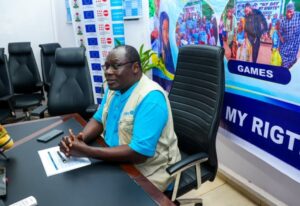
UNICEF Chief of Field Office in Sokoto, Dr Michael Juma, made the appeal on Friday during a media briefing to mark the 2026 World Children’s Day in Sokoto.
Juma said protecting children’s rights required stronger collaboration among federal and state governments, development partners, traditional and religious leaders, community organisations and the media.
He stressed that every child, regardless of background or circumstance, deserved the opportunity to survive, learn, develop and fulfil their potential.
UNICEF reports progress in education interventions
Juma highlighted interventions carried out by UNICEF in partnership with the governments of Sokoto, Kebbi and Zamfara states.
According to him, the partnership had supported the identification of at least 624,000 out-of-school children across the three states.
Of that number, about 68,000 children had been reached through re-enrolment initiatives aimed at returning them to formal education.
He also disclosed that approximately 98,000 children had benefited from the Teaching at the Right Level (TaRL) approach, designed to improve foundational literacy and numeracy skills.
Despite these interventions, Juma acknowledged that many children identified as being outside the education system had yet to be reached.
He said additional efforts were necessary to ensure that children returned to school and received the support required to remain in education.
Millions of children reached through vaccination
On healthcare, the UNICEF official said approximately 7.8 million children across Sokoto, Kebbi and Zamfara had been reached through measles-rubella vaccination programmes.
He added that more than five million children received polio vaccines during the most recently concluded immunisation campaign.
Juma also acknowledged the financial commitments made by the Sokoto and Zamfara governments towards tackling severe acute malnutrition.
He said Sokoto State committed about ₦100 million, while Zamfara State pledged approximately ₦500 million for the procurement of Ready-to-Use Therapeutic Food (RUTF), a specialised nutritional product used in treating children with severe acute malnutrition.
The commitments demonstrate the role of state funding in supporting essential child health interventions, although the announcement did not provide details of procurement, delivery or the number of children expected to benefit from the supplies.
UNICEF warns of funding pressures
Juma called for stronger government leadership, sustained domestic investment and community mobilisation to address persistent challenges affecting children.
He assured that UNICEF would intensify resource mobilisation efforts to sustain support for essential services amid declining global funding.
The agency also urged journalists to use their platforms to raise awareness, amplify children's concerns and hold public institutions accountable for commitments made towards child welfare.
He specifically called on the media to support public awareness ahead of the polio immunisation campaign scheduled for December 5 to 11 across Sokoto, Kebbi and Zamfara states.
Children’s rights require measurable action
The 2026 World Children’s Day is being commemorated under the theme, “My Day. My Rights. My Future.”
UNICEF’s reported figures indicate progress in identifying out-of-school children, expanding foundational learning and reaching children through vaccination programmes. However, the gap between identifying vulnerable children and ensuring they receive sustained services remains significant.
The return of 68,000 children to education, for instance, represents progress, but leaves a much larger number of identified children yet to be reached.
Similarly, financial commitments for nutritional treatment will need to translate into actual procurement, timely distribution and access for children who need it.
Governments in the three states face the continuing responsibility of demonstrating how funding, education programmes, immunisation campaigns and nutrition interventions are improving children's lives.
The protection of children's rights cannot depend solely on annual commemorations or temporary interventions. It requires consistent public investment, reliable services and accountability for results.
Atlantic Reports: Voices. People. Facts.
Written by
Atlantic Reports Admin
Comments
- Be the first to comment.