UNILAG, Birmingham University to Launch Joint Postgraduate Programmes in 2027
By Atlantic Reports
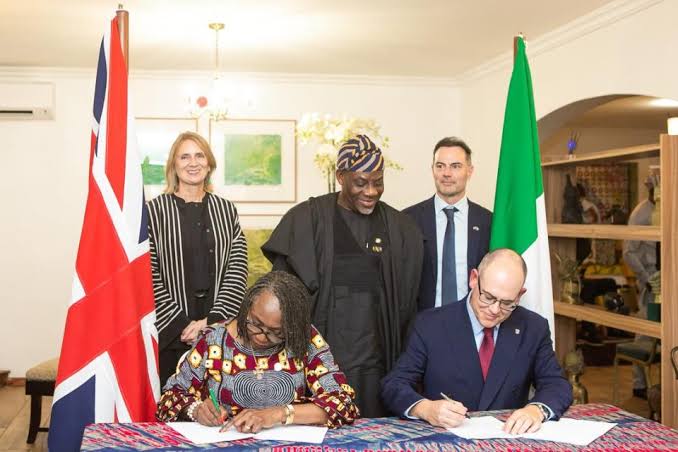
The Federal Government says a new partnership between the University of Lagos (UNILAG) and the University of Birmingham in the United Kingdom will expand access to international postgraduate education for Nigerian students without requiring them to travel abroad.
The Minister of Education, Dr Tunji Alausa, disclosed this at the launch of the joint academic programmes, which are scheduled to commence in September 2027.
The initiative will initially offer two master’s degrees: an MSc in Artificial Intelligence (AI) and Data Technologies, and an MA in Digital Media and Communications.
According to a statement issued in Abuja by Ikharo Attah, the minister’s Special Adviser on Media and Communications, the partnership forms part of the Federal Government’s efforts to improve education quality and prepare students for changing labour market demands.
Programmes target emerging skills
Alausa said the collaboration aligned with President Bola Tinubu’s Renewed Hope Agenda, the Nigerian Education Sector Renewal Initiative (NESRI) and the Federal Government’s Transnational Education Policy.
He described the partnership as an opportunity to bring internationally developed academic programmes to Nigeria while strengthening local universities’ capacity to deliver quality education.
“Today, we have transnational education in action, with one of the world’s leading universities partnering with one of Nigeria’s best universities to bring international-standard education to our country,” the minister said.
He added that the initiative marked the beginning of further collaborations intended to broaden access to international education within Nigeria.
The minister said the courses were selected to address growing demand for expertise in technology, innovation, entrepreneurship and digital communication.
The MSc in Artificial Intelligence and Data Technologies is expected to cover machine learning, deep learning, computer vision, large language models, data management and AI ethics.
The MA in Digital Media and Communications will focus on digital cultures, research, content creation, broadcasting and contemporary media practices, including journalism and other communication-related careers.
Alausa expressed the expectation that graduates would use the skills acquired to develop businesses, create employment and contribute to national development.
However, the programmes are not scheduled to begin until September 2027. Their eventual impact will depend on implementation, student access, teaching quality and how effectively graduates can apply their training in the workplace.
Universities outline benefits of collaboration
The Provost of the University of Birmingham, Prof. Nick Vaughan-Williams, said the institution was pleased to partner with UNILAG to support higher education and talent development in Nigeria.
He said both universities had a role in preparing graduates for changing global economies through skills development, entrepreneurship and improved employment opportunities.
UNILAG Vice-Chancellor, Prof. Folasade Ogunsola, described the partnership as an opportunity to strengthen international collaboration and update academic programmes in response to emerging fields.
She said the initiative would promote practical learning, improve the university’s global visibility and support research in areas such as artificial intelligence and digital communications.
The partnership also received support from British officials involved in educational cooperation between Nigeria and the United Kingdom.
The British Deputy High Commissioner in Lagos, Jonny Baxter, said the programmes reflected the relationship between both countries in education and skills development.
He noted that expertise in artificial intelligence, data science and digital communications could support innovation and contribute to sustainable economic growth.
Similarly, the Country Director of the British Council Nigeria, Donna McGowan, said transnational education provided a platform for knowledge exchange and the development of skills relevant to national growth.
She said the collaboration would make UK education more accessible to Nigerian students while supporting the development of a skilled workforce.
Access, affordability and implementation remain important
The partnership could provide an alternative for students seeking internationally developed postgraduate qualifications without the cost and logistical demands of studying overseas.
Nevertheless, the announcement did not specify tuition fees, admission requirements, available scholarships, the number of students to be admitted or the precise arrangements for delivering the programmes.
These details will be important in determining how accessible the courses will be to students from different economic backgrounds.
The minister also disclosed that plans were underway to extend the collaboration to undergraduate degree programmes in fields relevant to labour market needs. No commencement date or list of proposed undergraduate courses was provided.
As the universities work towards the September 2027 start date, prospective students will need further information on admissions, programme structure, qualification arrangements and financial support.
The initiative’s success will ultimately be measured not only by the introduction of international partnerships, but also by the quality of teaching, affordability, research opportunities and the skills graduates acquire.
Atlantic Reports: Voices. People. Facts.
Written by
Atlantic Reports Admin
Comments
- Be the first to comment.