UNILORIN Scholars Flag Health Risks from Metal-Contaminated Milled Food
A team of researchers at the University of Ilorin has raised the alarm over metal contamination in food processed at public grinding mills, warning that the practice could pose long-term health risks to consumers.
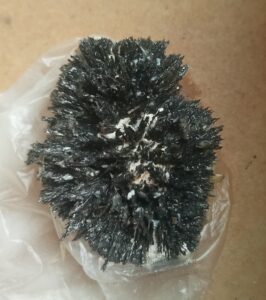
According to the study, published in the journal Engineering Results, dry grinding operations can introduce as much as 1.7 grammes of metallic contaminants into every 10 kilogrammes of ground maize.
This is according to a statement issued by Mr Kunle Akogun, Director of Corporate Affairs at the University of Ilorin, where 10 scholars carried out the research.
The researchers found that wear particles shed from cast-iron grinding discs during milling can find their way into food that is widely consumed, with potential consequences for long-term health.
Akogun said the study was supported by the Tertiary Education Trust Fund (TETFund) through its National Research Fund, under the title: "Documented contamination levels, sources and health risks associated with metallic wear from cast-iron grinding discs commonly used across Nigeria and other developing nations."
The research team was led by Prof. Sulaiman Abdulkareem of the Department of Mechanical Engineering as Principal Investigator, alongside Prof. Ismaila Idowu Ahmed, Prof. Jamiu Kolawole Odusote and Prof. Rasheedat Modupe Mahamood.
Other members drawn from the Department of Materials and Metallurgical Engineering included Dr Jeleel Adekunle Adebisi, Dr Segun Isaac Talabi and Mr Taiwo Yahaya.
Medical and biological input came from Prof. Lawrence Aderemi Olatunji of the Department of Physiology and Dr Mariam Kehinde Sulaiman of the Department of Medical Microbiology and Parasitology, while Prof. Jamiu Adetayo Adeniran of the Department of Chemical Engineering was later brought on board to contribute expertise in environmental source apportionment and health-risk modelling.
Citing Prof. Abdulkareem, Akogun said the findings underscore the need for better milling practices and tighter quality-control standards for the grinding discs used in food processing.
"The average contaminant particle size was approximately 43 micrometres, making the particles small enough to pass into the stomach unnoticed," Abdulkareem said.
He explained that dry grinding generates markedly more metallic contamination than wet grinding, noting that water acts as a lubricant during the wet process and helps reduce wear on the discs.
The study also established that all the grinding discs tested showed notable susceptibility to corrosion when exposed to a simulated gastric solution—a fluid designed to replicate conditions in the human stomach at a pH of 1.7 and temperature of 37°C.
"Corrosion occurred at varying degrees among the discs, with the imported sample showing the highest susceptibility, while the pit furnace-produced disc showed the most resistance," Abdulkareem said.
Written by
Atlantic Reports Admin
Comments
- Be the first to comment.