Universities Must Teach Beyond AI Answers, Amfo Says
By Atlantic Reports
Universities must rethink how they teach and assess students to produce graduates capable of questioning information, exercising ethical judgement and solving problems in a world increasingly shaped by artificial intelligence, Prof. Nana Amfo has said.
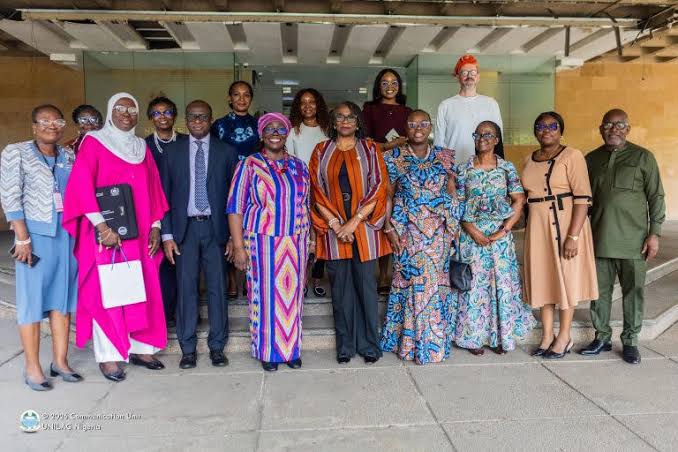
The University of Ghana vice-chancellor made the call while delivering the keynote address at the University of Lagos International Week 2026, themed “Re-imagining Pedagogy and Teaching for Higher Education in the 21st Century”.
Amfo argued that higher education should do more than prepare students for employment. It should develop intellectual independence, creativity, adaptability and a commitment to public service.
“At a time when technology can generate answers with remarkable speed, the capacity to ask good questions may be more valuable than ever,” she said.
She urged universities to equip students to identify problems, investigate their causes, develop solutions and work with people from different backgrounds.
Learning Through Practice and Inquiry
Amfo said lectures remained valuable but should be complemented by case studies, simulations, collaborative projects, fieldwork and community-engaged learning.
Such approaches, she argued, would enable students to construct, test and apply knowledge rather than simply receive information.
She cited the University of Ghana’s Student Venture Support Programme as an initiative encouraging students to develop entrepreneurial ideas and explore their viability. According to her, participants learn to test assumptions, communicate proposals, respond to criticism and manage uncertainty.
She also highlighted the Tetra Mapa Initiative, which explores how artificial intelligence and speech recognition could reduce communication barriers for people with speech impairments while incorporating Ghanaian languages.
Amfo presented the initiative as an example of collaboration across linguistics, technology and disability studies, with participation from affected communities. Its intended benefits remain distinct from demonstrated outcomes, which were not detailed in the supplied account.
African Knowledge and Inclusive Curricula
The vice-chancellor called for greater interdisciplinary learning, saying contemporary challenges rarely fit within a single academic discipline.
She said African universities had a responsibility to develop knowledge and capabilities relevant to public health, food security, environmental sustainability and inequality. However, she cautioned against narrowing education to immediate development needs, stressing the continuing importance of the humanities, arts, fundamental sciences and theoretical research.
Amfo said the University of Ghana was reviewing its required courses to incorporate digital literacy and applied artificial intelligence, alongside proposed learning in gender, equality, disability and inclusion.
She also advocated greater recognition of African languages, histories and intellectual traditions without rejecting international scholarship.
“The goal is not intellectual isolation. It is intellectual confidence, producing graduates who can engage with the world while remaining grounded in the societies from which they come,” she said.
For Amfo, decolonising education required examining whose perspectives were prioritised and whose contributions had been overlooked.
She said inclusion also demanded accessible learning materials, flexible assessment methods and support for students with disabilities and those from disadvantaged backgrounds.
Citing the university’s One Student, One Laptop programme, she argued that technology should be judged by whether it expands meaningful access to learning, rather than by the sophistication of the equipment.
Assessing Understanding in the AI Era
Amfo urged universities to avoid both uncritical adoption and outright prohibition of artificial intelligence.
Instead, she called for responsible use in teaching, learning and research, supported by assessments that establish whether students understand concepts and can explain and defend their reasoning.
Oral examinations, portfolios, presentations, practical demonstrations and project-based assessments could complement conventional examinations, she said.
She also urged African universities to contribute their languages, knowledge systems, research and ethical perspectives to AI development, warning that inadequate representation could deepen existing inequalities.
Supporting Lecturers to Change Teaching
Amfo called on university leaders to invest in lecturers’ professional development, recognise teaching excellence and involve students in improving learning experiences.
She said research and teaching should reinforce each other, with institutional policies giving lecturers room to test effective approaches.
Her proposals place responsibility on university leadership as well as individual teachers. Accessible materials, revised assessments and sustained staff development require institutional support if they are to become everyday practice.
“The true measure of technological innovation is not how differently we teach but how deeply our students learn, how independently they think, and how meaningfully they are able to contribute to societies,” she said.
Atlantic Reports: Voices. People. Facts.
Written by
Atlantic Reports Admin
Comments
- Be the first to comment.