Voters Praise INEC’s Early Arrival for Lagos Mock Accreditation, Raise BVAS Concerns
By Atlantic Reports
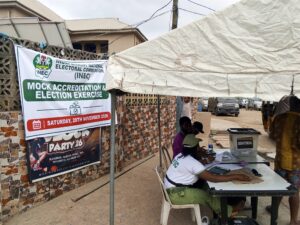
The early arrival of officials of the Independent National Electoral Commission (INEC) at polling units in Oshodi-Isolo Local Government Area of Lagos State has received positive feedback from some participants in the commission’s mock voter accreditation exercise.
The voters, who spoke in separate interviews in Lagos on Saturday, November 28, commended the punctuality and professionalism of electoral personnel. However, some called for improvements to the Bimodal Voter Accreditation System (BVAS), particularly its camera, software and fingerprint recognition functions.
Their observations offer an early assessment of the exercise, which is intended to test accreditation procedures and identify operational challenges before future elections.
Voters commend officials’ preparedness
At Ward F1, Polling Unit 029, Isolo, Tonade Akinwale, Chairman of the All Progressives Congress (APC) Local Government Area chapter in Isolo Local Council Development Area, praised INEC officials for arriving early and commencing the exercise smoothly.
He said the BVAS device at the polling unit was functioning effectively, without noticeable technical problems.
Akinwale also described the officials’ interaction with voters as polite, orderly and professional.
Similarly, Abubakare Olaleye, a former councillor in Oshodi-Isolo who participated at Polling Unit 016, Ward F6, Ijushaga, said Nigeria’s electoral process had improved considerably since the return to democratic rule in 1999.
He commended INEC for what he described as progress in electoral administration and urged the commission to sustain efforts to strengthen public confidence.
Olaleye also praised residents who turned out for the mock exercise, noting that the early deployment of electoral officials reflected improved preparation.
BVAS technical concerns raised
Despite the positive assessments, some participants identified technical issues they believe INEC should address before the next general election.
Saliu Animashaun, Vice Chairman of Ward F2, who participated at Polling Unit 033, Ilasamaja, called for improvements to the BVAS camera, software and fingerprint recognition system.
He said camera performance and fingerprint identification needed attention to ensure voters could complete accreditation without unnecessary difficulties.
Animashaun also urged INEC to upgrade the software and make the necessary adjustments to the system.
At Polling Unit 026, Ijushaga, Olafimihan Gafar, an APC canvasser, raised concerns about what he described as inconsistencies in the commission’s accreditation software.
He said resolving the reported problems before the general election would reduce the risk of technical disruptions and improve the efficiency of voter accreditation.
Mock exercise puts electoral technology under scrutiny
The feedback from Oshodi-Isolo highlights two important aspects of election administration: the readiness of personnel and the reliability of the technology used to verify voters.
While early arrival and professional conduct can improve the experience at polling units, technical failures during accreditation could still affect the process and undermine confidence.
The concerns raised by participants are individual observations from selected polling units and do not, on their own, establish that the BVAS is experiencing widespread technical problems across Lagos or the country.
INEC will need to assess the results of the mock exercise, identify recurring faults and communicate any corrective measures taken before subsequent elections.
The effectiveness of the exercise will ultimately depend on whether the commission can translate the feedback into practical improvements that make voter accreditation reliable, accessible and transparent.
Atlantic Reports: Voices. People. Facts.
Written by
Atlantic Reports Admin
Comments
- Be the first to comment.