WFP to Cut Gaza Food Aid by One-Third Over Funding Shortages
By Atlantic Reports
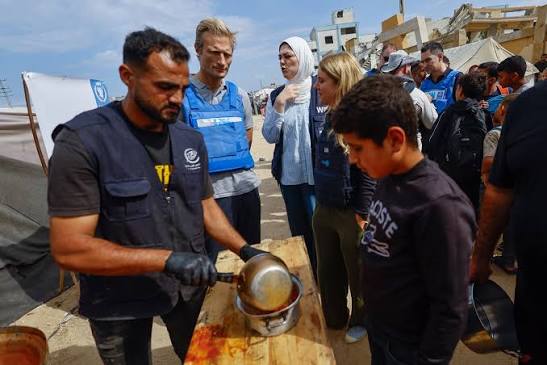
The WFP announced the planned reduction on Monday, saying it no longer had sufficient funding to sustain its existing level of assistance in the war-ravaged territory.
Since the ceasefire deal began in October 2025, the agency has provided food parcels, bread and cash assistance to about 1.6 million Palestinians each month.
WFP Deputy Executive Director Carl Skau told the BBC that the organisation needs $450 million over the next six months to maintain assistance in Gaza and the occupied West Bank.
“We have to make sure we can help bring back normalcy and dignity to people’s lives,” Skau said, calling for increased efforts to address the suffering of civilians.
Hunger persists despite reduced famine concerns
The UN says many Palestinians continue to live in makeshift shelters or the ruins of their homes, surrounded by sewage and accumulated rubbish. Employment opportunities and other means of earning a living remain limited, while security conditions across the coastal territory remain dangerous.
UN teams recorded about 50 attacks daily during the previous week, according to the report. Meanwhile, people still receiving WFP assistance have faced reductions in the quantity of food available.
The agency said food rations had been cut by half, while hot meals distributed to vulnerable people were often inadequate.
The WFP estimates that about 67 per cent of Gaza’s population is experiencing acute hunger or worse.
The Integrated Food Security Phase Classification (IPC), which monitors food insecurity globally, no longer classifies Gaza as experiencing famine. However, the initiative says the population continues to face severe food insecurity and malnutrition.
The absence of a current famine classification does not mean that hunger and nutritional problems have been resolved.
Israel disputes assessment of food needs
The Coordination of Government Activities in the Territories (COGAT), the Israeli authority responsible for civilian affairs in the Palestinian territories, maintains that the volume of humanitarian aid entering Gaza is sufficient to meet the population’s food needs.
COGAT also said there was no acute food insecurity in the territory, a position that contrasts with the WFP’s assessment of widespread hunger and the continuing need for emergency assistance.
The planned reduction in aid raises concerns about the ability of vulnerable households to obtain food as humanitarian agencies struggle to secure the resources needed for their operations.
For hundreds of thousands of Palestinians who may lose WFP assistance, the immediate challenge will be finding alternative sources of food amid damaged infrastructure, limited livelihoods and continuing insecurity.
Atlantic Reports: Voices. People. Facts.
Written by
Atlantic Reports Admin
Comments
- Be the first to comment.