WHO Reports Over 10,000 Ebola Cases, 5,000 Deaths in DR Congo, Warns of New Hotspots
By Atlantic Reports
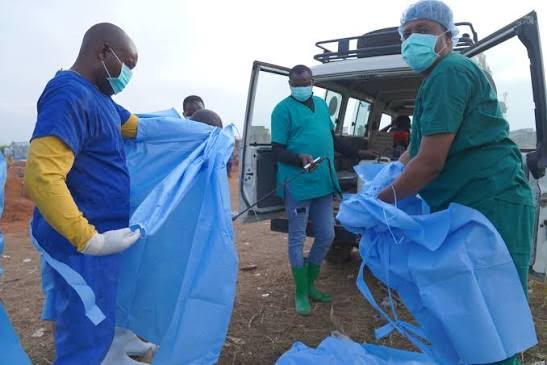
WHO Director-General, Dr Tedros Adhanom Ghebreyesus, disclosed this during a news conference on Wednesday, identifying population displacement, heavy rainfall, attacks on healthcare facilities and difficulties reaching remote communities as major obstacles to containing the outbreak.
According to updated figures published by the European Centre for Disease Prevention and Control on November 3, the DRC had recorded 10,532 confirmed cases and 5,126 related deaths as of November 2.
Ghebreyesus said Kenya had reported nine cases, including two deaths, while Nigeria had confirmed one imported case. He commended both countries for their responses and transparency in reporting infections.
He urged countries that had imposed travel restrictions to lift them, warning that such measures could discourage timely reporting, penalise countries for transparency and undermine international efforts to contain the outbreak.
The WHO chief said the organisation was supporting countries neighbouring the DRC to prepare for possible imported infections while assisting the affected country with response activities, research and vaccine development.
WHO Supports Development of Bundibugyo-Specific Vaccines
Ghebreyesus disclosed that WHO experts had recommended adding two vaccine candidates specifically targeting the Bundibugyo virus to an ongoing clinical trial in the DRC.
The candidates are ChAdOx1 BDBV, developed by the University of Oxford in partnership with the Serum Institute of India, and Moderna's mRNA-1469 vaccine.
He said the recommendations followed the commencement of another clinical trial in October involving Ervebo, a vaccine approved against the Zaire Ebola virus.
The ongoing research is being led by the DRC's National Institute for Biomedical Research.
Ghebreyesus stressed that vaccines alone would not end the outbreak, calling for continued emphasis on early treatment, contact tracing, isolation, safe burials and community engagement.
WHO Says Climate Action Could Prevent 1.6 Million Deaths Annually
Turning to climate change, Ghebreyesus said six proven climate and health interventions could prevent an estimated 1.6 million deaths annually while generating trillions of dollars in economic and fiscal benefits.
He made the remarks ahead of the United Nations Climate Change Conference, COP31, scheduled to take place in Antalya, Türkiye, from November 9 to 20.
According to a WHO report released on November 4, implementing the interventions globally could generate approximately $3.9 trillion in annual economic welfare benefits and another $5.4 trillion in fiscal benefits.
He identified the proposed interventions as including:
-
Heat-health warning systems.
-
Climate-resilient drinking water services.
-
Improved sanitation and hygiene.
-
Cleaner household energy.
-
More efficient fossil fuel pricing policies.
Ghebreyesus said climate change was already contributing to disease outbreaks, increasing heart and lung diseases, cancer and asthma, while making healthy diets less affordable for vulnerable populations.
He described climate action as an investment in healthier people, a healthier planet and stronger economies, urging governments to prioritise measures that protect public health and livelihoods.
WHO Raises Alarm Over Physical Inactivity Among Adolescents
The WHO director-general also expressed concern over persistently low levels of physical activity among adolescents worldwide.
New global estimates released on Wednesday showed that only 14 per cent of adolescents aged 11 to 17 reported achieving at least 60 minutes of physical activity on all seven days of the previous week.
The findings also showed that one in four adolescents reported no day with at least 60 minutes of physical activity during the week.
The study, based on 389 population-based surveys involving more than 3.2 million adolescents across 140 countries and territories, found that activity levels had remained virtually unchanged over the past 15 years.
Ghebreyesus said girls continued to face greater barriers to physical activity than boys in almost every country and region.
He urged governments to invest in safer schools, public spaces, walking and cycling routes, supportive transport policies and affordable sporting and recreational facilities.
He explained that regular physical activity helped prevent heart disease, some cancers and diabetes, while supporting healthy weight and mental wellbeing.
63 Countries Eliminate at Least One Neglected Tropical Disease
On neglected tropical diseases (NTDs), Ghebreyesus announced that 63 countries had eliminated at least one such disease by June 2026, representing progress towards global targets for 2030.
The announcement followed the release of WHO's midterm evaluation of its global NTD roadmap.
The report showed that the number of people requiring interventions against neglected tropical diseases had fallen by 19 per cent since 2020, reaching 1.41 billion in 2024.
It also recorded only 10 human cases of Guinea worm disease in 2025, reflecting progress in global elimination efforts.
However, Ghebreyesus warned that funding cuts had disrupted programmes and services, while excessive dependence on a small number of donors threatened the sustainability of interventions.
He urged governments and development partners to increase domestic financing, sustain external support and integrate NTD services into primary healthcare and universal health coverage.
He explained that neglected tropical diseases comprise 21 diseases that predominantly affect poor and marginalised populations in tropical and subtropical regions, often worsening existing health and socioeconomic inequalities.
The WHO roadmap, adopted by the World Health Assembly in 2020, targets the elimination of at least one neglected tropical disease in 100 countries and a 90 per cent reduction in the number of people requiring interventions by 2030.
WHO Launches Global Initiative Against Health Misinformation
Ghebreyesus also announced plans to launch a global initiative, Together for Science and Health, on November 10 to strengthen public trust in science and address misinformation and disinformation affecting health decisions.
The initiative is designed to strengthen connections between scientific research, society, public policy and communication.
He warned that misinformation and disinformation had become significant public health risks, distorting decisions on vaccination, treatment, disease prevention and healthcare while undermining emergency responses.
According to him, the initiative would go beyond countering false claims by improving access to reliable evidence, strengthening information integrity and building public trust through transparency and community engagement.
He called on governments, research institutions, civil society organisations, media organisations, technology companies and communities worldwide to support the initiative.
The WHO chief said stronger public trust in scientific evidence was essential to improving health decisions and preparing countries to respond effectively to emerging health challenges.
Atlantic Reports: Voices. People. Facts.
Written by
Atlantic Reports Admin
Comments
- Be the first to comment.