Women’s Affairs Minister Urges 10 Million Women to Mobilise Ahead of 2027 Elections
By Atlantic Reports
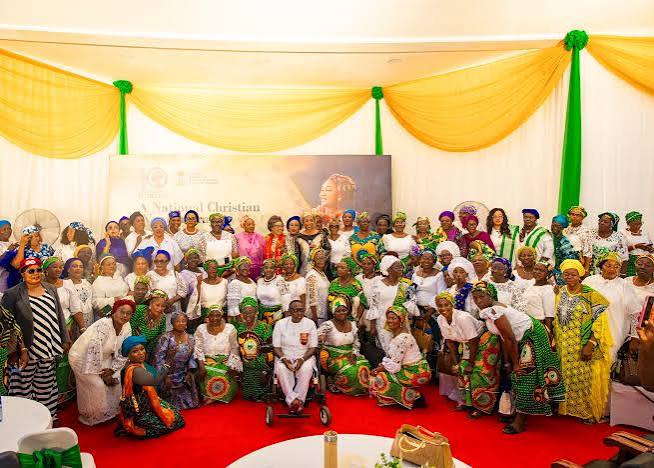
The minister made the call on Tuesday in Abuja at the 30th anniversary conference of the League of Women Voters of Nigeria (NILOWV), themed “Thirty Years Strong: Empowering Women’s Voice, Leadership and Democratic Participation; Celebrating the Past, Shaping the Future.”
Sulaiman-Ibrahim described women’s votes as an important instrument of democratic participation, urging women across the country to unite and take a more active role in governance.
“It is upon this foundational legacy that I assert today: at the very core of our thirty-year journey lies the most sacred currency of any democracy; the ballot of the Nigerian woman.
“A vote cast by a woman is never just a mark on paper; it is a quiet revolution, a solemn declaration of citizenship, and an instrument for generational upliftment,” she said.
The minister proposed mobilising 10 million women as a strategic effort to strengthen their collective influence on Nigeria’s political direction.
“To unlock this power fully, we must realign our mission with an unstoppable force: the collective resolve of 10 million women; one voice, one movement, one choice; intentionally and strategically negotiating the Nigeria of our dreams,” she said.
Minister Calls for Grassroots Political Mobilisation
Sulaiman-Ibrahim urged NILOWV to intensify its engagement with women in markets, villages, places of worship and polling units, stressing that political participation should extend beyond advocacy and policy discussions.
She encouraged women to organise within their communities, understand electoral processes and engage directly with candidates and political parties.
“Do not merely sit at the table and wait for opportunities to reach you. Go into the trenches, into every market, every village square, every worship centre, and every polling unit to enlighten, organise and mobilise Nigerian women to own their political power,” she said.
The minister acknowledged that the Federal Ministry of Women Affairs could not achieve its gender inclusion objectives alone, emphasising the need for collaboration with civil society organisations and groups such as NILOWV.
She said sustained partnerships would be important to expanding women’s participation in political leadership and national development.
NILDS Identifies Barriers to Women’s Advancement
The Director-General of the National Institute for Legislative and Democratic Studies (NILDS), Prof. Abubakar Sulaiman, said women remained important contributors to Nigeria’s economy, agricultural value chains and community development.
However, he identified limited access to economic resources, capital and financial structures, alongside patriarchy, cultural expectations and educational disparities, as barriers to women’s advancement.
He argued that democracy could not achieve meaningful inclusion while women remained underrepresented in decision-making.
“As long as Nigerian women are excluded from decision-making, our democracy is not democracy. Our projected task is to convert advocacy into structural and legislative reality,” he said.
Sulaiman reaffirmed the commitment of the National Assembly and NILDS to supporting gender inclusion initiatives, including the proposed Special Seats Bill for Women.
He said the institute would continue collaborating with stakeholders to build capacity, train women and support efforts to remove institutional barriers to political participation.
NILOWV Seeks Greater Representation in 2027
The President of NILOWV, Mrs Irene Awunah-Ikyegh, said women needed to change their political strategy ahead of the 2027 elections by moving beyond being recognised as a significant voting population to becoming active participants in political decision-making.
She called for practical measures to create opportunities for women to enter leadership positions and contribute meaningfully to national development.
Awunah-Ikyegh said women’s numerical strength would translate into political influence only when supported by effective organisation, information and mobilisation.
“The numbers alone do not generate political power. Numbers become power when they are organised, informed, mobilised and strategically deployed,” she said.
She urged women to engage candidates and political parties on issues affecting them, including political representation, gender-based violence, economic exclusion and unequal opportunities.
“Women’s votes are valuable, and our support must be earned through credible commitments and measurable actions,” she said.
The NILOWV president also encouraged women to support female candidates in the 2027 elections, mentor younger leaders and strengthen networks that could improve women’s participation in politics.
“In 2027, we must not mainly campaign for others. We must prepare and properly declare our support to female candidates,” she said.
Founder Calls for Measurable Progress
Earlier, NILOWV Founder and Chairperson of its Board of Trustees, Mrs Esther Uduehi, said the organisation’s 30th anniversary should serve as a reminder that more work remained to achieve equal opportunities for women.
She cautioned that the existence of policies did not automatically guarantee their implementation, just as the right to vote did not guarantee equal opportunities to contest and win elective office.
“An anniversary is not the finish line. The existence of policies does not guarantee implementation. The right to vote does not guarantee the opportunity to be elected,” she said.
Uduehi called for measurable progress in women’s representation, economic opportunities, community safety, girls’ education and institutional funding.
She also advocated a fairer political system in which women could participate meaningfully in decision-making.
From Voting Strength to Political Influence
The conference highlighted the distinction between women’s participation as voters and their representation as candidates, elected officials and political decision-makers.
Achieving greater representation will depend on more than voter mobilisation. Access to party nominations, campaign financing, internal party processes, security and institutional support will also influence women’s opportunities to contest elections.
The proposed mobilisation of 10 million women presents an ambitious target, but its practical significance will depend on how the initiative is organised, the communities it reaches and whether it produces measurable improvements in participation and representation.
As the 2027 elections approach, NILOWV and its partners face the challenge of translating advocacy into concrete opportunities for women to influence political priorities and occupy elective offices.
Atlantic Reports: Voices. People. Facts.
Written by
Atlantic Reports Admin
Comments
- Be the first to comment.