Women Traders Face Harassment Along West African Borders, Stakeholders Demand Stronger Protection
By Atlantic Reports
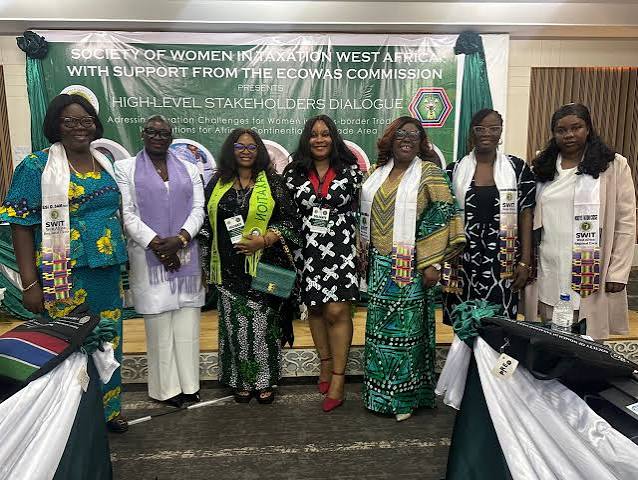
Stakeholders from government institutions, development organisations and trade associations have called for stronger measures to protect women engaged in cross-border commerce across West Africa.
The call followed a dialogue involving representatives of Global Affairs Canada, TradeMark Africa, the Nigeria Customs Service, the Nigeria Immigration Service and women traders' associations.
The engagement, announced in a statement issued in Abuja on Friday by Brice Adou, Programme Lead of the Making Trade Work for Women Project at TradeMark Africa, focused on practical ways to make border crossings safer and more inclusive.
Harassment remains a major concern
According to Adou, findings from a study conducted between August and November 2026 identified harassment as a significant challenge for women involved in cross-border trade.
The reported abuses included sexual harassment, verbal abuse and other forms of mistreatment.
The dialogue was organised under the Making Trade Work for Women in West Africa programme, implemented by TradeMark Africa and the Centre for International Studies and Cooperation (CECI), in partnership with Canada. Africa International Trade and Commerce Research (AITCR) serves as the local partner.
Adou described the engagement as an advocacy platform for identifying practical responses to the challenges confronting women traders.
Calls for accountability among border officials
The Executive Director of AITCR, Sand Mba-Kalu, urged authorities to enforce existing protections and strengthen accountability mechanisms for addressing reported abuses.
He argued that women should not face punishment or intimidation simply for engaging in legitimate cross-border trade.
“There are regulations that have been put in place to protect them and we want to make that active,” he said.
Mba-Kalu estimated that women account for approximately 90 per cent of cross-border traders along the Lagos-Abidjan and Tema-Wagadu corridors.
He said addressing harassment and insecurity was essential to advancing regional trade integration under the African Continental Free Trade Area (AfCFTA).
He also highlighted the importance of protecting women traders to the effective implementation of the ECOWAS Trade Liberalisation Scheme (ETLS).
Border procedures and reporting mechanisms under review
Participants examined ways to improve border procedures, promote professional conduct among border officials and establish stronger mechanisms for reporting and addressing abuse.
The discussions also featured findings from a digital survey on gender-based violence along the Abidjan-Lagos corridor.
Another focus was the implementation of the AfCFTA Protocol on Women and Youth in Trade, which seeks to strengthen the participation of women and young people in regional commerce.
However, the statement did not provide detailed figures from the survey, including the number of women interviewed, the frequency of reported incidents or the specific border locations where abuses were most prevalent.
It also did not outline a timetable for implementing the proposed accountability measures or identify sanctions for officials found responsible for misconduct.
Further regional engagements planned
The dialogue forms part of wider activities along the Abidjan-Lagos corridor.
Further discussions are scheduled to take place in Cotonou, Benin, on December 1, and Abidjan, Côte d'Ivoire, on December 8, 2026.
The effectiveness of these engagements will depend on whether the recommendations translate into accessible complaint channels, consistent enforcement of regulations and consequences for misconduct.
For women whose livelihoods depend on moving goods across borders, safer trading conditions are not merely a question of convenience. They are central to economic security, business growth and meaningful participation in West Africa's regional market.
Atlantic Reports: Voices. People. Facts.
Written by
Atlantic Reports Admin
Comments
- Be the first to comment.