World Bank Adds $500m to Nigeria’s NG-CARES Programme
By Atlantic Reports
The Minister of Budget and Economic Planning, Senator Abubakar Bagudu, said the additional funding would help cushion the effects of economic reforms on vulnerable households and improve community resilience.
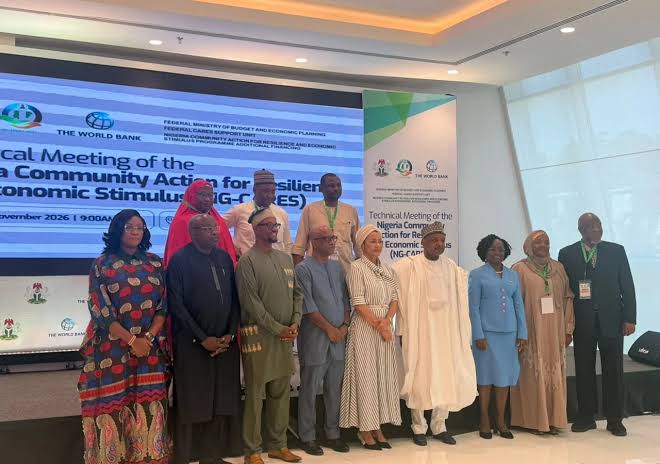
Bagudu spoke on Monday at the NG-CARES Additional Financing Technical Meeting in Abuja, where government officials and development partners discussed implementation arrangements for the programme.
He described NG-CARES, initially introduced to address economic difficulties associated with the COVID-19 pandemic, as an important intervention for supporting vulnerable households and communities.
According to the minister, the additional financing would enable participating states to extend support to more people and strengthen livelihoods.
He commended the World Bank for its continued partnership with Nigeria, saying its support had contributed to the country's economic reform efforts.
Bagudu urged state governments to ensure that the funds were effectively utilised and that implementation delivered measurable benefits to communities.
He also said the additional $500 million should help attract further investment from private-sector operators and development partners.
The minister linked the programme's potential impact to Nigeria's ambition of building a $1 trillion economy, citing cassava-producing communities in Enugu State as examples of areas where targeted agricultural assistance could improve productivity and household incomes.
He urged participating states to use the technical meeting to clarify implementation procedures and address challenges that could delay delivery.
Programme targets 8.9 million beneficiaries
The World Bank Country Director for Nigeria, Mr Matthew Verghis, said the additional financing would strengthen long-term resilience, improve institutions and expand access to essential services.
He disclosed that the new funding would bring the World Bank's total financing for NG-CARES to $1.25 billion.
Verghis said the programme was expected to reach 8.9 million beneficiaries through safety nets and basic services, including 4.1 million women.
About 4.5 million farmers are also expected to receive support under the programme.
He said the additional financing would strengthen state ownership, improve social registries and promote transparent delivery of assistance.
However, he stressed the need to accelerate implementation, particularly the engagement of an independent verification agency and the completion of eligibility requirements by participating states.
These measures are important to ensuring that programme resources reach intended beneficiaries and that reported results can be independently assessed.
35 states and FCT join additional financing
The Minister of State for Budget and Economic Planning, Dr Doris Uzoka-Anite, welcomed the additional financing, saying the achievements recorded under the initial programme justified its expansion.
She urged participating states and implementing agencies to maintain transparency, accountability and commitment to effective delivery.
The ministry's Permanent Secretary, Dr Deborah Odoh, said the original NG-CARES programme had reached more than 17.6 million direct beneficiaries nationwide.
She disclosed that 35 states and the Federal Capital Territory had joined the additional financing programme, while 33 states had submitted eligibility documents for review and confirmation.
Odoh said the technical meeting was organised to strengthen implementation arrangements, clarify operational procedures and develop practical solutions to possible challenges.
From COVID-19 response to long-term resilience
NG-CARES was introduced to support poor and vulnerable Nigerians following the economic disruption caused by the COVID-19 pandemic.
The initial programme was backed by $750 million in World Bank financing, alongside state-level co-investments and advance disbursements by the Federal Government.
Rather than ending with its initial implementation period, the programme has moved into an additional financing phase intended to consolidate earlier interventions and extend support to more communities.
The additional $500 million is expected to strengthen livelihoods, improve basic services and expand social protection.
Its effectiveness, however, will depend on how quickly states meet the required conditions, how transparently funds are deployed and whether the projected benefits translate into sustained improvements in household welfare.
The number of beneficiaries reached will be an important measure, but the quality and durability of the support will also determine the programme's long-term impact on poverty and community resilience.
Atlantic Reports: Voices. People. Facts.
Written by
Atlantic Reports Admin
Comments
- Be the first to comment.