WTO Urges Africa to Boost Industrialisation, Regional Trade and Infrastructure for Global Competitiv
By Atlantic Reports
The World Trade Organisation (WTO) has called on African countries to strengthen regional value chains, industrialisation and infrastructure development to improve the continent's competitiveness and influence in global trade.
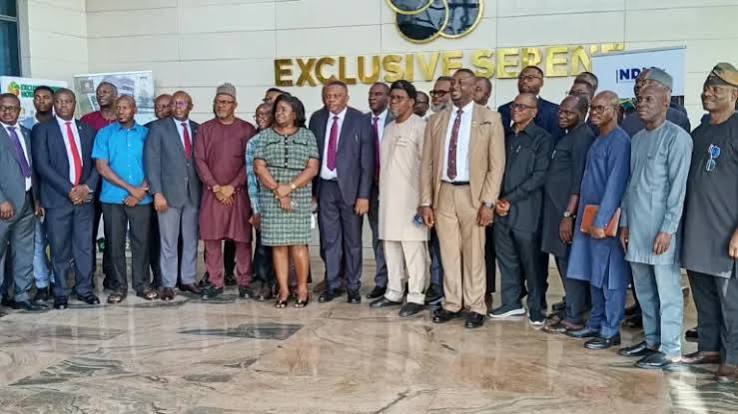
WTO Director-General, Dr Ngozi Okonjo-Iweala, made the call on Monday at a conference on Africa and the Geoeconomics of African States, Integration, Power and Structural Transformation in Abuja.
Represented by Dr Jan Yves Remy of International Trade and WTO, Okonjo-Iweala said Africa was strategically positioned to benefit from changing global trade patterns, given its abundant natural resources, youthful population and connections with international markets.
She noted that the continent held nearly 30 per cent of the world's critical mineral reserves, including cobalt, lithium, manganese, copper, nickel and graphite.
Despite this resource potential, she said Africa accounted for only three per cent of global exports, highlighting the need to strengthen its productive capacity and develop industries capable of processing raw materials locally.
WTO Calls for Shift from Raw Material Exports
Okonjo-Iweala stressed that Africa could achieve greater economic benefits by moving beyond the exportation of unprocessed natural resources to local processing and manufacturing.
“Africa must move beyond exporting raw materials to processing and manufacturing products locally to retain more economic value,” she said.
She identified the African Continental Free Trade Area (AfCFTA) as an important instrument for expanding production, strengthening regional commerce and creating interconnected value chains across African economies.
However, she observed that intra-African exports accounted for approximately 17 per cent of the continent's merchandise exports in 2024, indicating considerable room for improvement.
The WTO chief identified infrastructure deficiencies, institutional weaknesses and non-tariff barriers as major obstacles to the effective implementation of the continental trade agreement.
She called for investment in roads, ports, electricity, shipping connections and trade finance to facilitate the movement of goods and services across African borders.
She also advocated more efficient customs procedures and predictable trade regulations to reduce barriers to cross-border business.
Universities Urged to Support Trade Transformation
Okonjo-Iweala emphasised the importance of intellectual capacity in strengthening Africa's economic influence.
She urged African universities and WTO chairs to expand research, professional training and policy engagement to support the continent's industrial and trade development.
According to her, stronger academic contributions would help African countries develop informed policies and practical solutions to their economic challenges.
AfCFTA Must Deliver Industrial Growth, UNIZIK Vice-Chancellor Says
The Vice-Chancellor of Nnamdi Azikiwe University, Prof. Bond Anyaehie, also called for stronger African economic integration to promote industrialisation and improve the continent's competitiveness in international markets.
Anyaehie spoke at the conference organised by the university's National Centre for Regional Integration and Trade Research.
He argued that Africa must move beyond trade liberalisation towards building collective economic power through infrastructure development, industrialisation and competitive local enterprises.
He warned that opening markets without adequate infrastructure and establishing a continental trade arrangement without competitive African businesses would not deliver meaningful economic transformation.
“The success of AfCFTA should be measured by Africa’s ability to source inputs, manufacture products, provide services and finance trade through indigenous institutions,” he said.
Aba-Made Products Highlight Africa's Branding Challenge
Anyaehie expressed concern that some African-made products were exported, rebranded abroad and subsequently returned to the continent as foreign goods.
He cited Nigerian shoes manufactured in Aba, Abia State, and sold in Italy as an example of the need for stronger product branding and international market positioning.
He encouraged African entrepreneurs to invest in branding, improve product visibility and use digital platforms to reach wider markets.
He also stressed that universities must play a more active role in Africa's economic transformation through research, skills development and policy engagement.
The vice-chancellor called for stronger partnerships among universities, governments and industries to connect academic knowledge with practical economic needs.
Africa's Industrial Future Depends on Local Production
The discussions highlight a central challenge confronting Africa's participation in global trade: the gap between its substantial natural resource base and its relatively limited contribution to global exports.
While AfCFTA offers opportunities to expand regional markets, its benefits will depend on the continent's ability to improve infrastructure, strengthen manufacturing capacity, reduce trade barriers and support businesses capable of competing internationally.
For countries such as Nigeria, the expansion of local manufacturing, including industries in Aba and other production centres, could create opportunities for employment, enterprise growth and greater participation in regional value chains.
The broader challenge is to ensure that Africa's growing role in global trade translates into more production, higher local value addition and sustainable economic opportunities across the continent.
Atlantic Reports: Voices. People. Facts.
Written by
Atlantic Reports Admin
Comments
- Be the first to comment.