Sanwo-Olu Urges Leaders to Open Doors for Young Nigerians
By Atlantic Reports
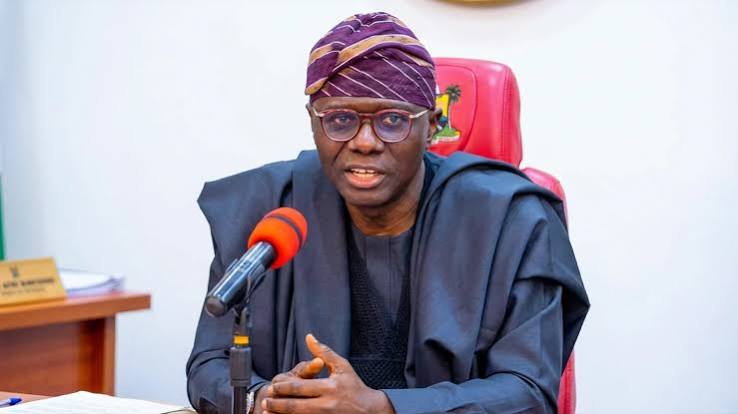
Lagos State Governor Babajide Sanwo-Olu has urged established leaders, professionals and business owners to give young Nigerians their first meaningful opportunities, from employment and mentorship to supervised contracts and leadership responsibilities.
Speaking on Monday in Lagos at a youth colloquium marking Seyi Tinubu’s birthday, Sanwo-Olu said leadership should be measured partly by the opportunities created for others, including those unable to repay the favour.
“Mentor a young person that you know cannot pay you back. Hire a young person that has no experience and mentor that person,” he said.
“Give a young person their first contract, but supervise them because nobody is going to do it for them.”
His appeal focused on a familiar obstacle for people entering the workforce: gaining the experience required to secure opportunities when few employers or established professionals are willing to offer a first chance.
Mentorship and leadership succession
Sanwo-Olu said mentorship required trust, practical support and supervision to help young people develop their abilities.
He argued that public service should be assessed beyond completed projects to include the opportunities created for others to contribute to national development.
“One of the greatest deeds of leadership is for you to hand over the chair to someone else, knowing that they will take it on and move it forward,” he said.
The governor described continuity as completing projects inherited from predecessors while laying foundations for successors. He also praised President Bola Tinubu for opening leadership opportunities to others and urged people in authority to extend similar support to younger Nigerians.
For young people, Sanwo-Olu’s message was to acquire knowledge, build relevant skills and participate in their communities, local governments and workplaces.
“Nobody is going to give you a place if you do not ask for one. You must participate because it is through participation that you can truly develop your leadership skills,” he said.
Seyi Tinubu calls for preparation and participation
Seyi Tinubu, son of the President, said experienced leaders should make room for younger people in decision-making, while aspiring leaders should prepare themselves for responsibility.
“Experience must make room at the table for younger collaborators, while ambitious beginners must use that experience to prepare themselves for responsibility,” he said.
He urged young Nigerians to move beyond observing national affairs and engage with decisions shaping their economic and social future.
Addressing members of the City Boy Movement and other youth organisations, he called for informed engagement, practical ideas and a commitment to public service.
“Political access gives us an opportunity, but what we do with it will ultimately determine our worth and the future of the country,” he said.
Seyi also defended the administration’s removal of the petrol subsidy and changes to the foreign exchange system, saying the reforms were intended to address longstanding economic problems and create opportunities for future generations.
He acknowledged immediate pressures on households, while arguing that investment in infrastructure, education, agriculture and manufacturing was necessary to strengthen productive capacity. His remarks represented his assessment of the reforms, rather than evidence that their intended outcomes had been achieved.
Adesina: A youthful population needs productive opportunities
In his keynote address, former African Development Bank President Dr Akinwumi Adesina said Africa’s growing youthful population could become an economic asset if governments invested adequately in education, healthcare, skills and enterprise.
He argued that population growth alone would not generate prosperity.
“Population is what we inherit; capability is what we build. The demographic dividend is not created simply by having more people. It is created by making more people productive,” he said.
Adesina described education as an investment in national wealth creation. Drawing on his own experience, he said his father’s investment in his education had helped shape his career and expand his opportunities.
He added that education must be supported by healthcare, nutrition, social protection and technical skills.
Adesina urged countries to develop young people’s capabilities in engineering, agriculture, manufacturing, software development, data science, cybersecurity and artificial intelligence. He said young Africans should be supported to create and adapt technologies that address local problems.
Removing barriers to enterprise
Adesina also warned that skills alone would not enable young people to build successful businesses without access to finance, reliable electricity, infrastructure and functioning institutions.
He urged governments and financial institutions to regard young entrepreneurs as potential creators of wealth and employment, and to connect education and technology with finance and markets.
“The liability is created when systems fail to develop, protect, connect and utilise that potential,” he said.
The colloquium brought together discussions on mentorship, leadership and entrepreneurship. Its practical challenge is how those appeals translate into accessible opportunities, particularly for young people without influential connections.
The supplied account did not announce new funding, recruitment commitments or a timetable for implementing the proposals. Progress will depend on whether institutions and businesses turn the calls for support into opportunities young Nigerians can use.
Atlantic Reports: Voices. People. Facts.
Written by
Atlantic Reports Admin
Comments
- Be the first to comment.